























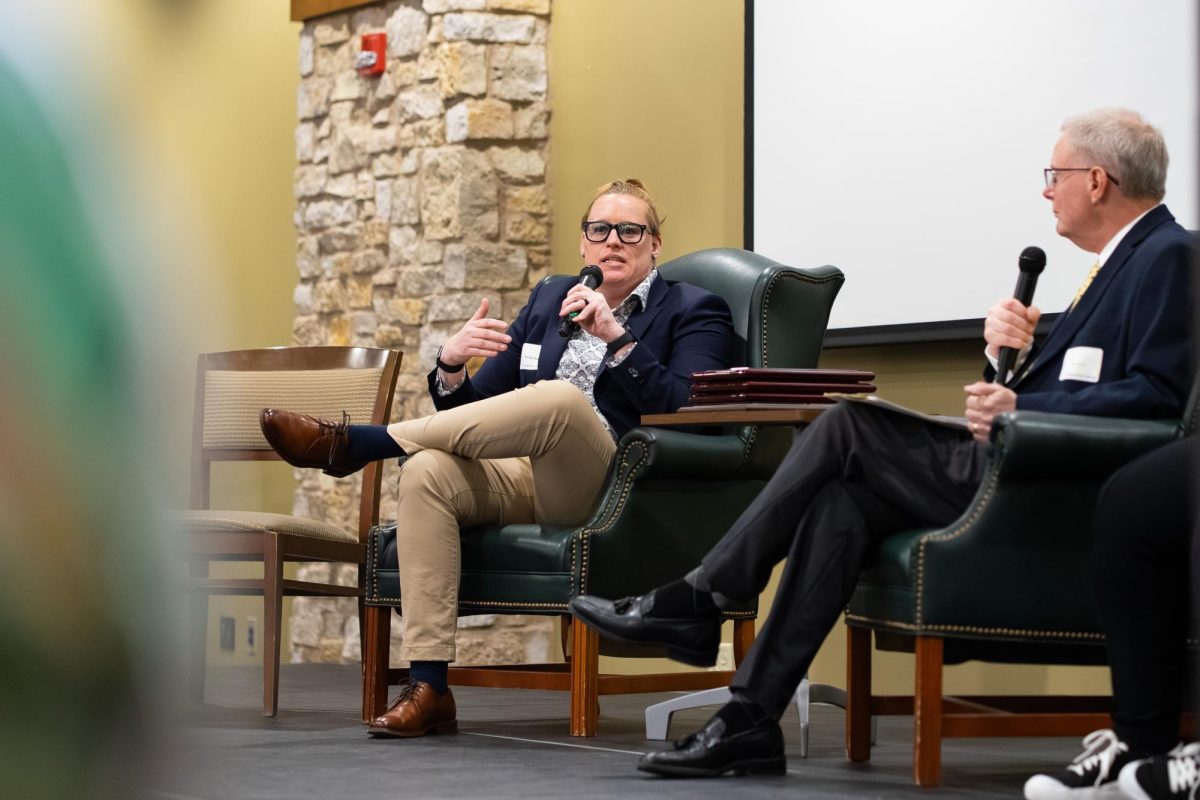






















































As new technologies emerge, Augustana strives to be part of the conversation. This effort includes a talk held by associate dean for graduate students at the Feinberg School of Medicine at Northwestern University, Gayle Woloschak. The talk discussed the ethics of artificial intelligence and gene editing.
Woloschak travels around the globe speaking to various audiences. She is a professor in the department of radiation, oncology and radiology at Northwestern, and has also worked on commissions and ethical projects for the United Nations. Woloschak is also on the metropolitan commission for the Ukrainian Orthodox church.
She spoke to Augustana students and faculty on Thursday, May 7 about what makes humans distinct from AI and how humans can properly use AI. This included recognizing AI’s flaws, such as the fact that it often reflects the biases held by society and its privacy concerns.
In terms of what makes humans distinct, Woloschak cited the development of culture, creativity, sensory experiences, language and responsibility to each other.
“We feel like we are responsible, we need to care for others … When they found skeletal remains of Neanderthals, the remains showed healed bones. What does this mean? This means that this person was not left to die,” Woloschak said.
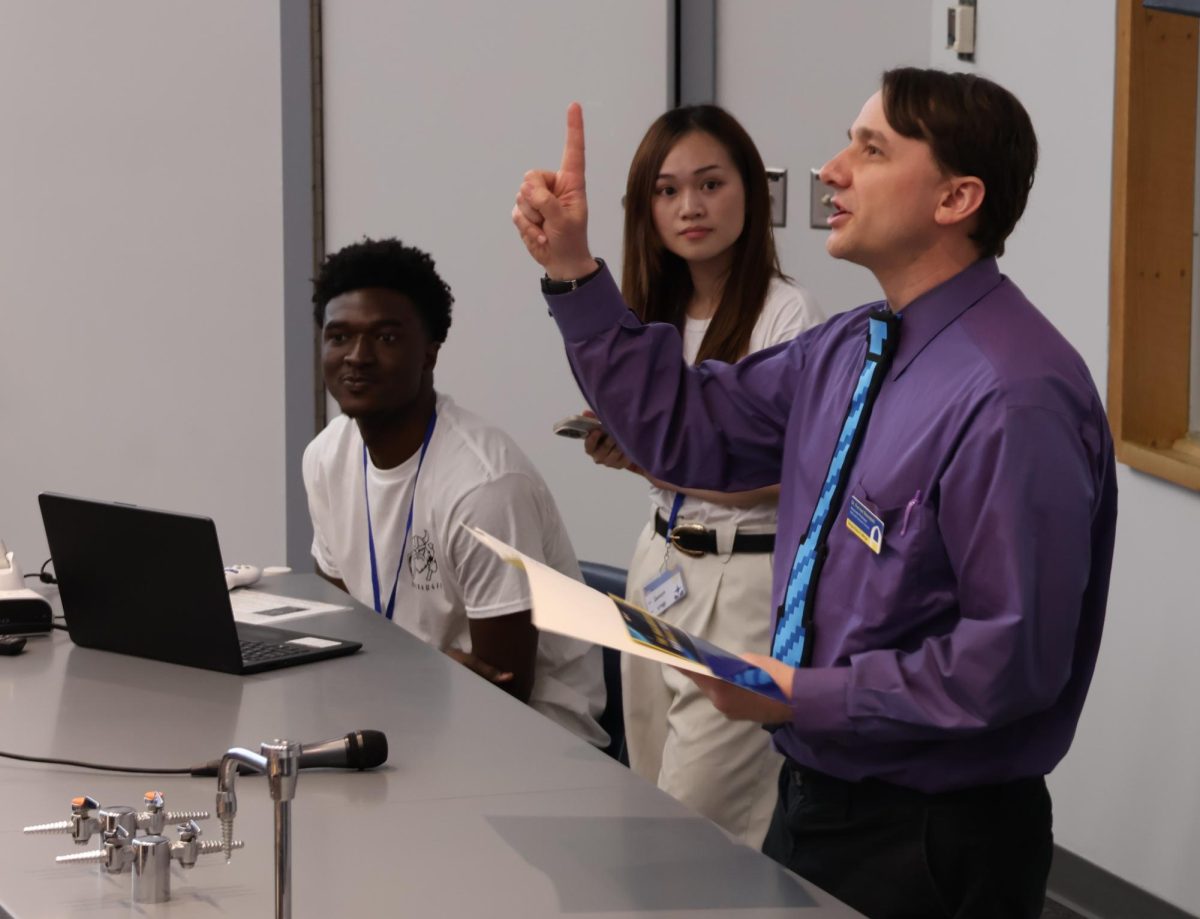
Dan Lee, professor of religion, co-chair of ethics and the Marian Taft Cannon Endowed Chair in the Humanities, organized the lecture. Lee said he hopes people come away from the lecture with increased knowledge about AI and related issues.
“To encourage people to think about the appropriate uses of AI and what the limitations are. And what responsibility and commitment to human values means in terms of AI,” Lee said.
Heidi Storl, professor of philosophy, attended the talk to learn about the role of AI in medical ethics.
“Currently, the role of AI is very much at the beginning phases of the positive potential that it might have. However, I also think at this point it is something that is very easy to abuse,” Storl said.
Storl emphasized concerns around plagiarism and humans’ tendency to take the easy way out. She said AI is currently the easiest way out.
At the lecture, time did not permit for genetic editing to be discussed as much as AI was, but it was addressed as a parallel to AI as an emerging technology that we don’t yet know the full impacts of and raises questions of what it means to be human.
The lecture did not address gene editing as much as AI due to time constraints. Gene editing was used as a parallel to AI because it is another emerging technology that we do not know the full impacts of yet. It also raises questions about what it means to be human.
Genetic editing is the process of selecting specific genes and removing parts in order to get a certain result, such as removing the gene for sickle cell anemia.
“Who we are, in a way, is partially from our genetics. So I see that human uniqueness, that human identity as important, and that’s why I see them [AI and gene editing] as related,” Woloschak said.