




























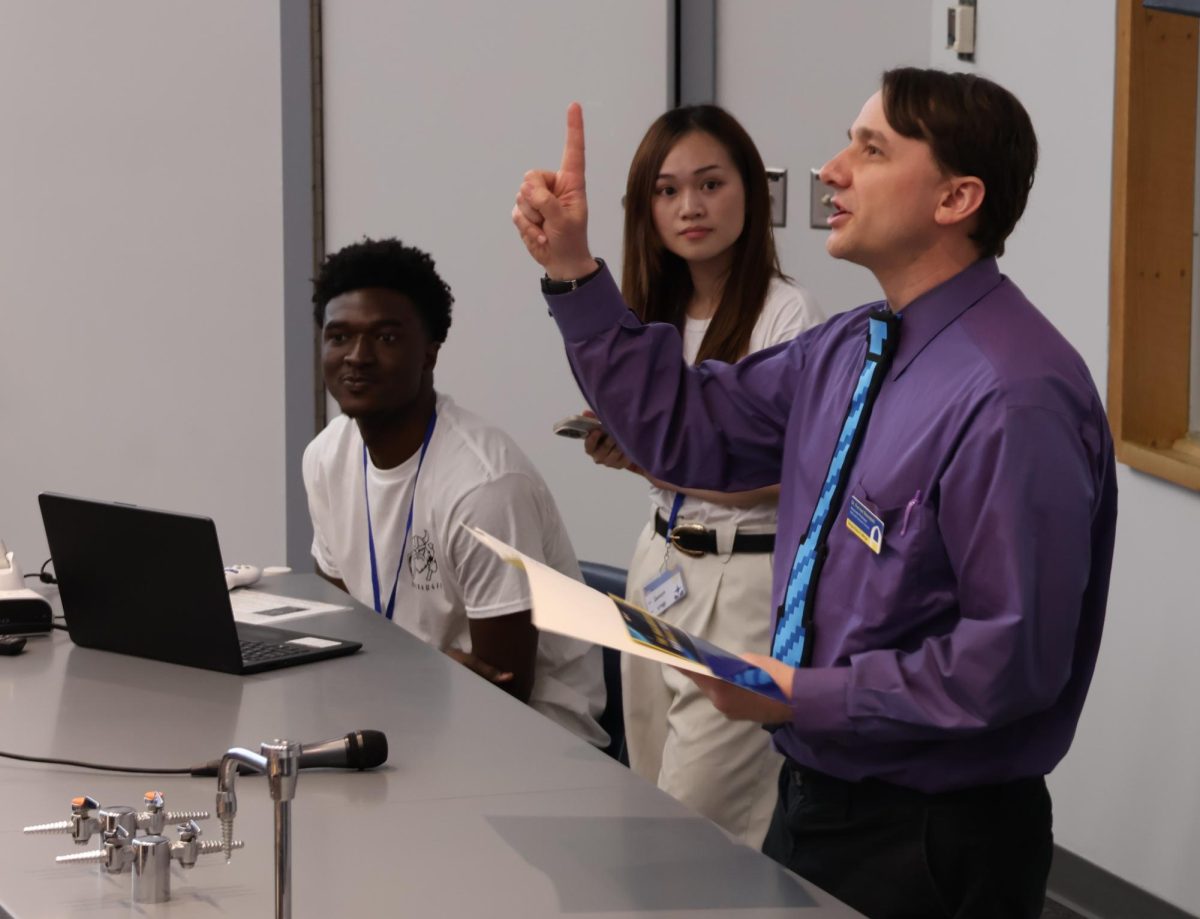
HackAugie was a 24-hour opportunity for students to compete against students from other schools, connect with potential employers and learn about fields outside their own.
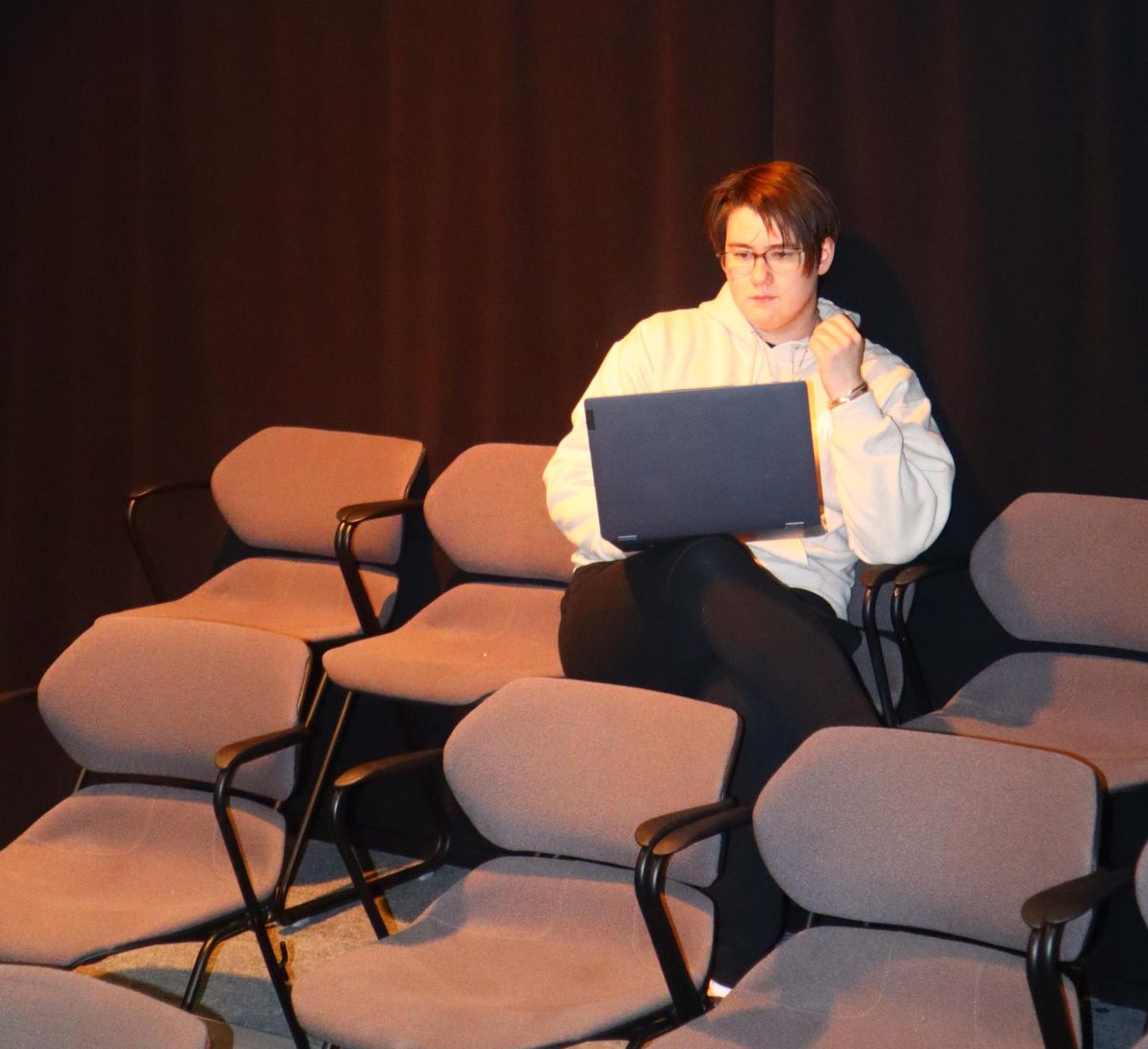
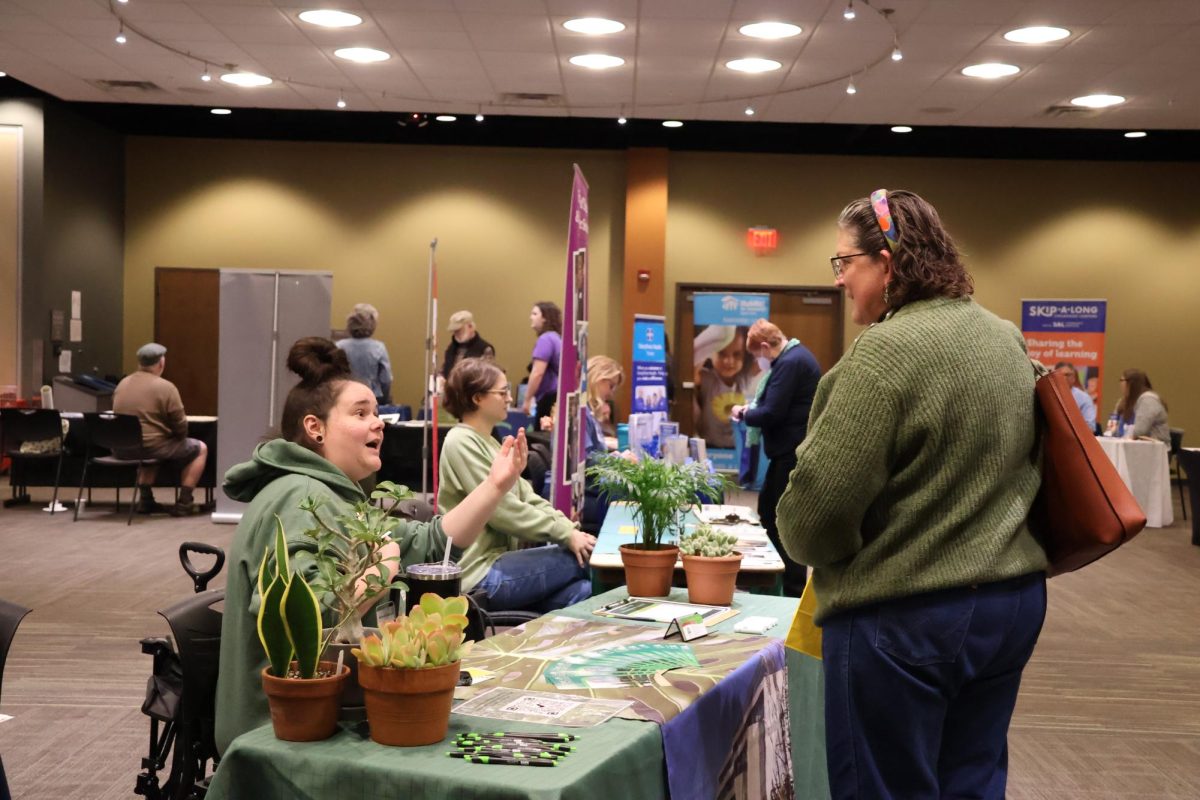
Taking place on April 18 and 19, the event included sessions to learn about topics such as AI and coding. There were also stations hosted by representatives from companies like Google for networking opportunities and a competition to hone in on one problem within a field like public health or computer science and create a solution.
These solutions were then presented to a panel of judges. Judges included employees of local technology companies. Many were also Augustana professors and alumni.
Imane Mansouri, a sophomore and the event’s vice director, had never competed in a hackathon before. Mansouri was excited for Augustana to host a hackathon because it would be a financially accessible event for students who may have never been able to compete in a similar competition.
Mansouri said that students from many different schools and majors attended HackAugie.
“We wanted [students] to come together and build something meaningful, and we’ve seen that through HackAugie. That’s one of the biggest reasons why we wanted to do this,” Mansouri said.
Quinxie Doan, a senior and founder of HackAugie, said that, in the early stages, people wondered whether the money used to host a hackathon would be better spent taking Augustana students to a hackathon hosted by another school. However, Doan saw the value in Augustana starting one of their own.
“We wanted Augustana to be the host, and by doing that, we expand the reputation and show people what Augustana is capable of,” Doan said.
She said that students who attended showed appreciation for everything from the food Augustana provided to the quality of the hackathon’s organization. The money to host was obtained from sponsors, including Augustana groups like the Office of Student Life and companies like Google.
Students in attendance were not just computer science students. Fields ranged from law, public health, sustainability, game design, business and more. Students from all these areas formed teams to create a solution for a problem within a specific field, such as a game to help law students study or an app to improve scheduling at a medical center.
The event was a huge organizational task, and the staff advisor, Forrest Stonedahl, gave all the credit to the students on the HackAugie team.
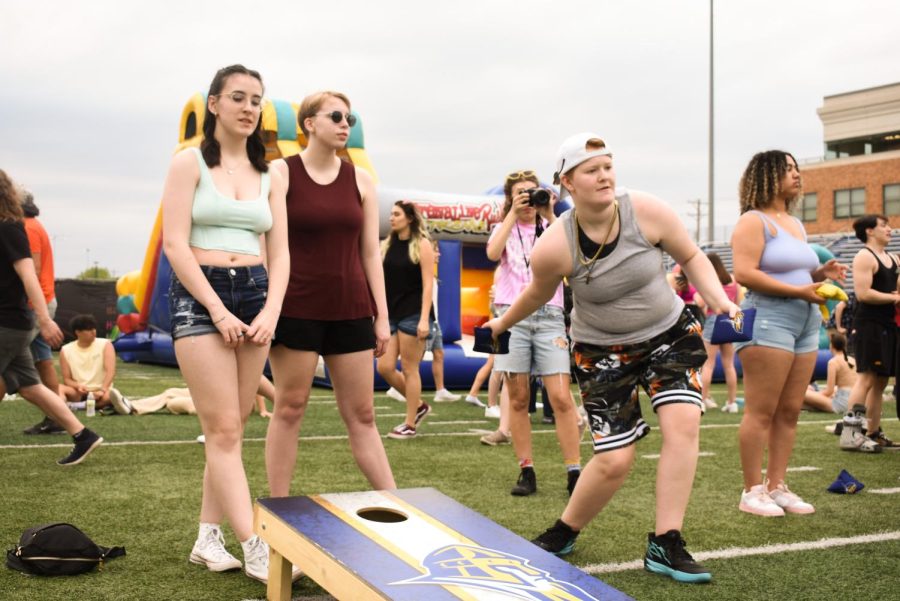
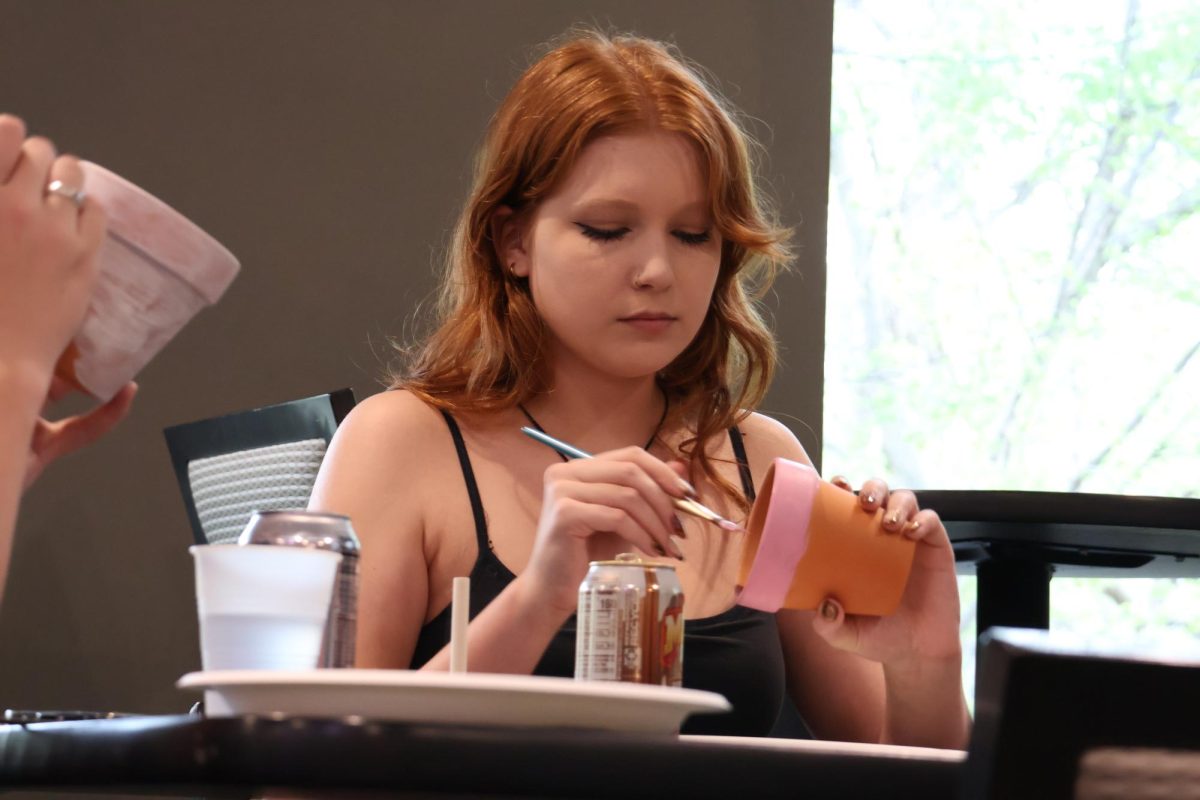
“There was all of the preparatory work – advertising, graphic design work for posters and the website, figuring out the rules, recruiting judges and mentors, finding people to host workshops, reserving rooms on campus, designing and ordering T-shirts and the list goes on. And then during the event itself, it required a dedicated team to run the welcome desk, help students form into teams, coordinate catering, make announcements, help fix problems [and] run fun stress-relief activities to give teams a break. It was a huge lift, but the HackAugie student team really rose to the occasion,” Stonedahl said.
