
































































As the spring semester comes to an end, the results of the recent housing selection scrambled students’ moods, leaving many upset that they could not view the schematics or photos of their desired dormitory. This issue sparked partly because of a lack of communication between students and the Office of Residential Life.
Currently, the Augustana College website hosts information on the housing process for all incoming and rising students to plan their living situations for their upcoming year. Within the website, you can see categorized housing types for each level of student, many of which include images and schematics of what the housing will look like.
However, not all the housing options have their pictures and schematics updated. For example, the Esbjörn House Transitional Living Area has schematics but no available pictures of what the interior of a room, or even the building, looks like.
According to the director of residential life, Chris Beyer, the lack of photography for these buildings is a temporary issue. Beyer explained that photographing the residential building is easier said than done, since he has a small amount of time to photograph the interiors; even when the team photographing the buildings was the whole residential life team and a hired student.
“Students leave their buildings by the end of May. Spaces that are not used for summer housing at all are low on the priority list, so sometimes the houses do not get cleaned until July or early August. The period of time for photography is a very short window,” Beyer said. “I would challenge you to find another college that has as many pictures and floor plans of all of its buildings. Considering we have five residence halls, 12 apartment buildings and 55 houses.”
The hardest part of communicating these issues to students is the uncertainty of whether Beyer and his team will even be able to go out and photograph the different spaces. For students, all they really need is to see what their future living options might look like so they can plan accordingly.
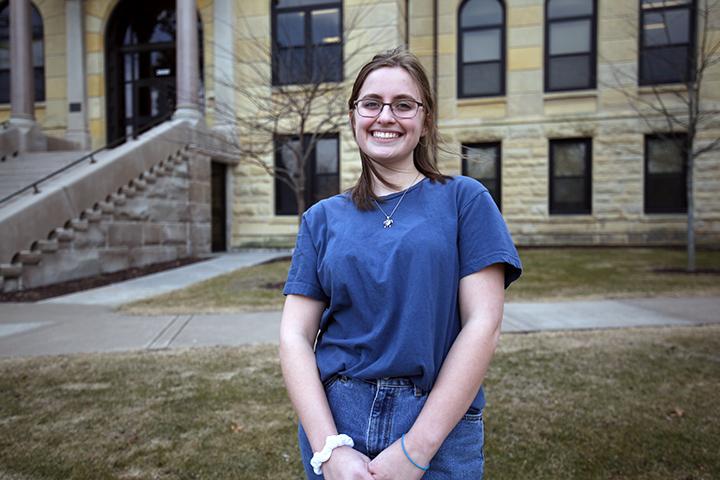
The reason this issue is worthy of debate is because students like First-Year Dimitry Bilancz, who have accommodation needs, require knowledge of their future living space.
“This year, I was interviewed to live in a single room with special accommodations due to PTSD. With my accommodations, I wanted to find a specific quad with enough space for me to feel comfortable,” Bilancz said. “During my selection process, not all the photos were available. In my opinion, having pictures of all the spaces is just like moving into a space in the real world. With it all being a lottery, if someone needs to back out, the options are usually gone by the time they realize.”
Even though the process of acquiring the photographs is difficult, it still causes several issues for students, just like Bilancz. Together, students and the Office of Residential Life need to improve their stream of communication to alleviate issues surrounding housing.
As a result, the residential life team can work together with the student body, and even potential student hires, to move dorm photography up the priority list.