
































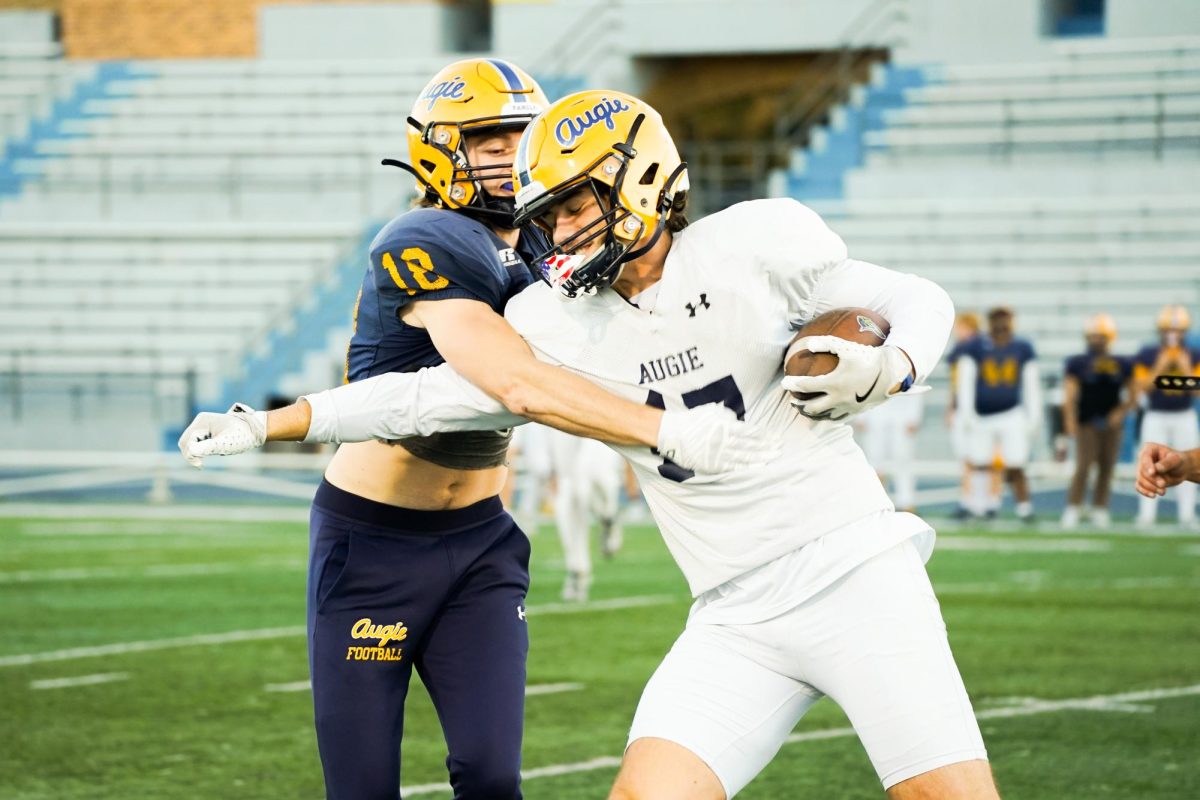
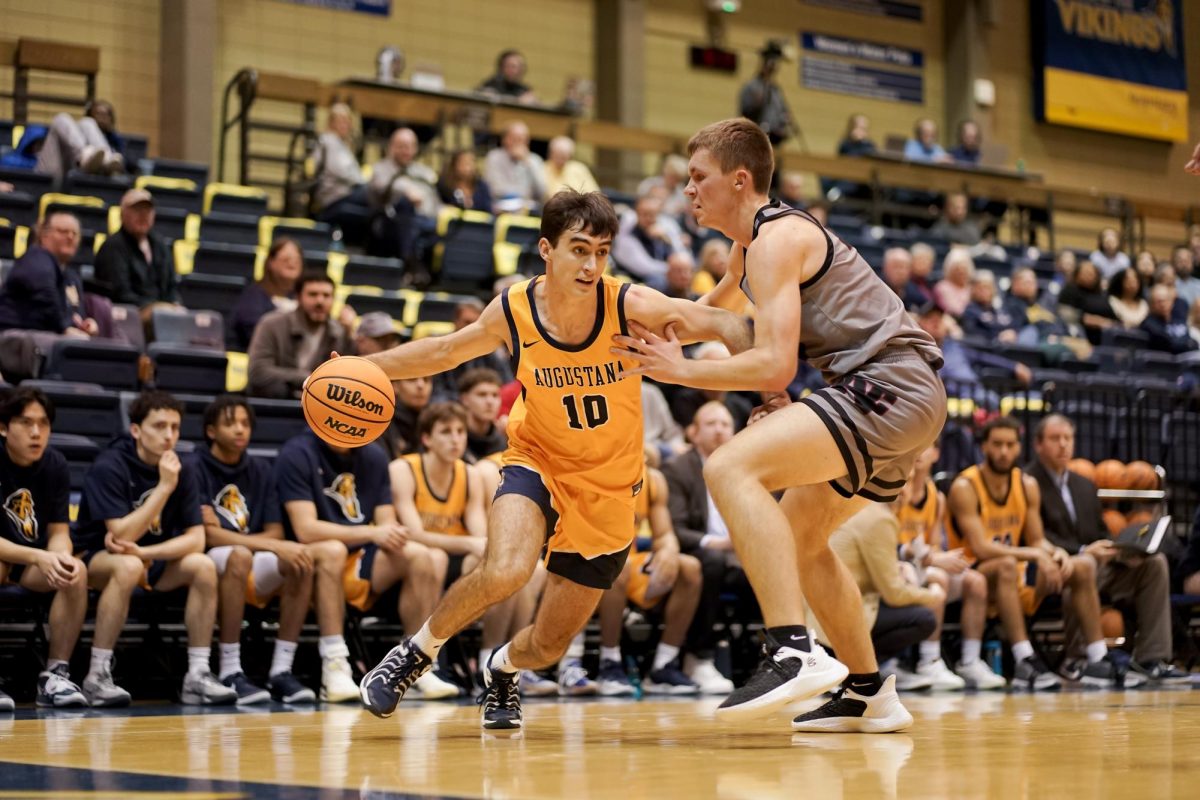
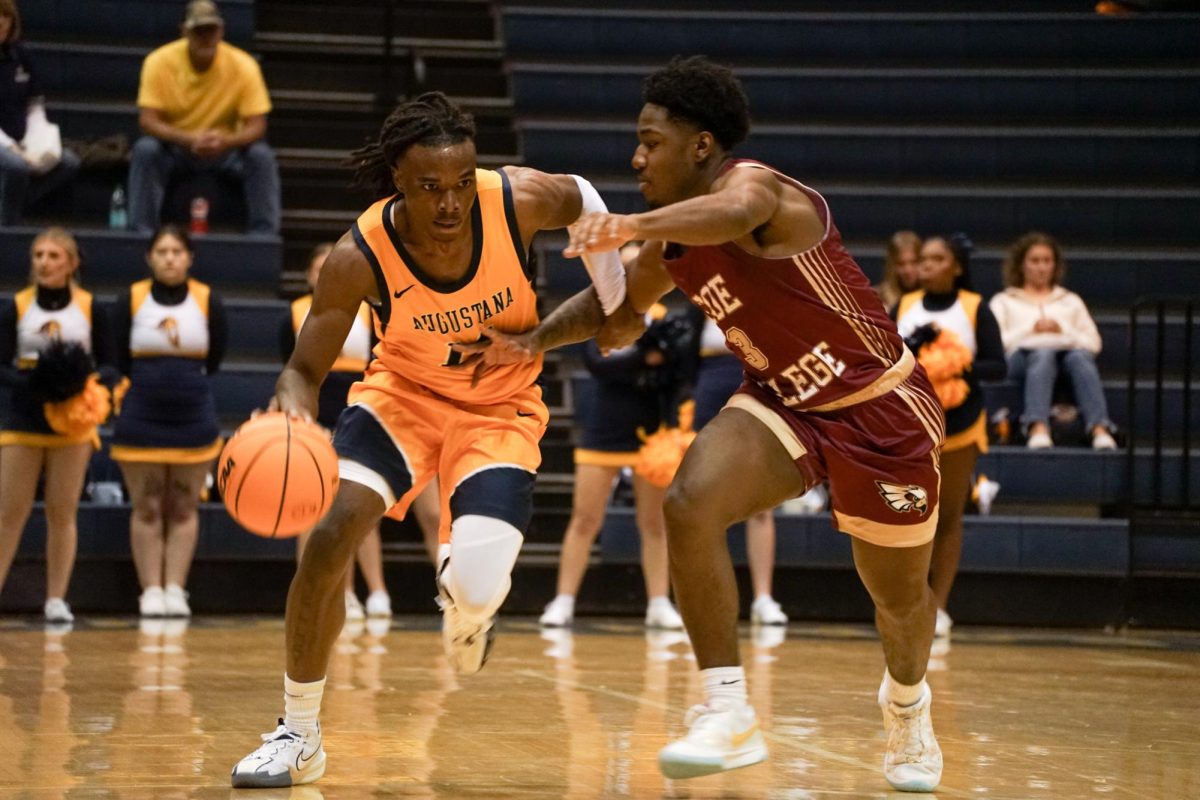




























True to its original form, the Augustana College Athletic Hall of Fame has an interesting history. Whether through its creation or its dormancy, the honor stands today as a beacon of athletic achievement for Augustana’s storied and proud athletic programs.
Named the “Tribe of Vikings,” the hall was created in 1977 by former Athletic Director Vince Lundeen to honor past athletes and celebrate athletic accomplishments at Augustana. Former Sports Information Director (SID) Dave Wrath was a student-athlete here at Augustana from 1976 to 1980 and saw firsthand the creation of the hall.
“Vince [Lundeen] had an idea that he wanted to honor Augustana athletics, but he had a vision, and his vision was to not just open it up and start inducting athletes,” Wrath said. “He knew that if he did that in 1977, some of the earlier student athletes would get left out because their honors would be different. We weren’t in a conference and didn’t play a lot of games, so in his wisdom, which was brilliant, he broke it up into a ten-year section.”
Between 1977 and 1982, there were six induction classes, with the first class being for athletes who competed for the Vikings between 1860 and 1919, the second from 1920 to 1929, the third from 1930 to 1939, the fourth from 1940 to 1949, the fifth from 1950 to 1959 and the sixth from 1960 to 1964, split up because of the total success by athletes during that time.
However, after Lundeen retired in 1982, the Hall went dormant, and there were no inductions for 20 years.
The hall would return in 2002, thanks to the help of then-Athletic Directors Greg Wallace and Liesl Fowler, who approached Wrath with the idea of reviving it. When Wrath agreed, the two immediately placed him in charge. The “Tribe of Vikings” was back after a name change and has continued to this day, except for the cancellation of the 2020 and 2021 ceremonies due to COVID-19.
Though Wrath retired as SID in 2021, he is still leading the selections. While Wrath might have felt a bit of pressure for having to restart it, he and the nine members of the voting committee ensured that no deserving athlete would be left behind and no undeserving athlete would get in.
“I felt pressure every day because I didn’t want to ever screw up,” Wrath said. “There’s a legacy there, and you want to honor that legacy. There are nine people on the committee, and we sometimes will have some spirited arguments, but I can honestly say we’ve never inducted anybody who isn’t worthy, and we’ve got plenty of people out there who are worthy, and that’s what some of the arguments around this table are about.”
The induction class of 2010 was the first class not to be organized by specific years, but instead, it was open to anyone who had graduated at least 10 years prior and had not previously been chosen. Some of the notable inductions since its reinstatement have been the National Champion winning 1983 football team in 2008, the National Champion winning 1984 football team in 2009, the current head baseball coach, Greg Wallace, in 2010, and the current swimming and diving head coach, Ramsey Vens, in 2026.
While having an athletic hall of fame might seem common now, it was not always that way. The reasons for having one might not be clear to a non-athlete, but according to current Augustana Athletic Director Mike Zapolski, it made sense at the time Lundeen created it.
“This is something that kind of came in vogue in the 70s and 80s, and as time has gone on, more and more schools have done it,” Zapolski said. “With the school’s athletic history dating back more than a century, it’s just a way to kind of put a spotlight on those student athletes, coaches and the other contributors that have really made their mark and kind of separated themselves from the group.”
While still a year away, the nomination process for the induction class of 2027 has already begun. Originally starting with a list of over 400 athletes and their accomplishments, each voting process eliminates half of the people on the list, with one of the current lists being shortened from 272 to 136 athletes, all the way down until they have between five and nine athletes, with roughly an even split between male and female inductees.
