










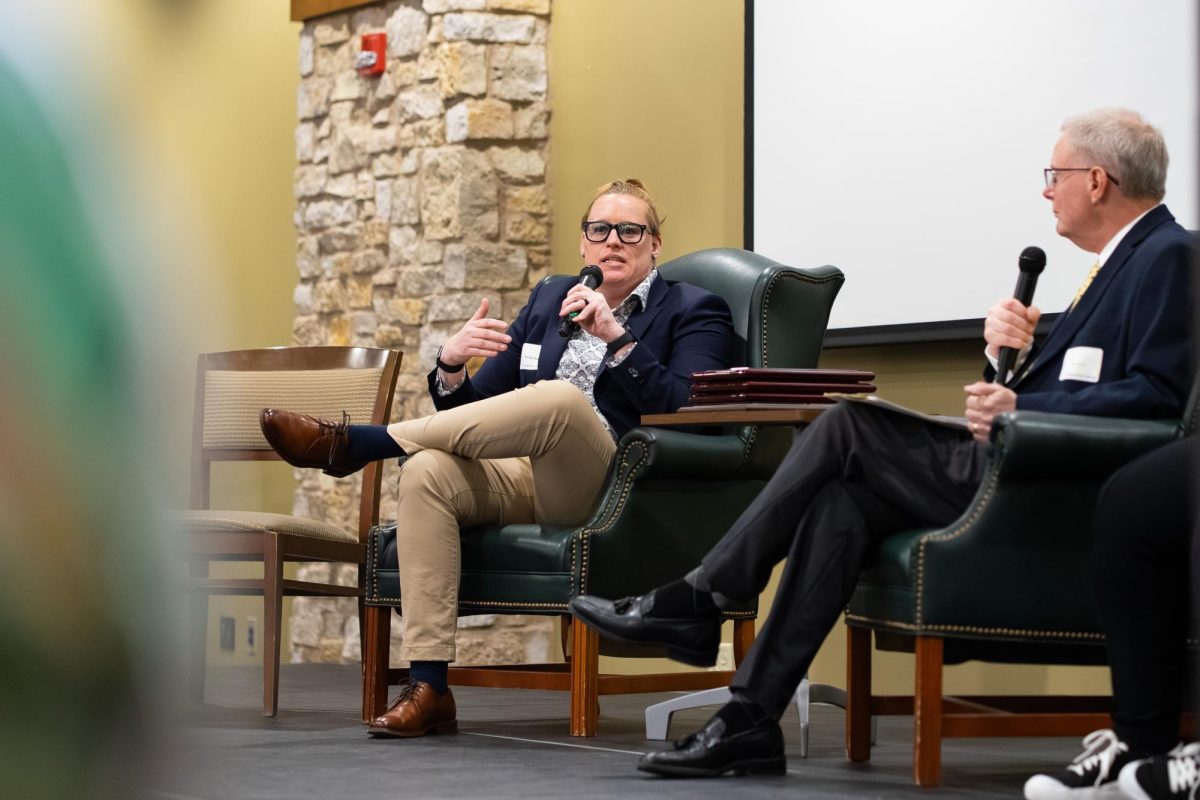


















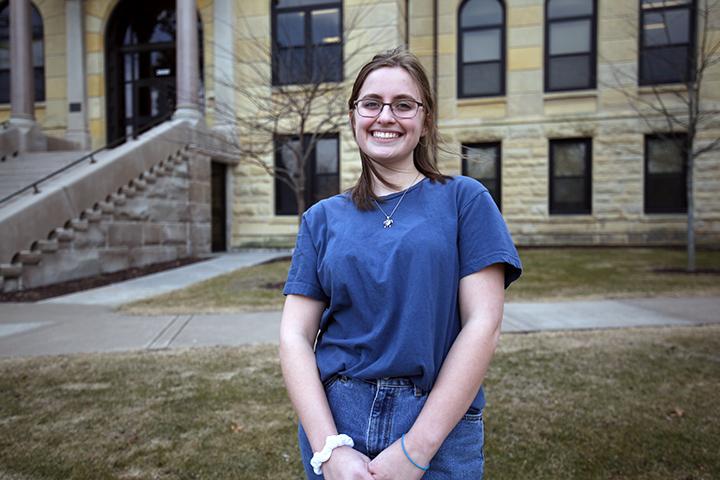








On April 1, Amanda Wilmsmeyer, associate professor of chemistry and biochemistry, was awarded the Robert W. Beart Chair in Chemistry by the college’s provost, Diana Shandy, recognizing her dedication to student research and the department of chemistry at Augustana College.
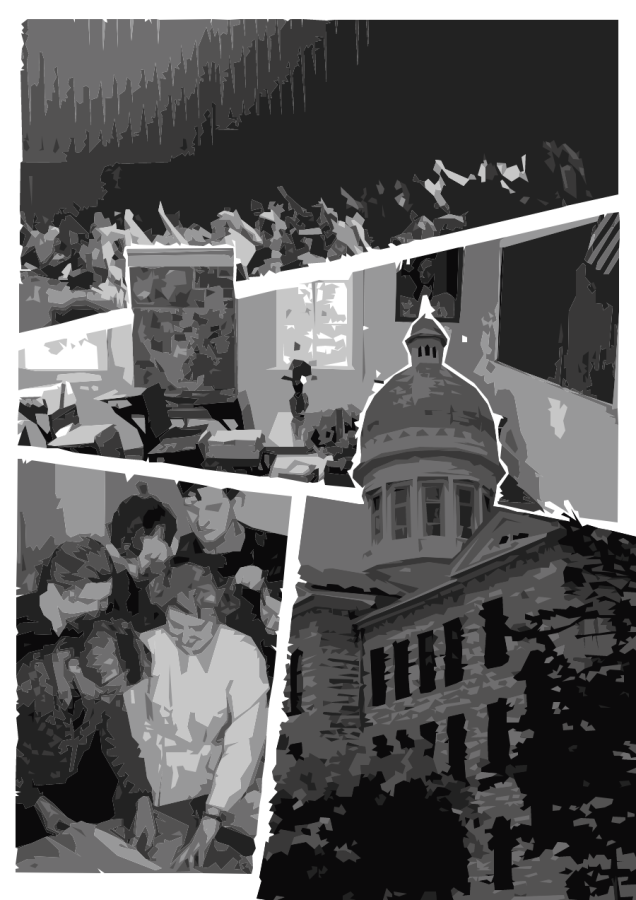
In 1938, Robert W. Beart graduated from Augustana College with a Bachelor’s in chemistry. To honor his legacy and advance Augustana’s research in chemistry, his family established the Beart Endowed Chair, which allocates funding for student research in the chemistry department.
Beart was known as a scientist who incorporated an artistic approach and found creative solutions to scientific problems. During his career, he earned patents and served as an example for how to incorporate creativity into the field of chemistry.
“[Beart’s] approach to science and building new things that the world has never seen is super inspiring,” Wilmsmeyer said. “It ties really well to the liberal arts, as far as being creative, not just doing math and science, but building inspiration from other things you see in life.”
As a scientist, being able to step outside of a lab and see solutions to problems in a place you wouldn’t expect to find them is an important skill for a researcher to have. Wilmsmeyer works with chemistry students to build these skills and foster an environment of creative thinking when faced with unexpected problems during experiments.
Initially obtaining her role at the beginning of the academic year, part of the reason why Wilmsmeyer was selected for the endowed chair position by Dr. Pamela Trotter is because she was able to build a reputation with the college for supporting students through their research.
The position reflects Wilmsmeyer’s personal achievements and her ability to support students by allocating funding for research projects occurring in the chemistry department.
“I don’t love being in the research lab by myself, that’s not what’s fun to me,” Wilmsmeyer said. “The fun thing is teaching students how to do [the research] and having the students be involved.”
Wilmsmeyer said that being entrusted to this role was unexpected. Trotter, the academic advisor for the chemistry department, previously held the chair and approached Wilmsmeyer about taking over the position in the summer of 2025.
Wilmsmeyer’s colleague, Patrick Crawford, professor and department chair of chemistry and biochemistry, said that he thinks Wilmsmeyer reflects the honor of the endowment, having seen the impact her work has on students and the department.
“[Wilmsmeyer] is really good about taking very complicated ideas and breaking them down to a simple level that I feel like general audiences can understand,” Crawford said. “That is just an amazing trait to have, but [also] extends to the research that she does.”
The position’s honor does not go unnoticed by Wilmsmeyer. As a professor who works closely with students, she has developed a strong connection with members of the chemistry department.
Shandy said the legacy of Robert W. Beart and the award align with Augustana’s values of fostering critical thinking opportunities and challenging students to think outside the box, just as Beart’s legacy provides.
“[This position] stands as a testament to the lasting impact of Augustana alumni and to the importance of investing in faculty excellence,” Shandy said.
Being a strong leader and supporting the chemistry department with knowledge and passion are important aspects of being chosen for the Beart Chair, Shandy said.
Any student who has taken a chemistry class and wants to work with a professor who also works on similar research can reap the benefits of the Beart Chair’s research fund. Wilmsmeyer said that student research is what faculty members should focus on, and that the Beart Chair supports that focus.
“Having faculty support students is what we’re all here for,” Wilmsmeyer said. “The students are the reason we have jobs; the Beart Chair position lets us continue supporting students by paying for their projects.”
For Augustana faculty, excellence means being a professor who supports Augustana’s values, such as building a strong community.
Having role models to look up to can be important for student success. As a woman, Wilmsmeyer is contributing to the representation of females in a male-dominated field.
Despite chemistry being a male-dominated field, Wilmsmeyer grew up with nearly all female chemistry teachers throughout middle and high school and college. She attributes this to being a big reason why she naturally gravitated towards the sciences growing up, but says she never felt it was unusual for a woman to be a scientist.
However, for some women, this isn’t everyone’s experience.
Data show that female leadership in chemistry declines significantly as positions of authority become more important. There continues to be female leadership in the chemistry field, but it remains dominated by men.
For those women who feel misrepresented, that sense of representation can bring hope.
“[There are] fewer female faculty in chemistry nationally, and so I think it helps students imagine themselves, and so I think it helps students imagine themselves along buried career paths when they can see themselves represented,” Shandy said.
As a woman, being able to have a woman leading you can impact your experience in any field, but especially in a field typically dominated by male leaders.
From a male perspective, Crawford sees the value of women’s representation in STEM and believes that having a woman in strong leadership is important in the world of chemical sciences.
“Having women like Dr. Wilmsmeyer share what they do is great for women in science,” Crawford said. “Seeing what people can do, even at a place that’s small like Augustana, and be successful [has a big impact].”
Wilmsmeyer hopes to be a positive influence on her students’ research and futures. She said she hopes to leave an impact on students and wants to challenge them in their learning.
She said the position affirms her work in both her career and teaching and that she is humbled by the recognition.
“I would like to inspire students to know that they can do hard things and that most problems worth solving should challenge you and push yourself outside of your comfort zone,” Wilmsmeyer said. “If it [were] super easy, it would have been done before.”