

















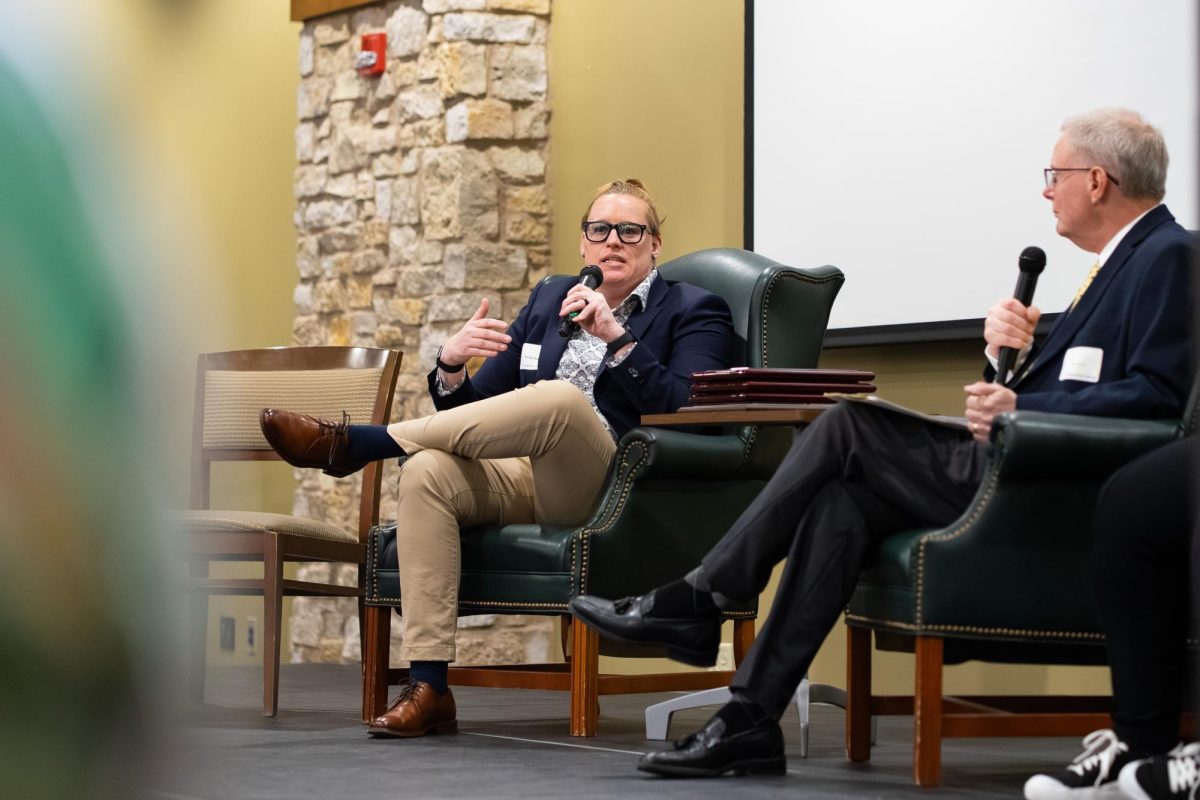

































In the fall of 2025, Augustana College conducted the Higher Education Data Sharing Consortium (HEDS) Sense of Community Survey. The results were presented to students, staff and faculty on April 23, in the Olin Auditorium.
HEDS is an organization that colleges use to assess the quality of programs and find the strengths and weaknesses of the campus climate, according to the HEDS website.
A total of 372 students, about 15% of the undergraduate population, completed the survey. The HEDS survey is not a satisfaction poll; it focuses on the sense of community among students, faculty and staff, as well as the factors that contribute to that feeling.
Gauri A. Pitale, vice president for culture and connection, said that this survey goes out every three years and is designed to track changes in belonging and campus culture over time.
The results were categorized into several sections and further divided by grade level. The study showed a significant decline in satisfaction among sophomore students in comparison to First-Year students.
Pitale said this is typical after year one, but said the declining pattern stood out and shows a need for better support during the transition from students’ first to second year.
“Sophomores will sort of have this sort of downward swing after the first year, when the shine sort of wears off, and the reality of college and everything comes up,” Pitale said. “But the sharpness of those numbers gives me pause.”
She said the data suggests the transition from First-Year to sophomore year might be a little more difficult than expected. In response, Augustana is planning to expand existing programs that help students build community. One of those is the Preparation, Awareness, Community, Engagement (PACE) program, which currently helps incoming students make connections early in their college experience.
Tyler Kinney, the international student advisor and program coordinator, said that the transition for both domestic and international students after their first year can leave some feeling unsupported.
“After their freshman year … [students are] encouraged to figure things out on their own, and I can see how that would lead to feelings of abandonment,” Kinney said.
Kinney said he thinks programs like PACE should have a greater presence for students from sophomore to senior year and regularly check in on their experiences.
Sophomore Sky Johnston said they can understand why there would be a decline in feeling welcome and supported after their first year.
“I would definitely attribute a lot of it to the first year excitement and then concerns after college,” Johnston said.
Johnston said that after their first year, the reality of expectations and responsibilities sets in, and you begin to worry about the years to come. They said that feeling welcome can be difficult with the changes and increased responsibilities that come after a student’s first year.
“[Administrators] might take the overall survey results seriously,” Johnston said. “But I don’t know if they’re actually going to get to the root causes of issues.”