











































Do the most hateful people you know post the most facetious appeals you’ve ever seen?
We might feel like we see inflammatory “activism” posts a lot, but that may be because they are all we expose ourselves to.
What might people mean by ‘performative activism’? Well, usually they might mean someone trying to make themselves look like an activist, without really doing anything. It is especially meant towards those who do it but don’t really agree with it–purely for looks. They may even mean those who do it simply to fit in, instead of believing in it.
The question is, what counts as doing something?
When it comes to influence, messaging and movements, unity is incredibly important. You might have heard of the 3.5% “rule”, described by Harvard professor of political science Erika Chenowith as the pattern that movements with 3.5% of population support become quite hard to ignore, and in most cases, are successful. Imagine how much more impact is possible now, thanks to social media, with the same percentage of support.
Of course, change doesn’t only happen on social media. That is where everyone is, and it is a way to share ideas with friends and family that they might not hear otherwise. When taken as an opportunistic first step, sharing online is an important way to invite others to your cause.
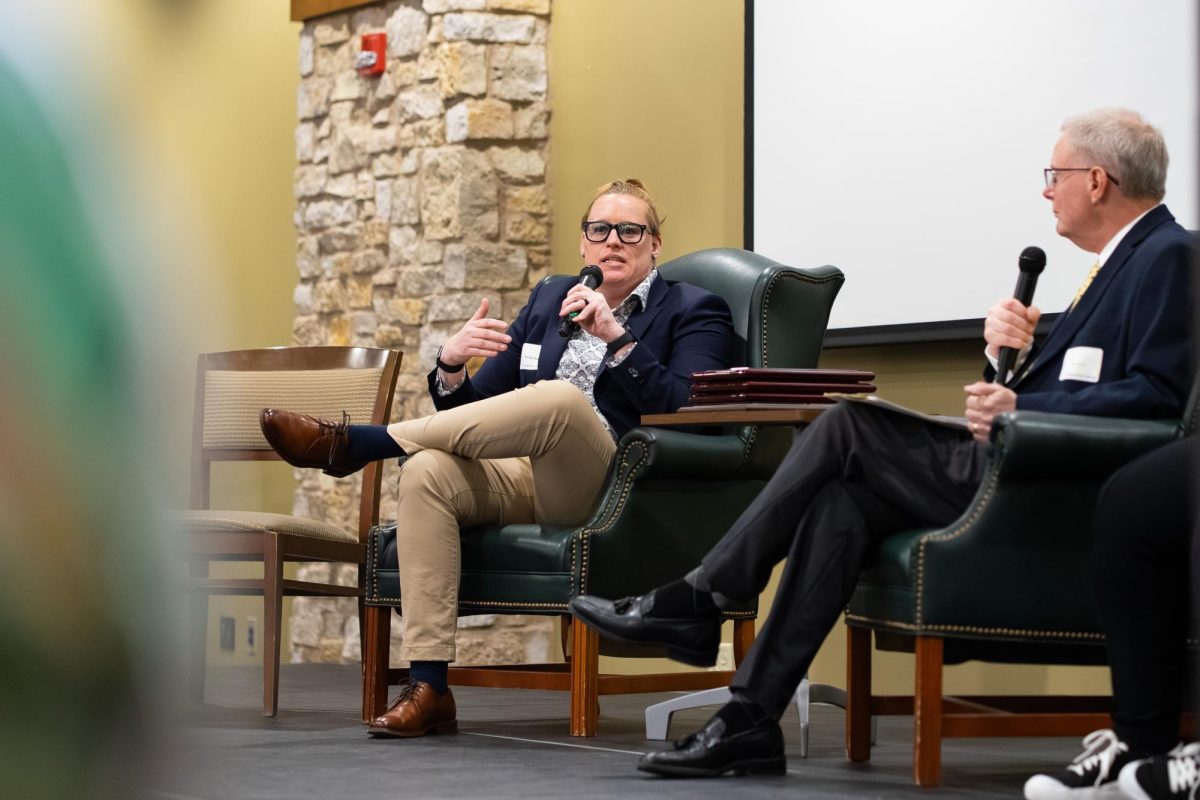
“While I would love for everyone to make giant leaps and bounds towards a more sustainable lifestyle, ultimately, if your way of getting better or thinking more sustainably or being more aware of your environment, is to post about Earth Day, 1,000% post about Earth Day,” Angie Truelson, vice president of Sierra Club, said. “The ‘performance’ side. I kind of hesitate to call it that, though, because it is just communication. It’s just mass communication.”
Communication is key when it comes to influencing people, especially the swing voters and moderates. Although it may be easy to forget it, most Americans are not extremists, only the loudest of us.
Research by Brooke Auxier and Colleen McClain at Pew Research Center found that a majority of both parties agree that social media is effective at raising awareness.
Most of those surveyed leaned towards one side but did not fully identify with it. Agreeing Republicans who only leaned that way made up 51% of the 74% surveyed, and 47% of 86% of agreeing Democrats were leaning.
This means those who are not identifying with a party, or most of us, are evaluating movements and what we see of them. Imagine if we only saw what the news covered, especially biased news. Maybe that can help us see the importance of access to other ideas.
“Ultimately, [posting on social media is] not really activism, but at least it’s communication, and spreading awareness. And awareness is the first step to actually doing something, or accomplishing something; but I do have a good network of people that will send me specific events, and keep me in the know about things,” Truelson said.
Research by West Virginia University instructor Arienna McLanahan shows that the “performative” activists need to remember or be able to have humane, listening-focused conversations with people whose lived experiences they want to speak for.
“I think there’s issues that arise when your behavior does not match the things that you are putting out on social media. I think that’s an issue,” Truelson said.
Instagram played a large part in the 2020 Black Lives Matter movement. Research from the National Library of Medicine found that the thought leaders rising at the time were those with primarily Black audiences or who focused on Black culture, not the more commonly leading institutions like the news or government.
So, reposting independent thought, at a time of protest – that’s performative? Maybe if you don’t agree with it, maybe if it’s all you do, but universally? It doesn’t seem so.
Next time you get annoyed by a friend’s post, or think it is all they ever do, maybe ask, instead of judging. Maybe they too want to get involved, and are waiting to find a way to. Many of our professors would simply call that the liberal arts experience of learning and growing from other perspectives.


