




























































The latest film from writer-director Kristoffer Borgli, “The Drama,” was released in theatres on April 3, with much anticipation built almost entirely around a single question found in the trailer: What could Zendaya’s character possibly say, just days before her wedding, that would cause such, well … drama?
The premise feels almost gimmicky on its surface, but Borgli uses it as a gateway into a striking study of how contemporary culture engages with morality depending on who is involved.
The film follows Emma (Zendaya) and Charlie (Robert Pattinson), a seemingly perfect couple preparing for marriage. During a pre-wedding dinner with friends, a casual game prompts Emma to reveal a past action so unsettling that it sends Charlie into a manic state, reconsidering marriage altogether.
From that moment on, the film’s tone shifts as it explores how that information is refracted through the people around them, and how quickly a person can be reduced to a single, socially charged idea.
Borgli’s provocation is loud, even formally playful at times, but the film’s most compelling work happens in its interior. What matters is not necessarily what Emma did, but how what she did is received. The film explores who is allowed nuance and who is denied it as perception shifts in relation to identity. The casting is essential here.
Zendaya’s presence as a Black American woman and Pattinson’s as a white British outsider fundamentally shape the film’s tension. Charlie’s unraveling feels tied not only to the act itself, but to the cultural frameworks through which he is processing it. In many ways, he functions as both participant and observer, struggling to reconcile intimacy with the noise of external judgment.
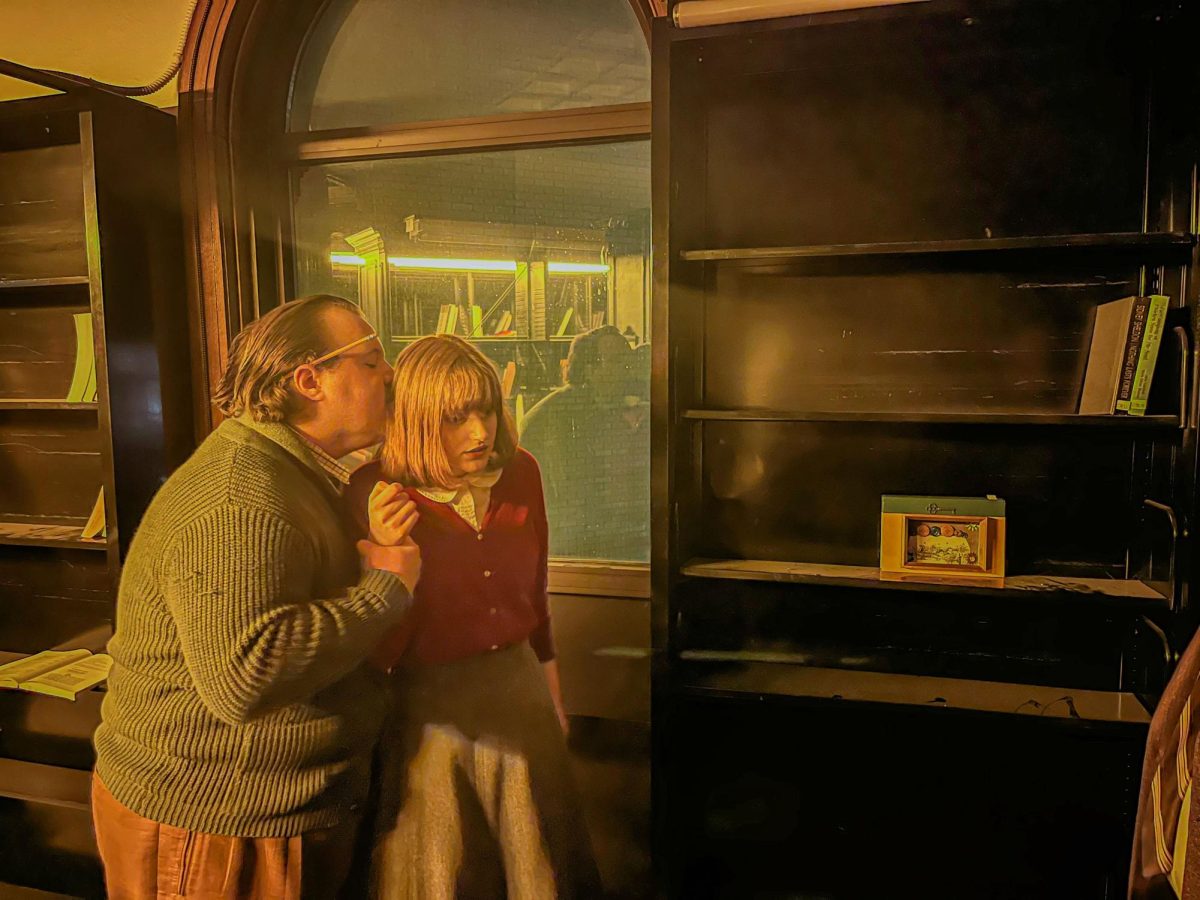
Visually, the film reinforces this instability. Its shadowy cinematography withholds information as deliberately as the script does, creating a sense that we are never seeing the full picture. The editing, jagged and anxiety-inducing, mirrors Charlie’s mental state – though it occasionally disrupts the rhythm of scenes, undercutting the performances it’s meant to heighten.
Those performances, however, remain the film’s strongest asset. Zendaya, while not giving her strongest performance, is quietly devastating, playing Emma with a guarded vulnerability. Pattinson is even stronger – deeply compelling as an erratic man grappling with a new reality.
But it is Alana Haim who delivers the film’s most memorable turn in a supporting role as Rachel, Emma’s maid of honor. She is an infuriatingly obnoxious, hyper-opinionated presence whose reactions amplify the film’s central anxiety. She embodies the most judgmental, difficult-to-be-around person that everyone has met.
At times, “The Drama” feels like it risks being defined too heavily by its central conceit. Its provocation can outpace its depth, and certain threads feel more like extensions of the idea than fully realized explorations. But even in those moments, the film remains engaging because of how vividly it captures a specific cultural discomfort.
Borgli, as a Norwegian outsider to American culture himself, is far more interested in asking questions than offering answers. A sharp, unsettling and darkly funny social provocation that doesn’t always cohere, but will stay with audiences in all the right ways. 8/10.