


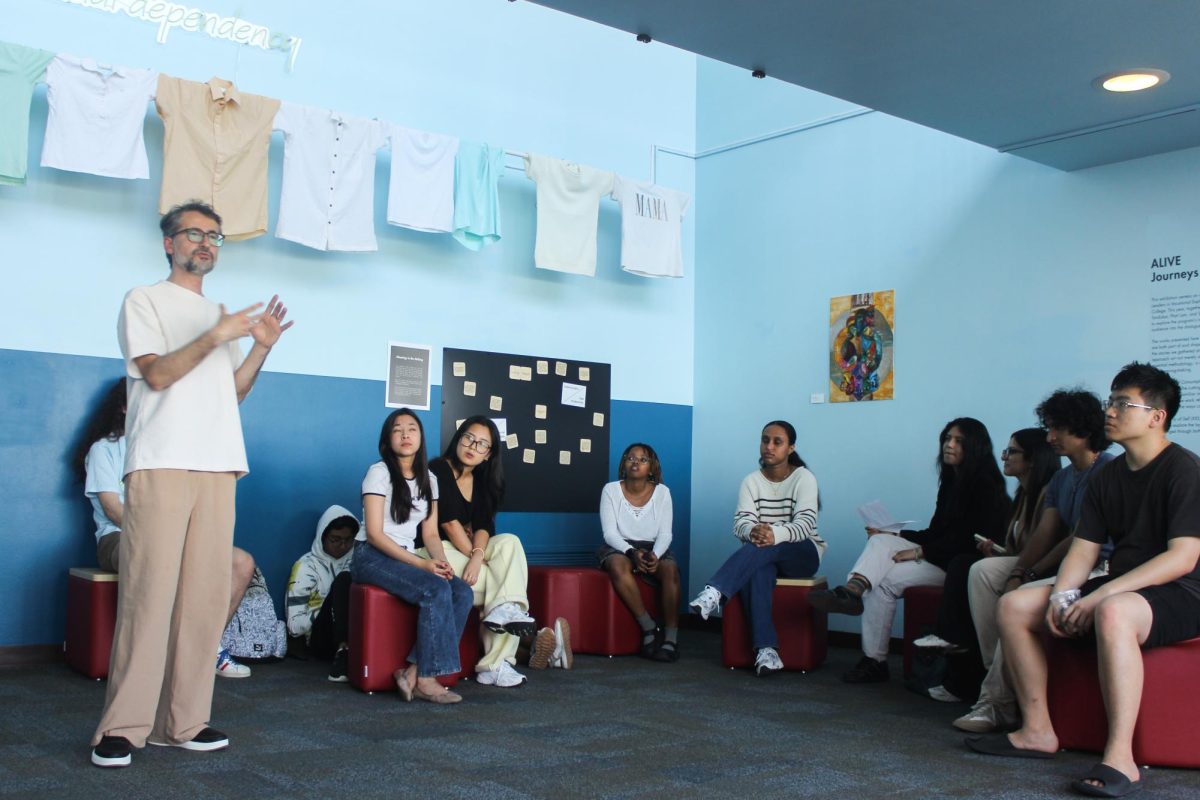
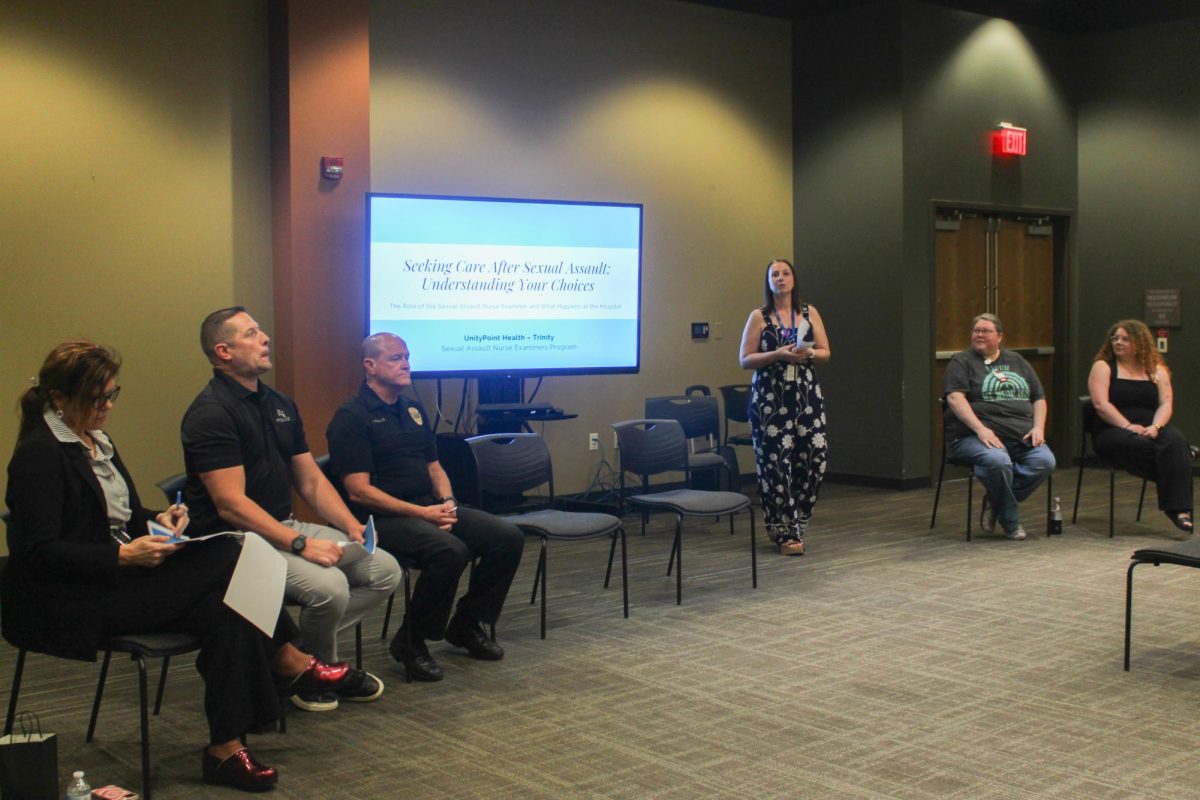















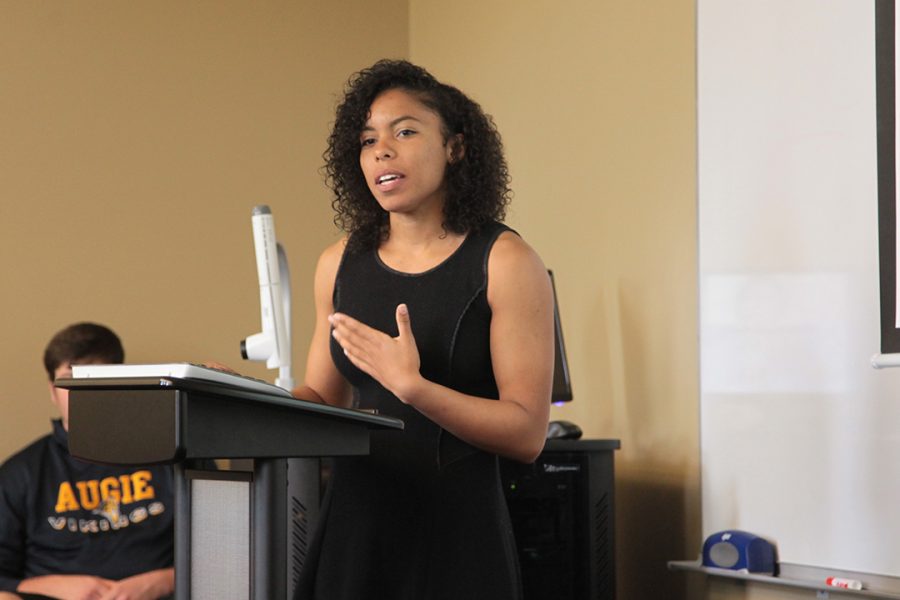

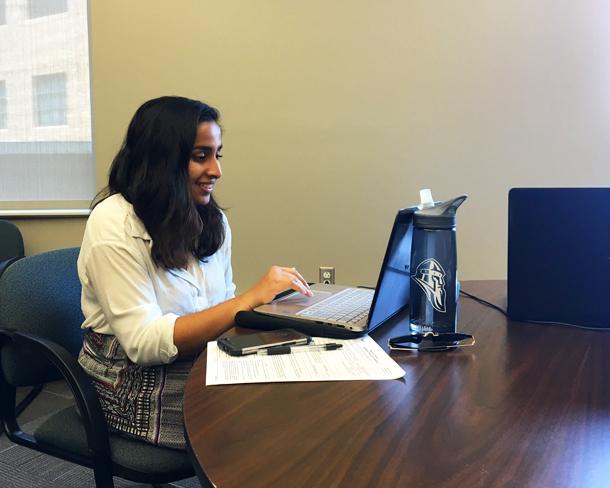

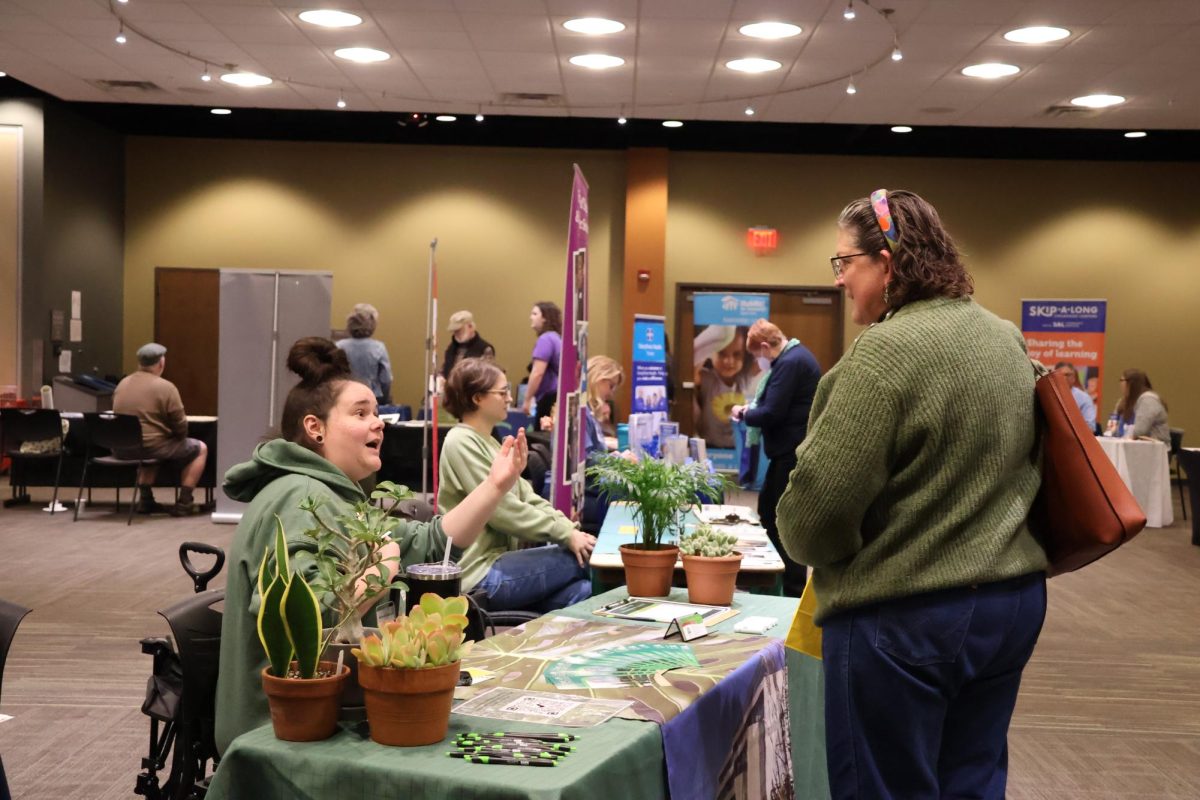




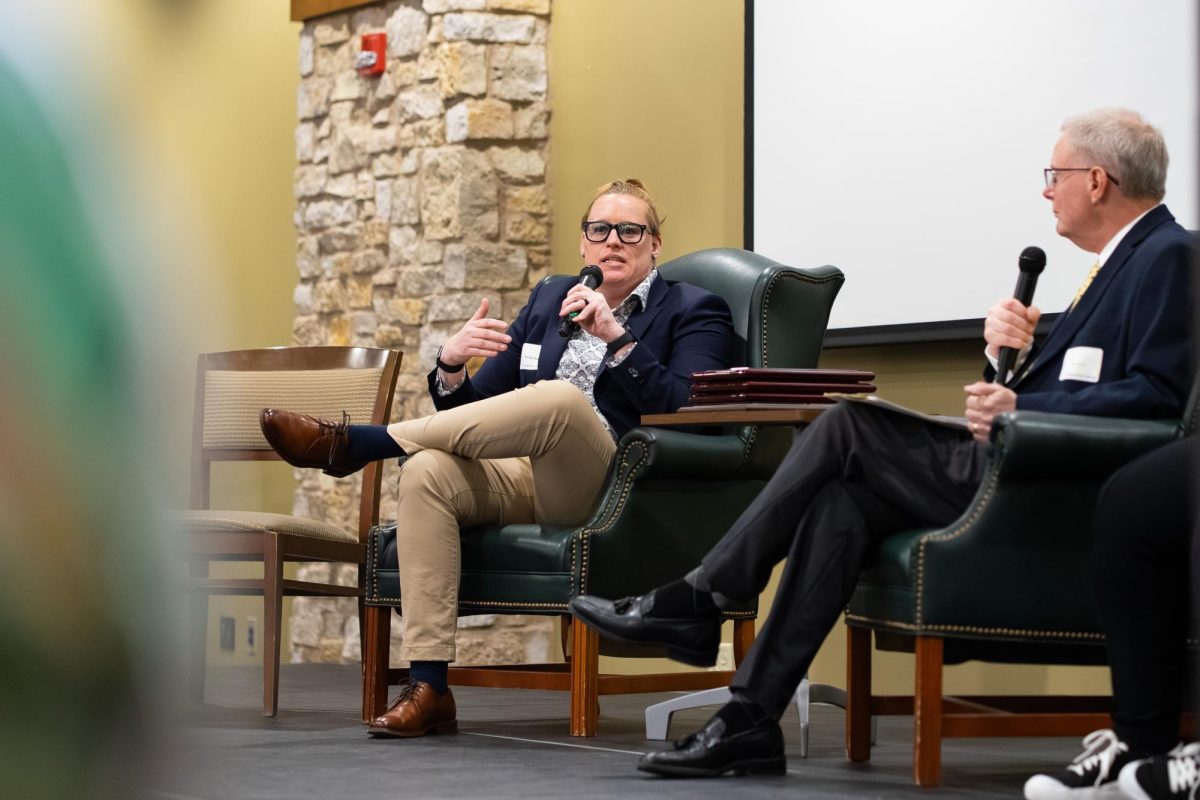

























































The “Futurist Thinking Series” ended with a panel on Artificial Intelligence (AI), titled “What AI Can’t Teach: Belonging, Humanity and the Purpose of College,” which took place on March 31. Organized by Augustana President Andrea Talentino, the series featured three panels, including a member of the Quad Cities community, a faculty member and an Augie alumnus connected with the panel’s topic.
The panel for the event included Brian Leech, the associate professor and chair of the history department at Augustana; Alex Mayszak ‘13, director of digital learning and innovation for the East Moline School District; and Aaron Wetzel ‘90, vice president of production and precision ag systems at John Deere. The final panel also featured a student emcee.
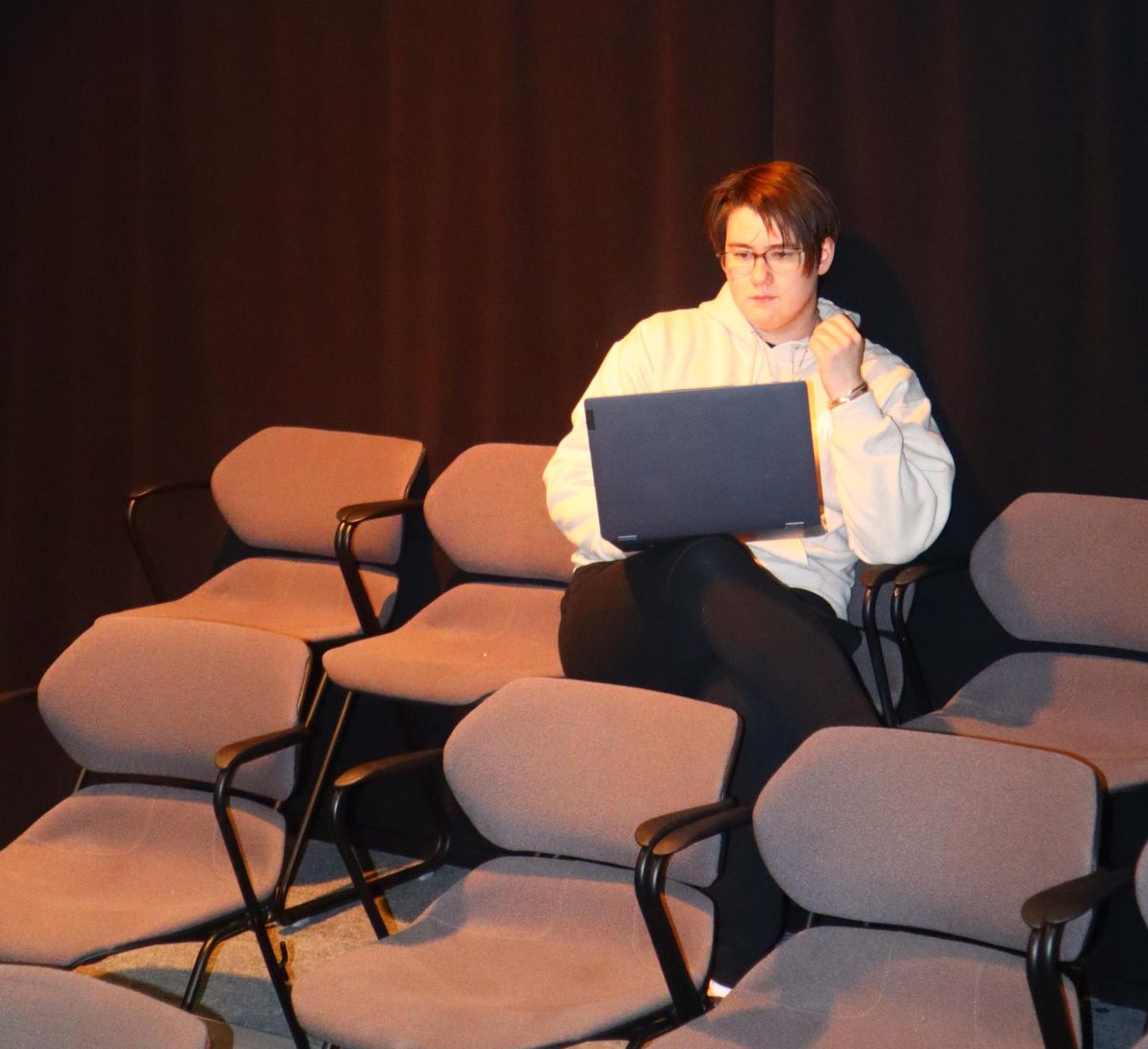
Senior T.Y. Stone served as the panel’s emcee and said the topic was very personal to him. He is currently testing a new program teaching at-risk youth in web development, AI integration and marketing skills. Stone said he doesn’t want to see Black youth left out of conversations about AI and find themselves unable to use a tool that is being integrated into most fields.
“I want us to be part of this conversation because it seems like everyone else figures [these tools] out, and my community gets in on it at the last minute. For me, it’s all about making sure the AI conversation continues to go on in my community,” Stone said.
However, many youth have concerns about AI, including its environmental impacts, and hesitate to utilize AI.
Laura Kestner-Ricketts, executive director of career and professional development at Augustana’s Careers, Opportunities, Research, Exploration (CORE), attended the panels and said students she works with often reject AI over concerns about the environmental impact of its water use.
Kestner-Ricketts sees generative AI as a tool for proofreading and finding ways to write in a way that students will understand.
“I think a lot of people use it for decision-making, but not in a way that it could be useful … I think a lot of people use it to turn off their brain so they’re not thinking,” Kestner-Ricketts said.
Leech, who discussed this issue at the panel, is currently testing AI use in his honors course as part of a series of mini-grants given by President Talentino.
Leech says the Futurist Thinking series focuses on issues that graduates will have to think about for a long time. He says AI is a fitting topic for this series, since it has and will continue to cause momentous change in students’ futures. Still, he doesn’t want to overstate AI’s impact.
“Sometimes we get a little overblown in our rhetoric about how much one piece of technology is changing our lives … I think there’s going to be a big disruption, and we have to think hard about what kind of work people are going to do and in what ways, and I’m sure it will change things. I don’t think there’s going to be such an enormous change that people are going to suddenly stop working,” Leech said.
