





























































































Picture this: You’re scrolling through TikTok or Instagram, and you come across a video about your favorite TV show. The creator has written multiple paragraphs analyzing and drawing conclusions from a few small details in the show.
Then you open the comments, and they’re filled with things like this: “It’s not that deep, bro,” “I ain’t reading all that” and “or maybe the curtains were just blue.”
The fancy term for the “it’s not that deep” phenomenon is “anti-intellectualism,” a rejection of anything associated with scholars, academics and intellectuals. It has been prevalent in American society since the McCarthy era.
Today, online “it’s not that deep” culture is classic anti-intellectualism repackaged for the internet. It encourages people to avoid deeply analyzing anything, and to view anyone who does as “doing too much.”
A common way that this mindset makes its way into the classroom is through the idea that “the curtains are just blue.”
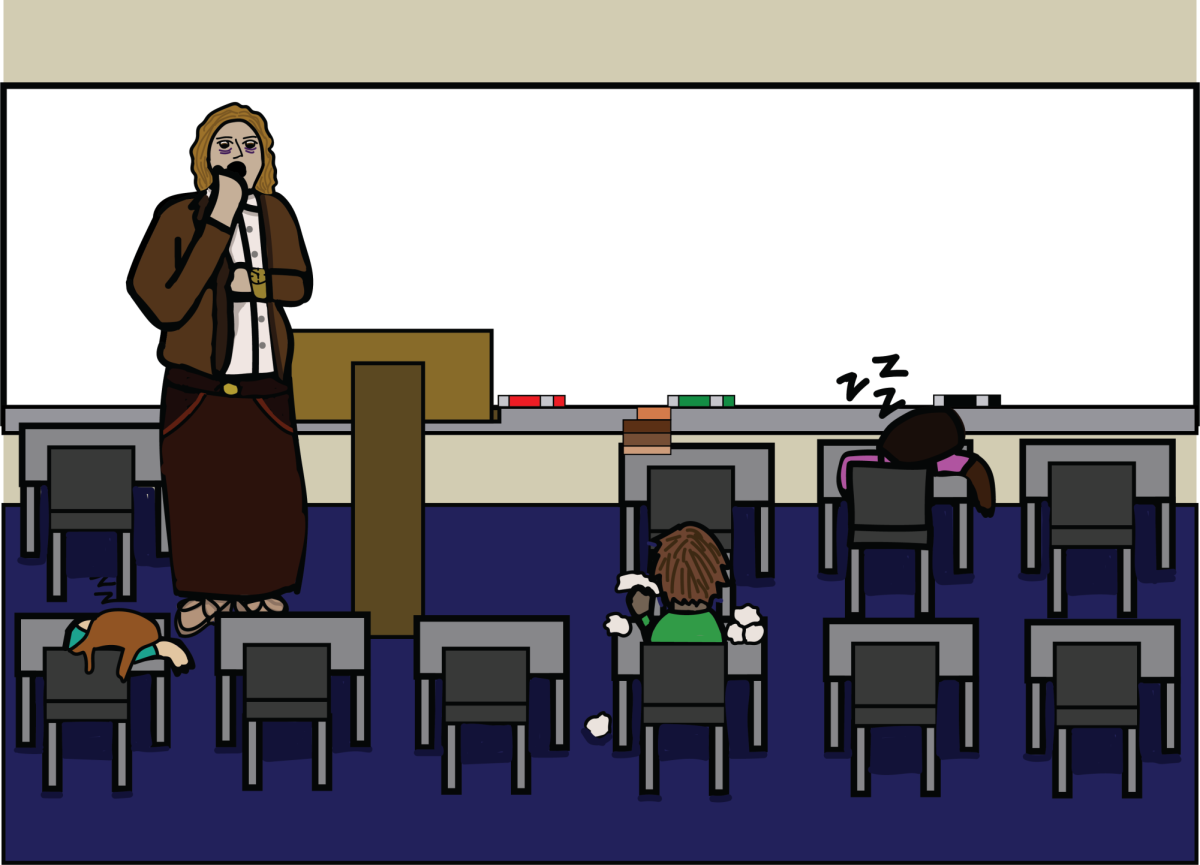
There is a stereotype that English teachers like to draw far-fetched conclusions about the themes of the novel from small hints, like the color of curtains mentioned by the narrator. In response, students have taken to saying that maybe the author just liked the color blue! Maybe they picked the color at random! Don’t think about it too hard, bro.
It’s not that deep.
That’s not to say that the curtains never turn out to be “just blue.” English department Chair Meg Gillette says that trying to attribute authorial motive to every detail in the text is often an ineffective way to do literary analysis.
“Literary criticism today, at its best, is not doing that anymore,” Gillette said. “In some ways, [‘the curtains are just blue’] is a reaction to bad instruction.”
Good literary criticism isn’t actually about finding the “right” answer or figuring out exactly what the author intended, but about critical thinking.
“I think about it more as there being multiple meanings,” Gillette said, “and it’s about what kind of evidence you can use to develop your interpretation of the text.”
Sometimes, the curtains really are just blue. But sometimes, they aren’t.
It’s important for students to be able to form their own opinions about the meaning of the blue curtains rather than relying on first impressions.
Only seeing things at a surface level is detrimental both in the classroom and in real life. In social interactions, being able to identify underlying messages can help you pick up on subtle forms of sexism, for example.
“When someone calls some girl ‘bossy’ on the playground, what else is being communicated there?” Gillette said. “I think that’s the danger of not being willing to think about what else the curtains mean. There’s a lot of baggage there, and being willing to unpack it can maybe help us see the world more clearly.”
Ignoring the negative connotations of a comment like that allows stereotypes to flourish unchecked in society. Preventing casual discrimination in daily life requires deeper analysis.
Not only is deeper analysis important to our social interactions, it makes life more interesting.
“Life’s gonna be boring without that,” Gillette said. “It’s better to look at things from different perspectives.”
If we only analyze something from one shallow perspective, we miss out on so much. For example, if you only see the world through tinted glasses, you miss all of the diverse colors around you. It’s only when you remove your glasses and look closer that you can appreciate the world that you live in.
So don’t listen to TikTok comments when they tell you that “it’s not that deep.” Analysis is healthy, important and fun. Engage with it. Your English teachers will thank you.