












































































Colleges across the United States constantly assess policies and information that affect their missions, communities and students. Under the current Trump administration, institutions like Augustana College are taking additional steps to evaluate any federal guidance that may impact their diversity, equity and inclusion (DEI) efforts.
On Feb. 14, the US Department of Education released a “Dear Colleague” letter that outlined nondiscrimination obligations for schools receiving federal funding. The letter provides guidelines on several DEI issues, including racial preferences in college admissions and divisive classroom topics. Controversially, the letter reads that schools have “toxically indoctrinated students with the false premise that the United States is built upon ‘systemic and structural racism.’”
For history professor Lendol Calder, this kind of language raises concerns. Calder, who teaches “Rethinking American History,” a course that explores foundational US issues such as systemic racism, suggested the political climate may make some educators more cautious about how they engage students in the classroom.
Instead of tiptoeing around information, Calder suggests that professors examine and teach every viewpoint for a given situation. Going forward, Calder plans to double down on efforts to teach all points of view, whether he agrees with them or not.
“We have to [teach diverse perspectives] and set a classroom environment and space that feels safe for everybody: conservatives, progressives [and] liberals,” Calder said.
If a school receives federal funding, it must comply with certain federal laws and regulations. While Augustana is a private institution, it receives funding from several federal grants from organizations such as the National Science Foundation, the Department of Justice and the National Institute of Health. Augustana students are also eligible for annual federal student loans. Under the current administration, Augustana has not faced any funding cuts at this time.
However, some federal funding may be subject to scrutiny. The TRIO Student Support Services grant specifically supports low-income, first-generation and students with disabilities, all of which fall under the umbrella of DEI.
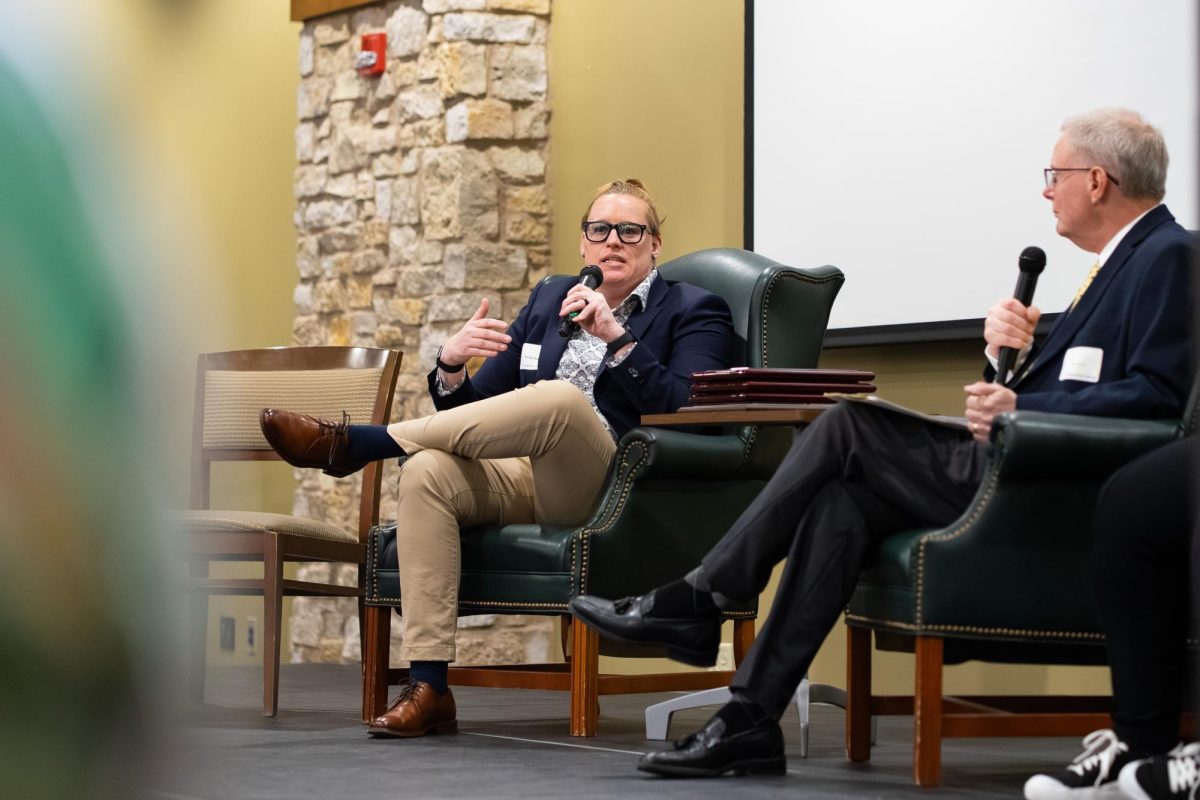
Gauri Pitale, Augustana’s vice president of DEI, said the college’s focus has remained on the students since the first day of the current Trump administration. In a rapidly changing political climate, campus leadership is closely monitoring, assessing and shifting the college’s current practices to comply with federal rules and regulations. At this time, Augustana is fully compliant with any state and federal anti-discrimination laws.
“Our focus remains serving our students, making sure that students of all backgrounds are primed for success, that they can thrive, that they have a strong sense of belonging, and we will continue to give them all the supports necessary on this campus,” Pitale said.
Pitale said the Office of DEI serves everybody, not just marginalized communities. The office works with several other offices around campus to ensure that Augustana strives to make students feel safe and secure. Pitale reiterated that any future decisions the college makes will always be made through the lens of student success. Upon any changes, Augustana will communicate with groups directly effected.
“After a lot of deliberation, we are not a reactive campus,” Pitale said. “We spend a lot of time deliberating, assessing and collecting data because data-informed decision-making is a very sound way of making decisions, rather than purely working on emotion.”
Augustana’s faculty and staff trust the school’s administration to deliver pertinent information about possible changes they may need to make in their classes. Katie Madel, professor of political science, said the college is looking at bigger public universities to help predict and inform possible changes.
“We might have to change some language, and we might have to change some presentation styles,” Madel said. “But [Augustana’s] values aren’t going to change. We’re still going to value diversity, we’re still going to value equity [and] we’re still going to value inclusion.”
Calder also doesn’t anticipate any radical changes occurring at Augustana under Trump’s presidency. Instead, Calder is concerned about professors refusing to teach diverse perspectives in the classroom.
“I feel like I was indoctrinated by some professors in my own college undergraduate experience,” Calder said. “By indoctrination, I mean a professor had a theory of the world, and that’s all they taught, and you didn’t learn that other people had their own different theories of how the world works.”
Madel highlighted the importance of teaching and hearing diverse perspectives in the classroom. Madel said she has always treated all issues delicately since students come from different backgrounds and global perspectives, and she will continue to do so whether changes are made or not.
“When you are in that outside or minority perspective, it can be really, really affirming to hear about why things are the way things are in your own life,” Madel said.
According to Madel, Augustana uses shared governance when selecting and modifying curriculum. In other words, the college’s administration may suggest curriculum changes, but faculty, staff, board members and “Dear Colleague”: DEI still matters inside all administrators will all work together to make changes.
“[Augustana wants] to make sure that our students are doing well,” Pitale said. “We want to have learning environments where [students] are going to be able to be successful and to be citizens in a global world who understand how they can function in an extremely diverse and complex society.”
Pitale encouraged students to ask questions, visit with their local public officials and speak up about issues that matter to them. Madel urged students to engage in their communities and think of ways to make a difference outside of the government, like a nonprofit or charity organization.
“I would encourage students to be the change that they want to see, whatever change they hope to see in society,” Pitale said. “You have to be a part of it.”