









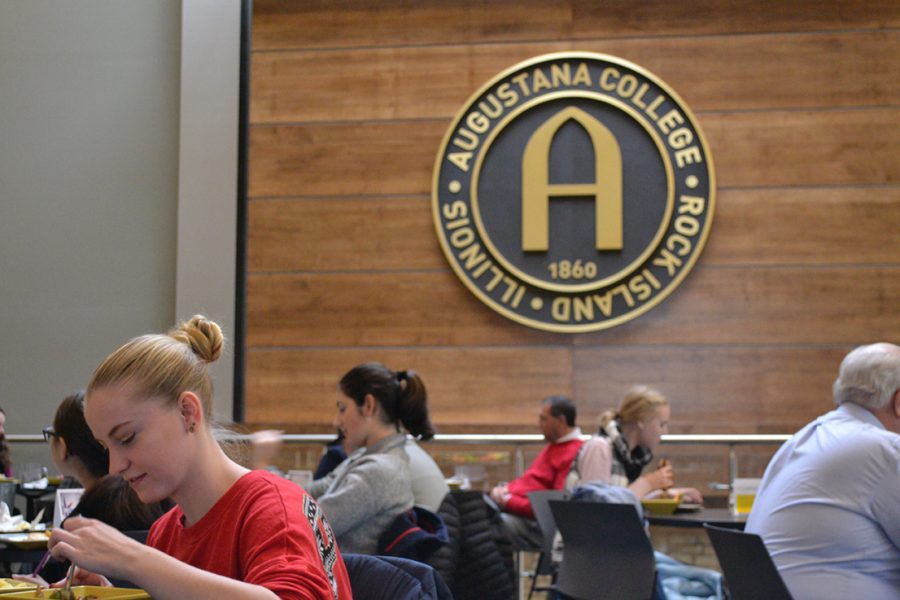










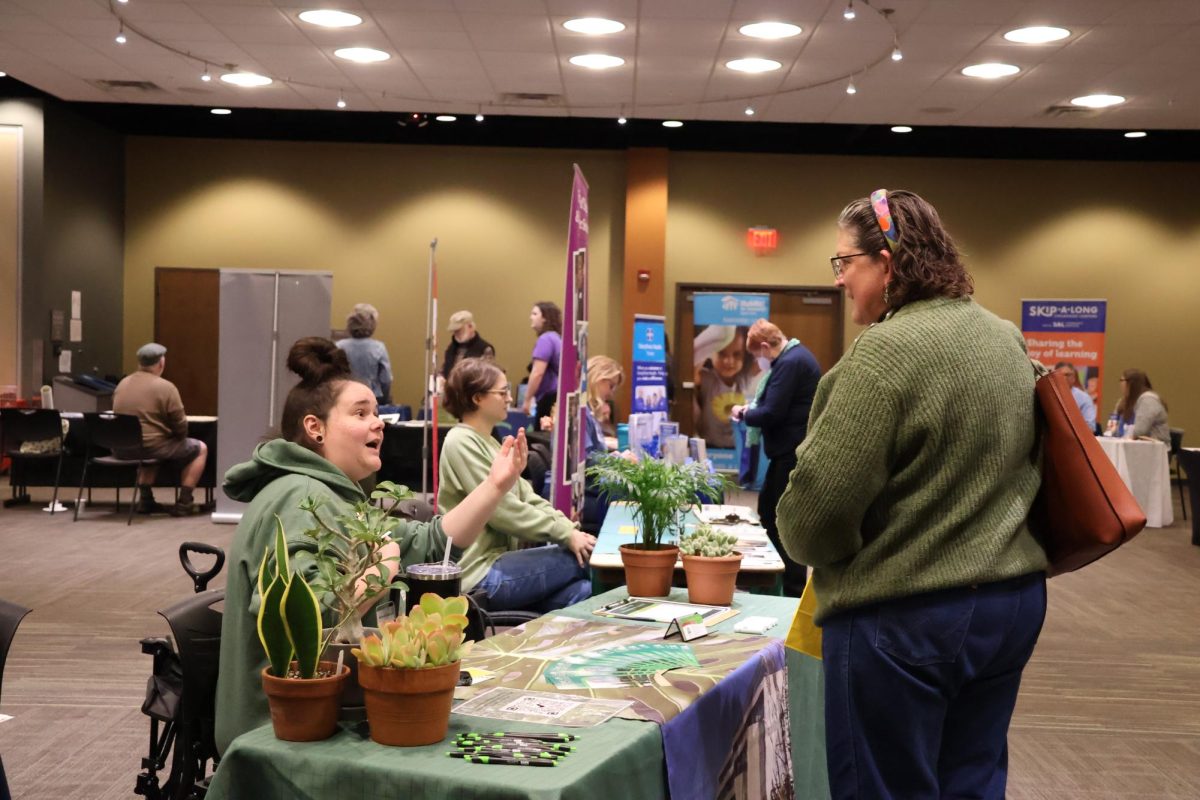

































































On Monday, Nov. 17, Augustana’s Sierra Club, Augie Acres and Augustana’s Student Government Association (SGA) came together in Hanson to celebrate National Recycling Day.
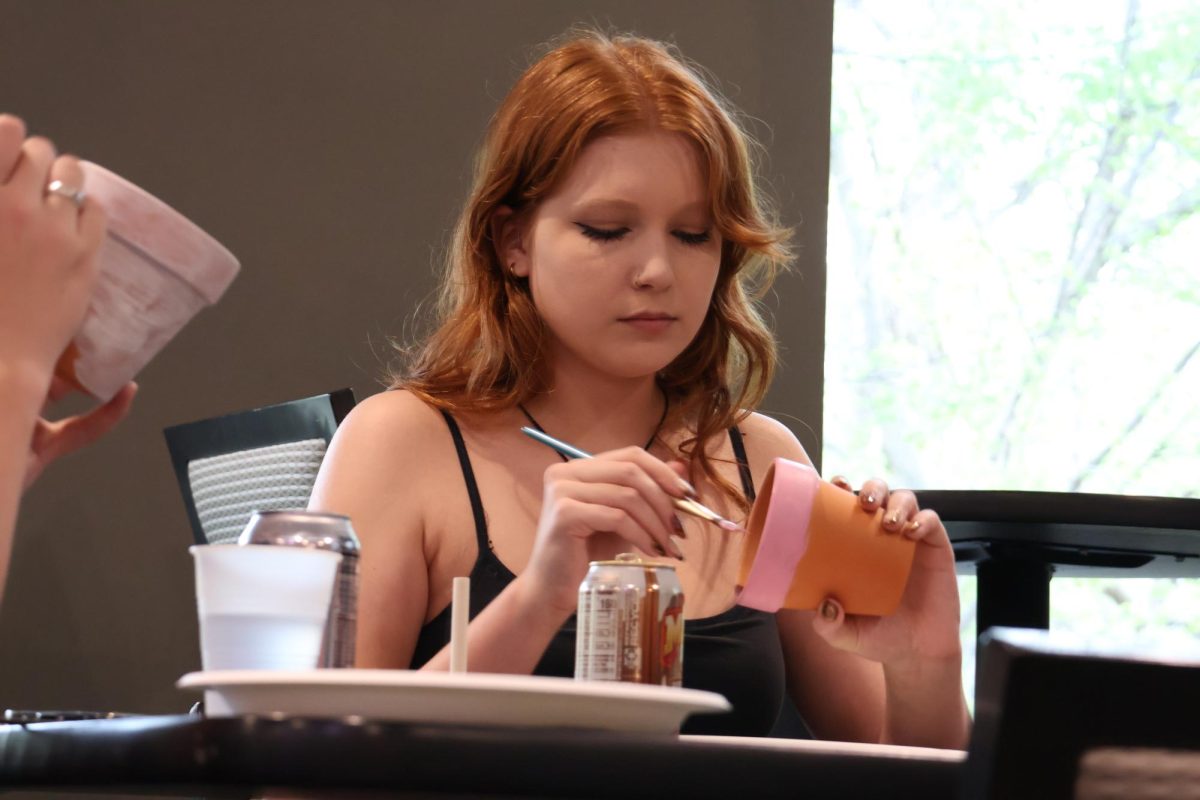
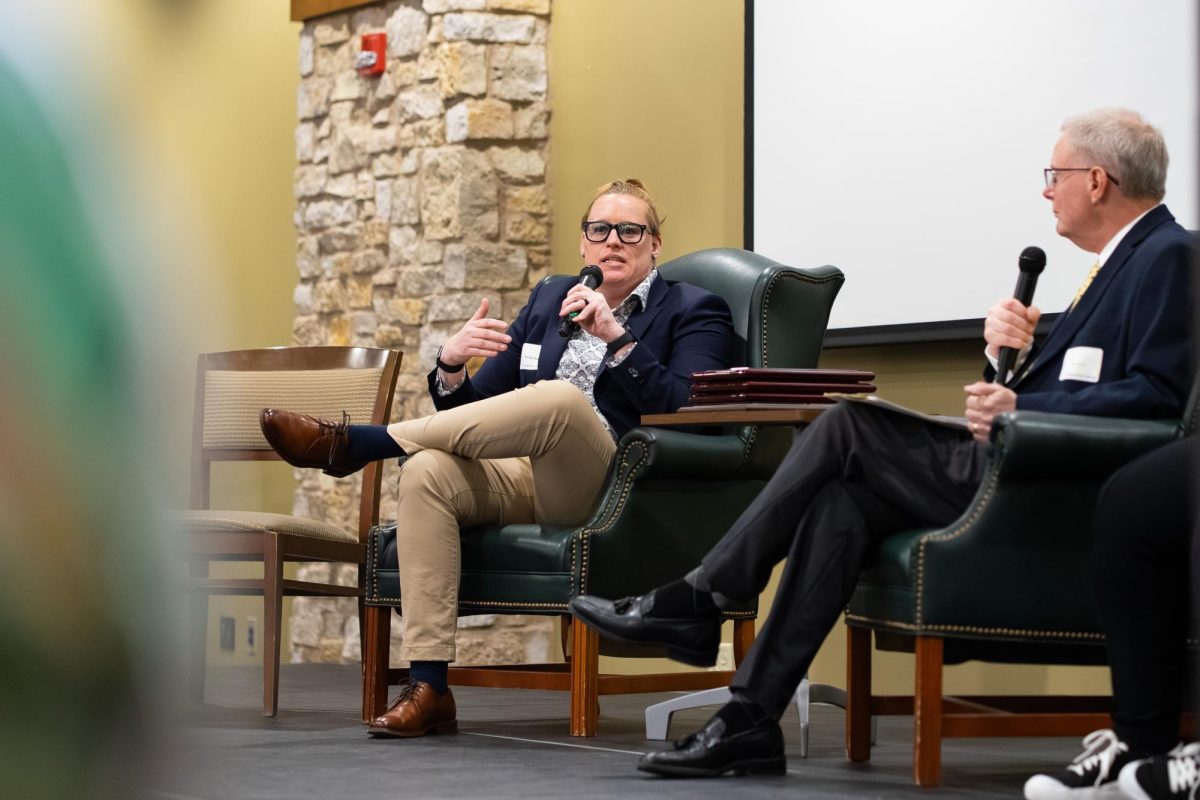
Members from Augie Acres and Sierra Club gave presentations on composting and recycling. The presentations covered how to compost, what can and can’t be recycled and the impact recycling has on the environment and economy. After the presentations, participants were given time to eat, connect and make crafts out of recycled plastic.
The SGA’s sustainability committee came up with the idea. The committee works to advocate for environmental issues on campus. The sustainability committee has worked on issues like expanding access to recycling bins and managing food waste.
Junior Senator and sustainability committee member Omar Timoumi said the committee hopes to help host more events like National Recycling Day in the future.
“We’re open to suggestions, [if] anybody in the community has something they wanna see, we’ve got the money, we’ve got the manpower and we just need the ideas to put into place,” Timoumi said.
Members of all three organizations felt the event was a success and expressed their hopes for future collaboration with each other. Sophomore Annika Sevig is the special events chair for Sierra Club.
“Whether it’s activism or other fun events […] hopefully we can do more in the future,” Sevig said. “I didn’t have any sort of expectation of how many people would be there [at the event] so I was pleasantly surprised.”
Maggie Berger is a junior and the secretary of Augie Acres. Berger said that the three groups had been trying to find ways to collaborate for a while, as they often cover similar issues and National Recycling Day seemed like a good opportunity to work together.
Berger said that the goal of the event was to increase awareness and understanding of recycling and composting.
“The point is that it’s still useful to recycle because it can be more positive than negative,” Berger said.
Sevig said that it was important to her that people understand that recycling isn’t a perfect or all-encompassing solution. She said that people should look to advocacy on the local and national levels to help address the issue.
“I never want people to get the idea that if everyone recycles, the problem is solved, but I also never want people to get the idea that recycling does nothing […] I feel like people often live in these extremes and the most important thing is that balance,” Sevig said.
