


















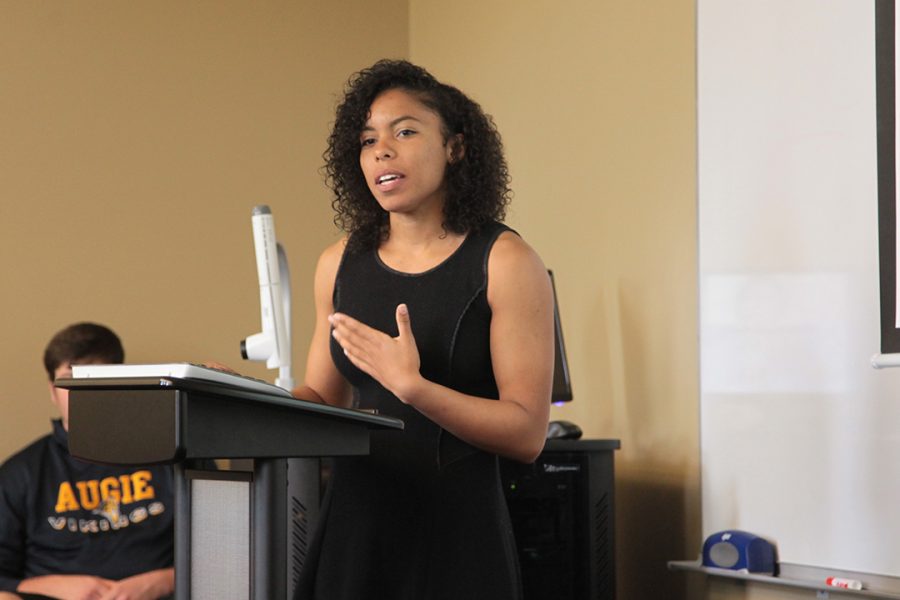


















































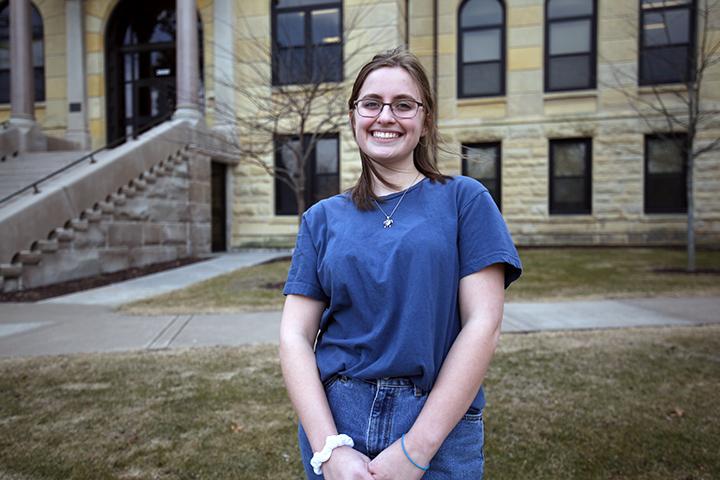


















Senior Lillie Ana Olvera is collecting data from the Augustana student body for her multiracial psychology Senior Inquiry (SI) project. On Monday, Nov. 10, Dr. Gauri A. Pitale, the vice president for Diversity, Equity and Inclusion, announced in an email to all students her research participation opportunity.
The psychology department at Augustana has several different options for SI projects. Every senior must complete a SI option: A research paper, a presentation or their own original research, which involves collecting and analyzing data and presenting it in time for finals week.
Chair of the International Review Board (IRB), Jeff Renaud, helps with the process of approving students’ studies. The IRB is made up of a group of Augustana professors who work to assess if the benefits from a study outweigh the potential harm that could be caused to the subject, he said. Renaud said that any institution receiving federal funding that wants to research human participants must have an IRB to approve such projects.
“Before there were boards to oversee research like this, basically anything goes. And that was a problem for many obvious ethical and safety reasons,” Renaud said.
Professor of psychology and neuroscience, Daniel Corts, advisor for Olvera’s SI, said that most studies’ subjects include Intro to Psychology students, who can get credit by participating, and personal contacts. Corts said Olvera conducting a study specifically of multiracial students meant the study had to cast a wider net to find enough subjects for her findings to be statistically significant, leading to her work with the IRB.
Olvera said she hopes to fill a gap in existing research with this study. Corts said that much of the research in the US focused on race considers strictly White or Black individuals.
“She [Olvera] found a much smaller body of research on [multiracial] people,” Corts said
In addition to filling a gap in the literature, Olvera said she is also interested in studying the identities of multiracial individuals, a demographic that experiences two different identities and often chooses what they identify with throughout their lives.
Olvera said she is interested in how factors like upbringing and who multiracial individuals choose to surround themselves with can impact how they identify. She said there is research showing that many environmental factors, such as economic status and political party affiliation, can impact the race that multiracial people identify with.
“What I do want to reveal is that there are certain biases that multiracial people can experience even if they are a part of the same race,” Olvera said.
To participate in the study, students can fill out the Google form sent out by email or contact Lillie Ana Olvera.
