

















































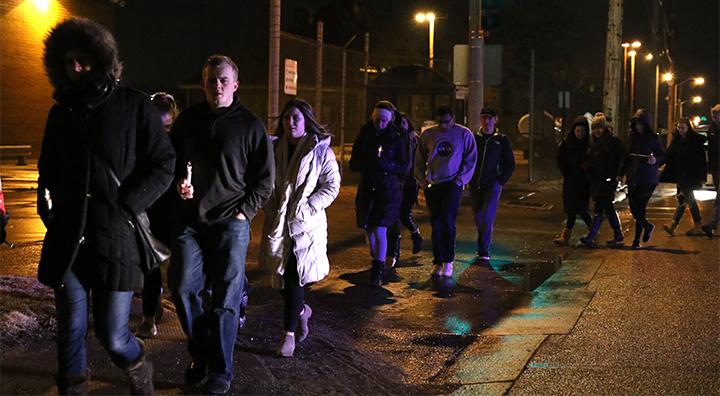






Augustana’s Student Prison Education Club (SPEC) held a fundraiser raffle from Oct. 27 to Oct. 31 to support and raise awareness for the Augustana Prison Education Program (APEP). The fundraiser offered three raffle baskets with a variety of items and raised $57 for the program.
The money raised will go towards books and school supplies for the students in the program. Executive Director of APEP Sharan Varallo said that the program began as a non-credit volunteer program, but has grown into a fully accredited, full-time program that offers incarcerated students bachelor’s degrees.
According to the program’s website, the first cohort of students consisted of 10 men from the East Moline Correctional Center. In the 2025-2026 school year, 45 men are studying for their bachelor’s degrees.
“We’ve had our first graduation on the inside and have several students finishing their degrees on the campus, and it’s a lifetime of work I’m very proud of,” Varallo said, “I’ve had strangers stop me on the street and tell me ‘I’ve never been prouder to be an Augustana alum’.”
Varallo said the program is a rare opportunity across the country, and it does face challenges. According to the Prison Policy Initiative, incarcerated workers in Illinois can be paid as little as $0.09 an hour, less than a dollar a day.
With incarcerated students having few resources to pay for their own materials, Varallo said the program tries its best to keep costs low through fundraising and writing grants. None of the money for the program comes from Augustana students’ tuition, she said.
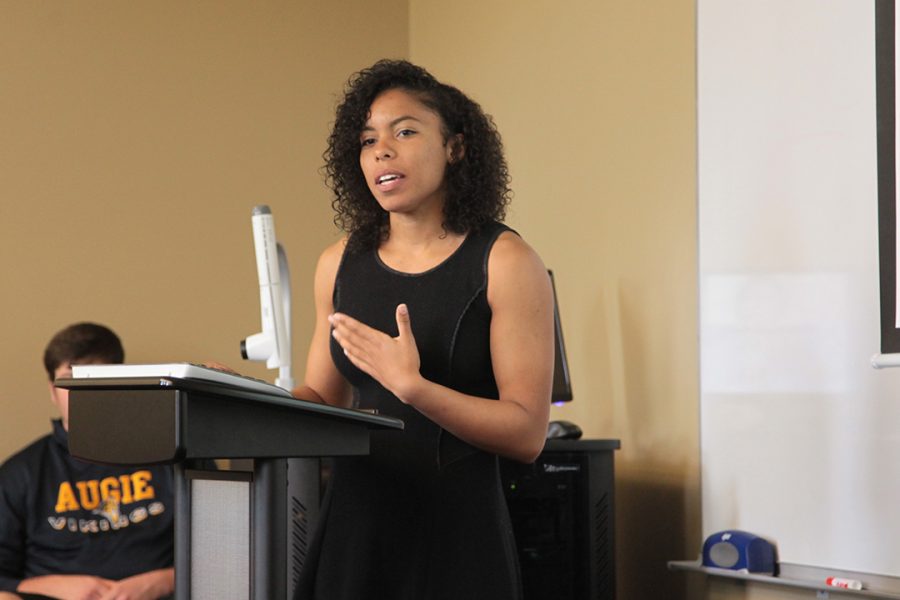
Junior Olivia Fleming is the president of SPEC and said the club started from a conversation with Professor Meg Gillette, chair of the English Department. The club started as a way to increase interest in APEP.
“Nowadays we tend to look at someone very one-dimensionally, we just look at what they’ve done in the past or where they are now…even though some of these are genuinely bad people, a lot of them just had no choice and are just kind of stuck….People deserve more than to be judged one-dimensionally,” Fleming said.
Fleming said SPEC works to fundraise, raise awareness and advocate for incarcerated students through a variety of events.
Varallo said, once a year, the club participates in a re-entry simulation. The simulation assigns students the character of a person recently released from prison and requires them to use their resources to get back on their feet. Bonnie Jessee, advisor for SPEC, said that students commonly get frustrated navigating the obstacles.
“I was just playing a game and I was frustrated,” Jessee said. “This is just a game for me, but I can’t imagine doing it in real life. Finally, I just said screw it, I’m just going to jail.”
Varallo said that many people released from prison end up back behind bars, not for committing another crime, but for breaking a technical rule of their release. Varallo said many formerly incarcerated people struggle to find work after release.
“It’s legal to discriminate in all kinds of ways. We had a student who had experience who we wanted him to be able to do an internship. He would’ve been an amazing person to do an internship at this non-paid [position] and they said no, our insurance won’t cover it. The obstacles are real, but education is a crime interruptor and an injustice interruptor,” Varallo said.
Varallo said, while planning is still in the works, the program and club hope to host a trivia night and silent auction on campus in the spring semester to raise even more funds and awareness for the program.
