













































































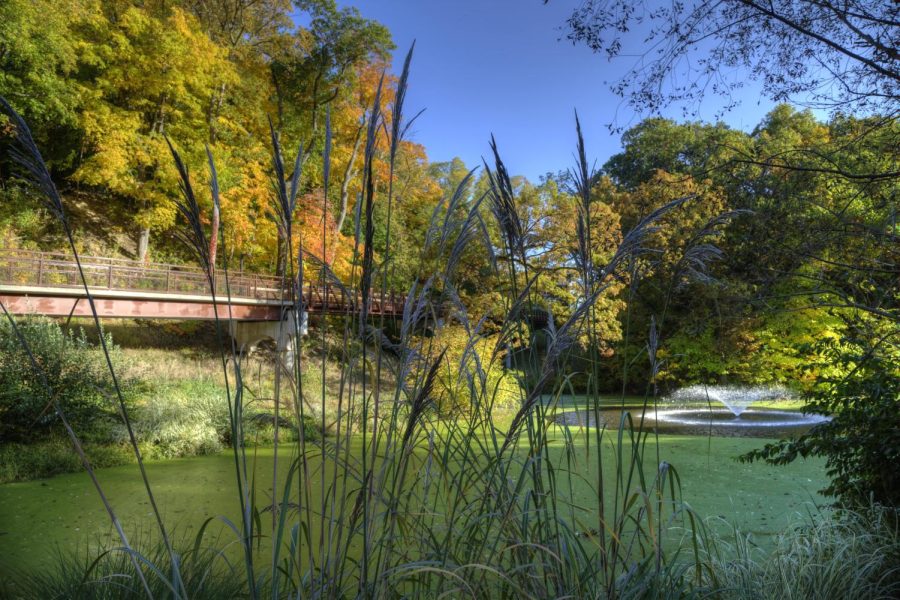
As the colorful leaves of fall return to Augustana College, campus wildlife continues to adjust to the presence of new and returning humans in their home. While this wildlife can be exciting, humans must remain responsible and respect animals’ boundaries.
Wild animals can become too accustomed to humans if we treat them like pets, so we must remember not to do so. On Augustana’s campus, animals such as deer, squirrels and raccoons can be spotted at a distance, and some of them have grown to be more interactive with humans, specifically raccoons.
Even though they may appear to be cute and cuddly, we should resist the urge to feed, pet or interact with wild animals. Junior Gabriella Davies had firsthand experience feeding the raccoons and said she now realizes it was a bad idea.
“I gave them water and food,” Davies said. “However, I’ve come to reflect on how it was not ethical or worth it to feed the wildlife, because they could become dependent and less scared of humans.”
With interactions such as Davies’, animals can become less fearful of humans and start expecting humans to feed them. This can make wildlife aggressive when the food runs out, preventing them from foraging and hunting naturally.
Wild animals are not domesticated. They have not evolved to live alongside humans like cats or dogs. No matter how much they beg or flaunt their “puppy dog eyes,” a raccoon can not suddenly learn tricks or be fed human food without reverting to its animalistic nature.
Junior Keegan Russell, a biology and psychology major researching animal behavior.. Specifically, Russell has researched how wild animals act on a binge instinct to get food from humans.
“If they know that there is going to be easier food that they don’t have to forage for, they are going to prioritize that food source, causing chaos within the ecosystem,” Russell said.
The natural diet of wild animals is hard to find, but it serves a larger purpose than just being food. Russell said if a squirrel isn’t burying its nuts for the winter, no trees will sprout.
Furthermore, if squirrels are not digging to bury their nuts, it’s not going to aerate the soil. These problems can escalate into much bigger environmental issues, all because of a seemingly simple interaction with a fluffy animal.
Despite all of these large-scale issues, it is unfair to blame people for wanting to interact with wildlife. While it may be cute to get up close with the chubby raccoons, it isn’t worth the destruction and detriment to these creatures.
Worldwide, people overlook the importance of animals. We use their fascinating personalities and quirks to generate momentary excitement, and we abuse their habitats and livelihoods. Most people are not equipped to handle wild animals humanely, but even the individuals who are still have boundaries with these fascinating creatures.
While we don’t need to say “Lions and Tigers and Bears, Oh My!”, we do need to maintain a distant level of curiosity, because we don’t know how a simple action like feeding a raccoon can start to destroy an ecosystem.
Sheilah Gaynor • Oct 30, 2025 at 2:07 pm
Great job Santino!!