















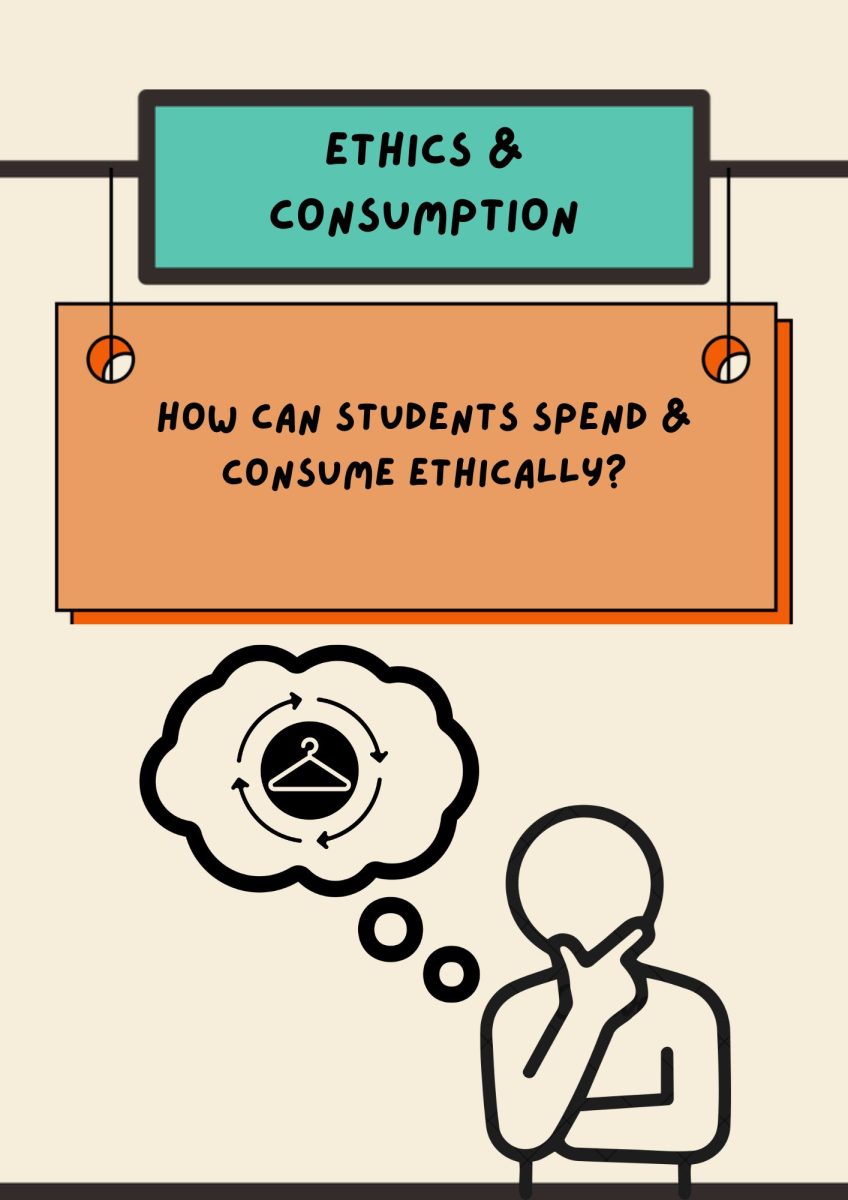

























































Halloween has some pretty iconic imagery: bowls of candy on doorsteps, jack-o’-lanterns lining dying grass and landfills becoming mountains because of clothes that were thrown out after their single use as a costume. The last image does not really match the other jovial symbols of this spooky season, but the amount of fast fashion that is consumed all year, especially near Halloween, should be enough to scare anyone.
With shops like SHEIN and Temu always on the rise, people are turning to cheap, poorly made clothing more and more. This trend in costume planning will only make already degrading climates even more polluted. Even though many are aware of fast fashion’s environmental impacts, the benefits for the consumer often outweigh the pressure put on the environment.
College students especially face a lot of financial pressure, oftentimes having to afford more necessities for themselves than they did with family back home. When two items seem the same and one costs significantly less than the other, the choice seems obvious to many.
This is a dilemma senior Lexi Polenske faced in her search for her Halloween costume this season: DC Universe’s Catwoman.
“[SHEIN] is cheaper. It’s a lot cheaper. And a lot of times, [SHEIN] has different options where it’s like, ‘Okay, I want this Fashion Nova dress,’ but it’s $400. And so, here, I can basically have the same thing off of SHEIN,” Polenske said.
But consumers admit how risky it can be to buy from these sites, given the likelihood of actually receiving the expected product. Many students who use these shops to make their Halloween costumes might be sorely disappointed, as in many cases, the quality of these clothing items is significantly worse than advertised.
“SHEIN hasn’t been too reliable with the quality it shows, or the color or sizing, so I try to steer clear as much as I can,” Polenske said.
This aspect of fast fashion is especially bad for those buying right before Halloween because, if the costume is nothing like they expected, they have to scramble to find another solution.
A far better alternative to fast fashion is buying secondhand clothing, as it reduces the amount of clothing that ends up in landfills and the terrible labor that the people making SHEIN and Temu products go through. Additionally, those buying at a thrift store or at a clothes swap can truly see what they are getting without waiting for a product to ship and hoping it is correct.
Polenske said she also uses thrifts as a resource and is doing so even this year for her David Bowie costume. She says she prefers to buy an article of clothing from a thrift store instead of SHEIN if the products are essentially the same.
“Yeah, at least I know I can visually see it and hold it and try it on and know it fits, know the quality of it,” Polenske said.
For Augustana College students, making a costume from donated clothes rather than buying online is more accessible than ever, thanks to the addition of Campus Closet last spring. Now, students can obtain materials secondhand, even if they are not able to make it off campus to go shopping for a costume this Halloween.
The closet is located in the basement of the Bahls Leadership Center. Senior Joren Weller-Vanhollebeke, the founder of Campus Closet, said that she has been preparing the closet for students’ Halloween needs.
“I do encourage people to utilize the closet here on campus, because we do have Halloween costumes. I’ve been holding on to a handful of things that might just need a little bit of tweaking, and you can turn into something amazing,” Weller-Vanhollebeke said.
Making the switch from fast fashion to shopping secondhand provides an opportunity for people to garner creativity and have a cleaner conscience about their environmental footprint. It might take a little more searching and eyeing through racks of pants and shelves of shoes, but the items found at donation centers will almost definitely be of higher quality than SHEIN’s products, and will certainly be less wasteful than the alternative.
Ghosts and ghouls might scare in the streets this month, but we do not have to let poorly sourced costumes be the thing we get tricked by. Shopping sustainably is the real treat for both our planet and our principles.