























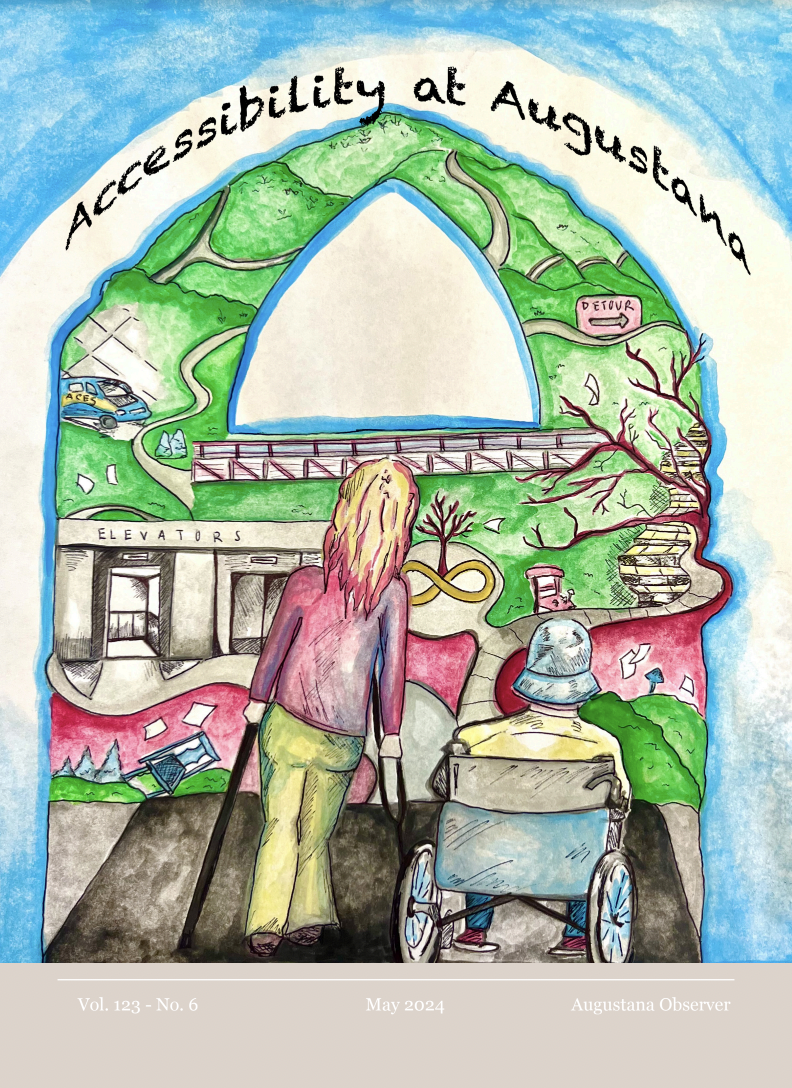
For any student at Augustana who needs to access the top floors of Olin, the ongoing broken elevator in the building is a heavy inconvenience. However, for physically disabled people, the broken Olin elevator is a lot more than that.
While public safety announced in an email to students that construction to the elevator will begin Tuesday, Oct. 14, it has been out of service for months. With the current situation, physically disabled students on campus are either completely cut off from accessing the top floors of Olin, or have to put themselves through significant physical pain and discomfort in order to climb the stairs.
This is only one of many accessibility issues on the campus of Augustana, and unlike the Olin elevator, most of these issues are not temporary problems. Given its architecture and the geography, inaccessibility is built into the very foundation of Augustana’s campus. For physically disabled students, navigating the campus often feels like a torturous obstacle course.
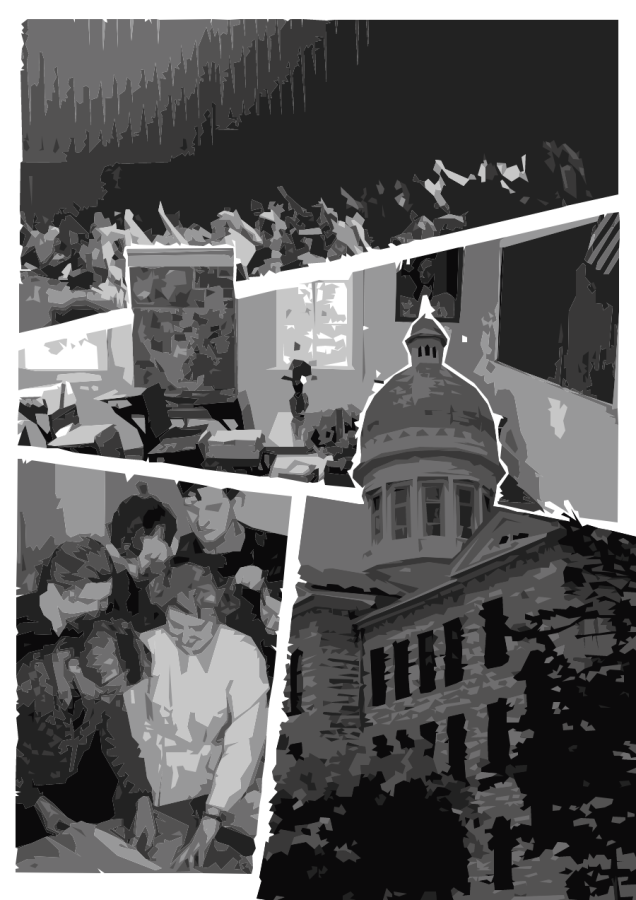
For example, to get to any counseling appointments, students have to climb up seven flights of stairs to Bahls. Furthermore, the building itself does not have an elevator, only a wheelchair lift.
For wheelchair users, this is far more inconvenient than an elevator as it requires extra time and effort to gain access to. Meanwhile, physically disabled people who do not use a wheelchair, such as those with asthma or chronic pain, have to simply muscle their way up the stairs and put their bodies through a great deal of stress.
The accessible entrance to Gerber is also an issue. To get to dorms like Westerlin and Erickson, most disabled students will choose to take the accessible entrance through the library and go through Gerber, but that elevator is only available when the library is open. When the library is closed, there is no accessible way to get to Westerlin or Erickson from the quad.
Situations like the Bahls stairs or the limited accessibility to Gerber have a tangible impact on disabled students. While most of these students can still manage to get around, it is twice as difficult for us and takes us twice as long.
The process is painful and costs valuable time, putting disabled students at an inherent disadvantage.
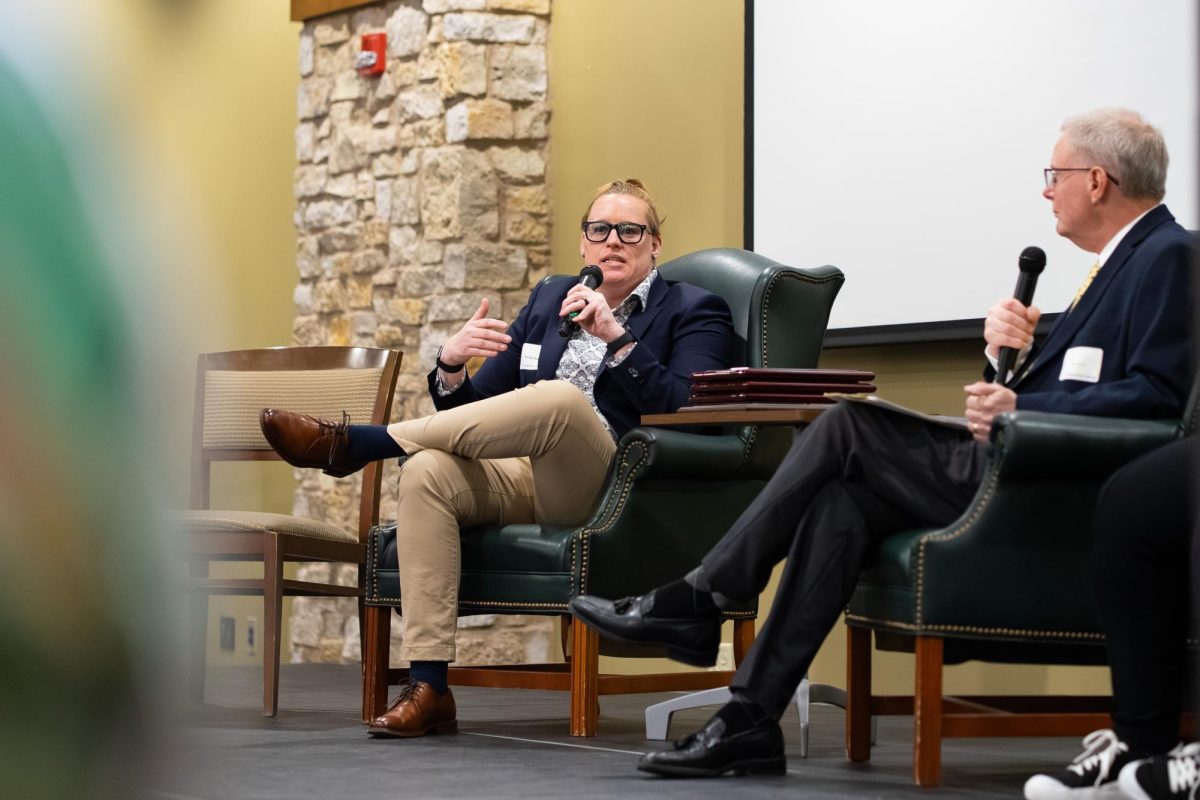
Rachael Souhrada, the coordinator of Disability and Access Resources, is well aware of these issues. The Gerber entrance in particular has been a major roadblock for disabled students. However, since keeping the library entrance open at all times would be a safety issue, this isn’t an easily solvable problem. There may be other solutions, though.
“I would love to see an extension of ACES into the daytime, where it would be medically shuttle-focused,” Souhrada said. “Taking students to Walgreens to get their medications, or taking them from Erikson down to Evald, I would love to see that.”
Before Souhrada’s time, Augustana actually did have a medical shuttle, but it no longer exists. ACES is currently not a one-to-one replacement due to its limited evening hours, but Souhrada and a few other faculty members have started to explore the idea of changing this.
Many of the accessibility issues on campus also have to do with the fact that, under the National Historic Preservation Act of 1966, certain older buildings like Bahls are somewhat exempt from ADA regulations.
“These buildings are historic, so unless there is a major remodel or renovation of some kind, they are not required to be made further accessible,” Souhrada said.
These issues are prime examples of systemic ableism. When Augustana’s campus was built, it was not built with physically disabled people in mind. In 1860, disability was something to be hidden away or ignored. Most disabled people were not expected to attend college, and those with invisible disabilities were often left undiagnosed.
Because we still have many of the buildings from that era, those accessibility issues still exist. Furthermore, since disabled people are often not seen as a priority in our society, there is not a particular sense of urgency to fix these issues. We are only a small percentage of the population, so the college may be tempted to address other issues before fixing problems with accessibility.
However, the needs of disabled people desperately need to be prioritized. Forcing disabled people to jump through hoops simply to get the same education as our peers is blatantly ableist. We deserve to have the same access to resources, and not be hindered by circumstances outside of our control.
Despite our small number, our education matters just as much as anyone else’s. Colleges have a responsibility to make the needs of disabled students a priority, and it’s high time that Augustana did so.