

























































































Ever fallen for some fancy talk that didn’t walk the walk?
Debate commonly involves the art of rhetoric or the art of persuasion. This includes simple ideas like repetition and more complicated ones, like scapegoating or fearmongering.
Debates happen over almost everything, but mainly over knowledge. This brings us to wonder, what even is knowledge?
To answer this, I asked Augustana philosophy professor Douglas Parvin.
“If you don’t believe something, you can’t know it,” Parvin said. “You need justification for your belief…The other requirement is that it has to be true, right? There are exceptions to this, though…There are exceptions where you need more than just true, justified belief.”
This shows just how hard it is to truly know anything. We need to believe it and to justify it. Even then, it may still fall short of being considered knowledge. But does the truth alone have power, or is delivery important too?
“In the Greeks’ classical liberal arts, they had both logic and rhetoric,” Parvin said. “You probably need both.”
Why not rely on rhetoric then? Why not just persuade and perform away your life, like the ancient sophists who believed truth to be relative and persuadable? They sold words lacking truth and substance, much like the “debates” we see online today.
“Survival and thriving favor those who are kind, who are connected with the truth. Where that isn’t obvious is probably where we have the most division,” Parvin said.
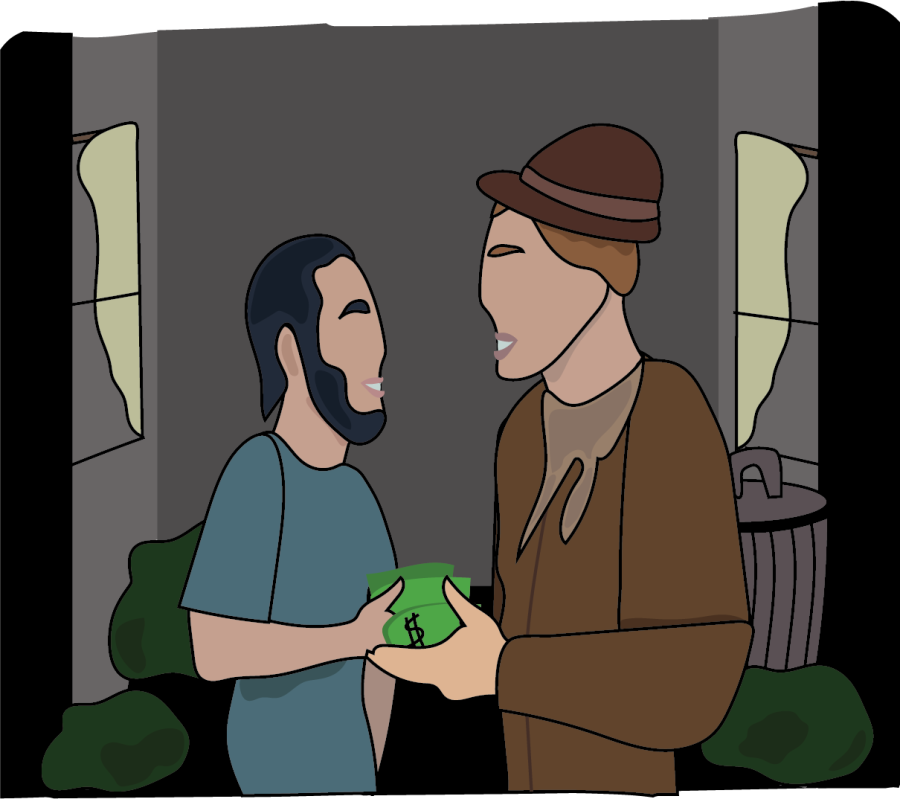
We see plenty of young people, from all sides, enticing the average person to come “debate” them. They usually end up sparring with unprepared people, who may be busier or just aren’t in the same depth of research.
This gap means the young person easily slams people, calls this a win, clips it and tries to make it viral (profitable). To figure out the difference between a debate and these one-sided performances we see online, I asked communications professor David Snowball.
“No fact-finding, no rules, no arbitrary arbiter, no gain from it. It’s just a performative undertaking for amusement,” Snowball said. “Debate is a sort of consensual aggression, where both parties know what they’re getting into. There are clear rules, there are clear norms. There’s a third-party judge. There are parameters you have to operate within.”
I was curious how common fallacies like the ad hominem (an attack or insult ‘to the person’, rather than to the argument itself), in a debate, would be dealt with, because online, these rhetorical tricks are cheered as wins. Of course, you can certainly make arguments that attack people, but they must be arguments, not just baseless insults like we see used today.
“‘He’s a socialist. He voted for Trump. She’s a lesbian, she’s trans.’ Those [examples] are all abusive, irrelevant to the quality of the argument, and, typically, debaters are trained to follow the evidence,” Snowball said. “They would declare it to be irrelevant.”
So, next time you see a “debate slam”, make sure not only to question the person who is obviously more prepared, but also to gain a perspective on the average person without judging them. Winning is fleeting. Even the ancient Greek philosophers believed truth to be unchanging.
Consider why people may believe what they do, because understanding each other is the best way for all of us to win.