













































































Finding real-world experience in a business environment can be difficult in college, but Augustana College’s Innovation Competition Team (ICT) gives students the opportunity to grow their skills in a professional, competitive setting.
Beginning in the fall of 2025, the ICT consists of a team of students from varying majors and years working together to form a mock business plan for real-life brands and compete against a number of schools domestically and internationally.
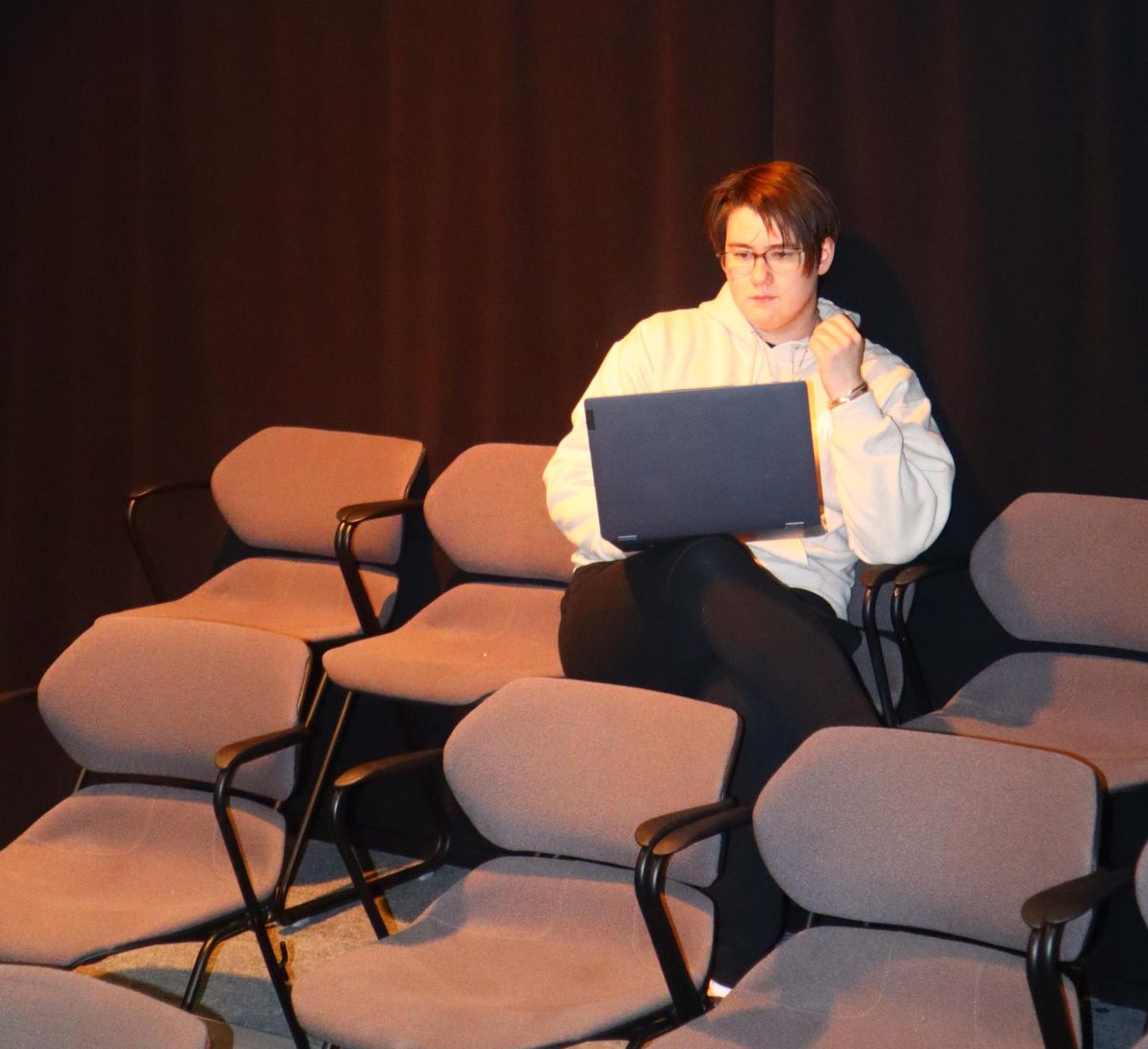
The club was founded by seniors Tin Dang, who majors in business management, and Minh Nguyen, who majors in business analytics and economics. The two share the role of president in the club.
Both Dang and Nguyen competed in the Boston, Massachusetts, ICT competition the year before founding the Augustana ICT. However, they were unable to advance past the first round.
After the competition, they discussed how becoming an official club would not only provide them with more resources but also produce opportunities for the student body at Augustana.
By officially bringing the ICT on campus, Dang and Nguyen have created a space for students to learn skills they can only learn through hands-on experiences.
“Not only do those students have practical experience with industry companies, they also get the chance to look at [other] students’ ability to solve a case,” Nguyen said.
The competition works in rounds, with the first round being virtual. If a team progresses past the first round, they are invited to compete in Boston and have the opportunity to interact face-to-face with businesses, schools and other competing students.
Since the club officially began, Dang and Nguyen have entered two separate teams into the competition, with one advancing to the next round in Boston.
When looking at building teams for business development, the ICT faculty advisor, Douglas Tschopp, said that it is important to have a diverse group of students working together to form strategies for the business plan.
“You don’t want a group of just business students or just engineers; you’re better off to have a really liberal arts-based group,” Tschopp said.
Since the team competes against national and international schools, there are many opportunities to learn and grow from students with diverse backgrounds.
Dang said he finds value in learning from different people.
“I have more interactions with people who are from different cultures and different grades than me, being able to keep those relationships going,” Dang said.
Students can have this experience on a smaller scale by working in diverse teams and using their individual skills from various disciplines to grow a stronger group.
Tschopp sees working in diverse and interdisciplinary teams as a major advantage for teams. Using individual diverse backgrounds creates a stronger collective perspective when forming a business plan for competition.
“We all carry a frame of reference, and if everybody has the same frame of reference, you don’t really innovate,” Tschopp said.
The problems within each business case study that students are presented with challenge them to grow and develop new skills they may not have used in coursework.
Nguyen has found that when teams work on these cases together, they have to look outside of what they may have learned in a classroom to find a solution.
“When you go to ICT, and you do this case, even though you have students to form teams, they all have to actually figure out all the problems on their own,” she said. “A lot of [the problems] are not a textbook problem at all.”
The skills that the team learns and practices are not just vital to make it further in the competition, but also valuable skills that students can bring into the professional world after college.
Dang said students can gain marketable skills through being part of ICT and creating a business model.
“We have to look into the market, into the suppliers and what makes [the business model] more sustainable,” Dang said. “Those are some of the things that you can bring up [in an interview] that are valuable.”
Less than a year in, ICT has been successful on and off campus, competition-wise. However, there are still growing pains being a new club that isn’t well-known to students.
Nguyen said these challenges can be viewed as positives and create opportunities to build relevant professional skills.
“We fail a lot, but at the same time, we learn from those challenges, and then we try to improve ourselves and listen to feedback to give [us what we] need to succeed after graduation,” Nguyen said.
The ICT can create relevant tools for students to use in many ways, professionally and personally.
Tschopp credits the ICT for growing skills that set students apart from others during the hiring process.
“I really see [the group of innovators] as this [powerful] thing of bringing liberal arts students together and building those AI-proof skill sets in problem solving and communication,” Tschopp said.
Simply being able to bring that resource to the students on campus is what Dang hopes the ICT’s legacy is.
“I hope to have more and more resources in terms of helping people who are interested in this and the business world,” Dang said.