








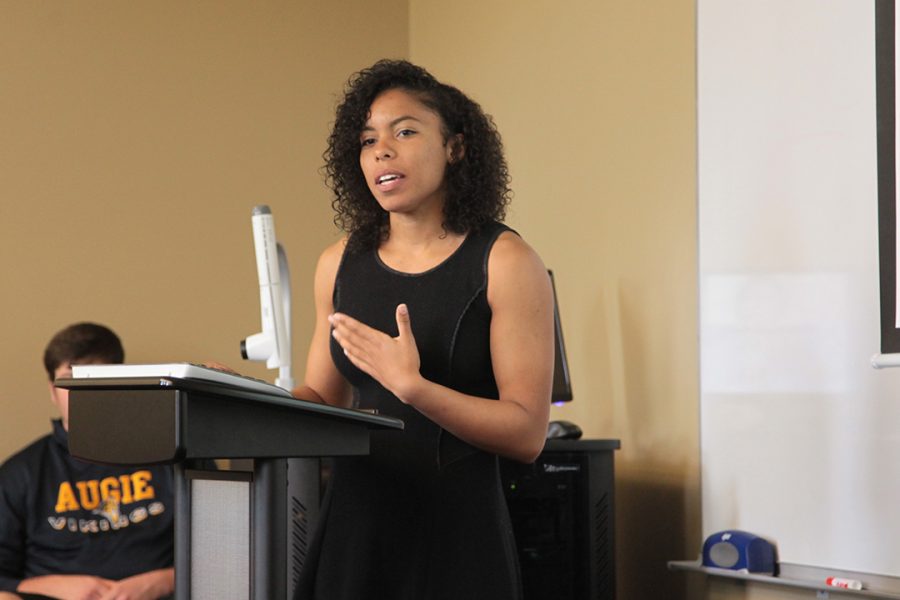




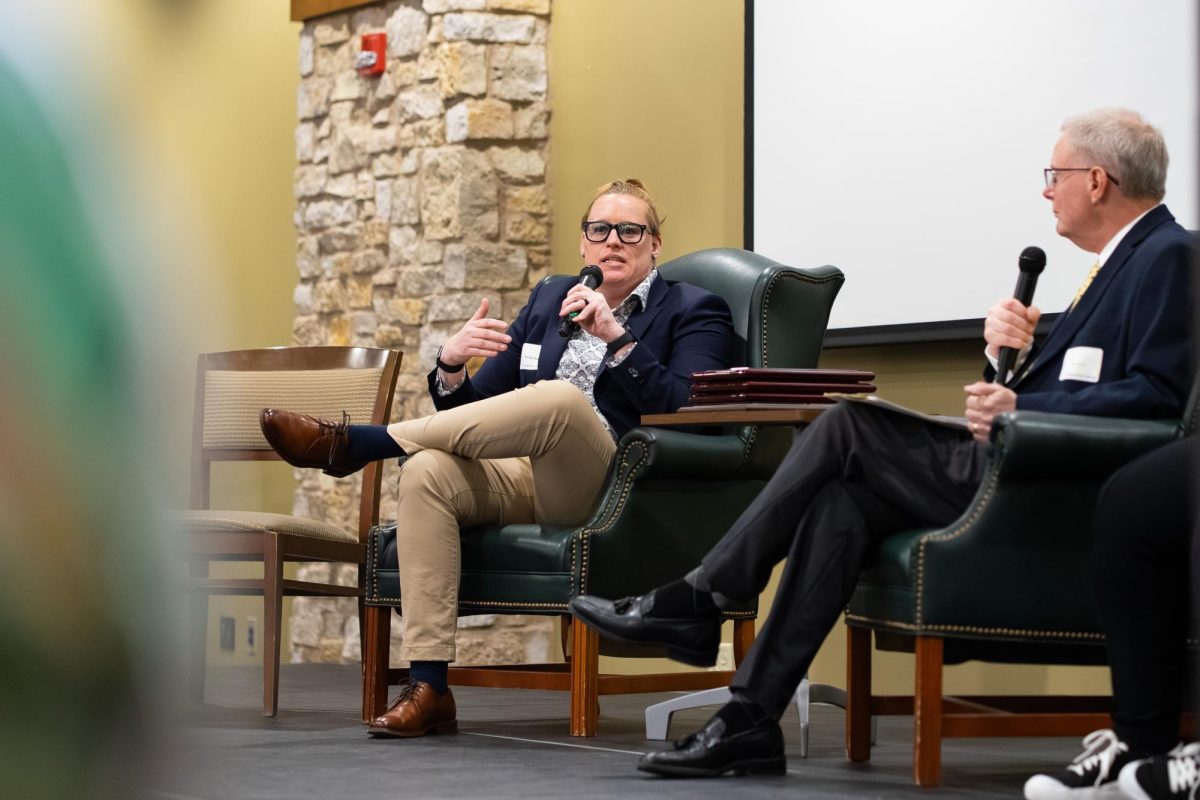







































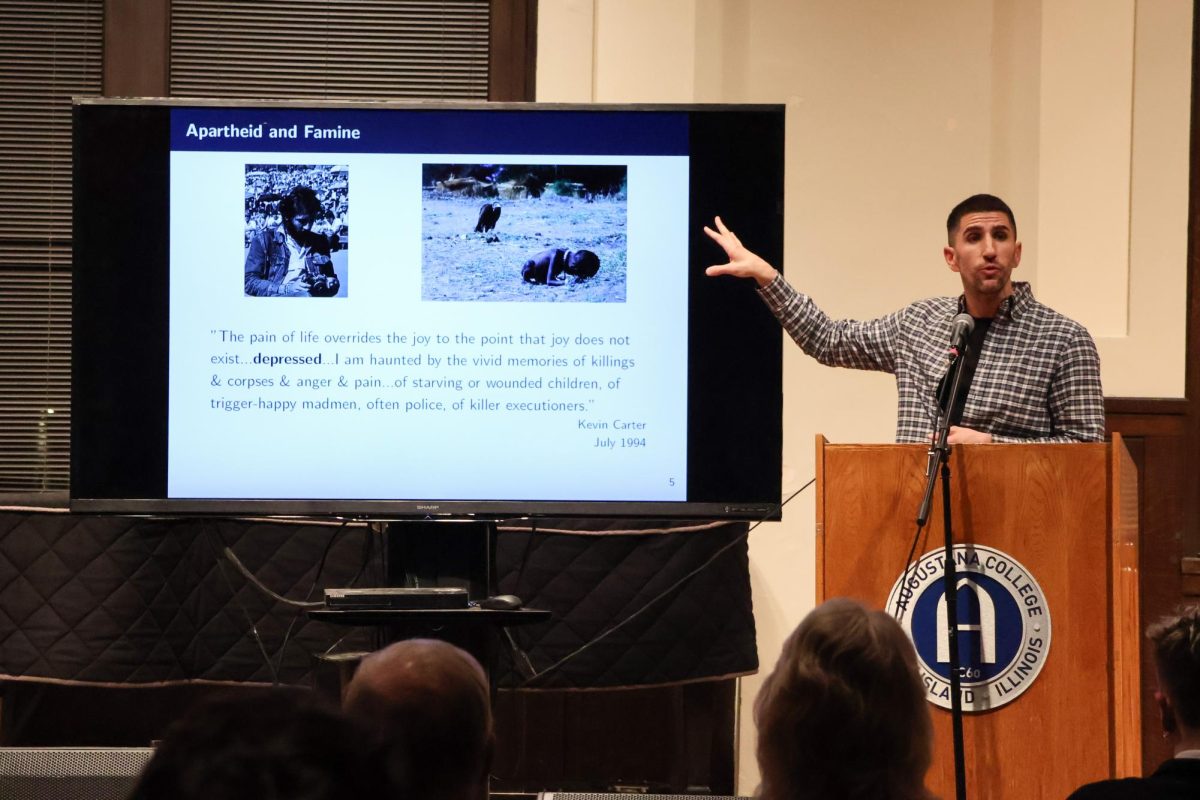
Stress is already common among college students, but rising political tensions across the nation add another layer of stress for many young adults. On Thursday, March 5, Christopher Ojeda, author and associate professor at the University of California, Merced, spoke in Wallenberg Hall about ideas from his book “The Sad Citizen: How Politics Is Depressing and Why It Matters,” focusing on the relationship between political engagement and mental health.
The talk explored why political engagement can lead to heavy emotional feelings, ranging from discouragement to clinical depression, and what that means for society. Political stress stems from the emotion of loss, which is inherent in our political system.
Ojeda said that depression not only affects political engagement but can also emerge as an output of political loss – something he has witnessed firsthand.
“I started writing about depression as an input in politics – shaping the way citizens think about and engage with politics. And then in 2016, I had a very good friend become deeply depressed following the election, and it was really heartbreaking to see,” Ojeda said. “That’s when I really first had this ‘aha’ moment where I thought, oh, politics can be depressing, right? Depression is not just an input – it’s an output, too.”
Dr. Mariano Magalhães, professor and chair of political science, invited Ojeda to speak after reading his book, finding it valuable for everyone, especially students. Despite rising political tensions, Magalhães said he believes students today have a heightened awareness of their mental well-being and are more willing to take time for reflection.
“I think part of it is [that] this generation is more attuned to their emotional and mental state. They know the language, they often identify with their mental well-being, compared to a generation above them or my generation. I do think that they recognize that, ‘I need some time off. I need to take care of myself – I have to stop doom-scrolling,’” Magalhães said.
Ojeda also offered several suggestions for managing political stress, including setting boundaries around media consumption and finding supportive communities.
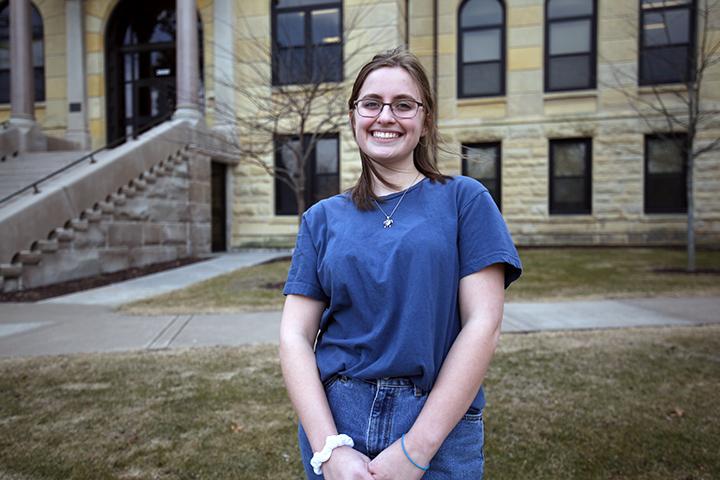
Junior Dalilah Benitez Estrada attended the talk and connected with its message about the emotional toll of politics, but said it also helped her reconsider how she approaches political engagement. Despite feeling frustrated or hopeless, she said it has encouraged her to become more involved in activism.
“It’s interesting because, yes, I face hopelessness and loss, but that makes me want to do something about it. And I’ve been feeling more aware about my own politics, but I also say I think it’s bad in the way that I approach it just because a lot of it comes from social media and social media kind of stigmatizes everything,” Benitez Estrada said.
Every student approaches mental health differently, whether through activism, building community or taking breaks away from politics. By acknowledging their own needs, Odeja hopes students can navigate political stress while continuing to participate in the civic conversations that matter.For on-campus mental health support, email [email protected].