
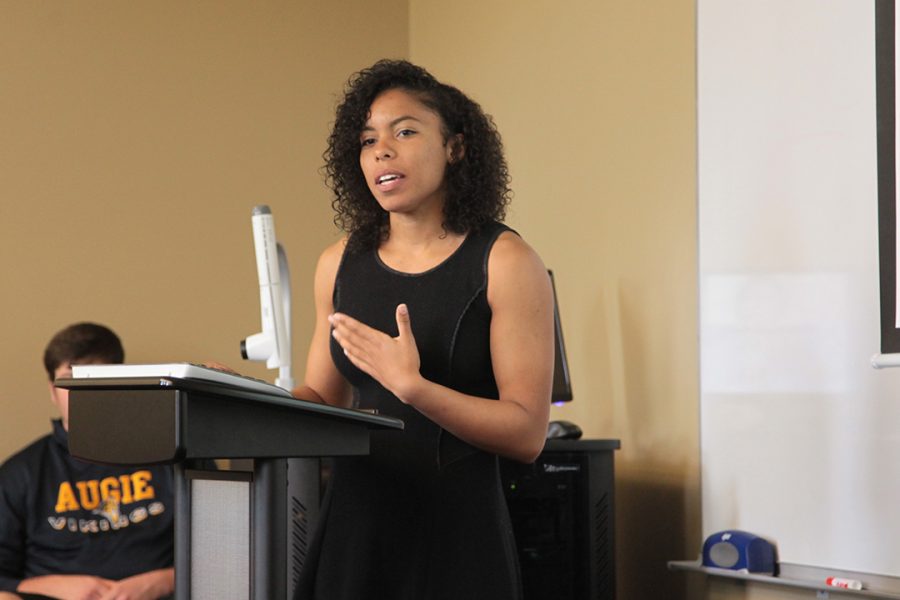



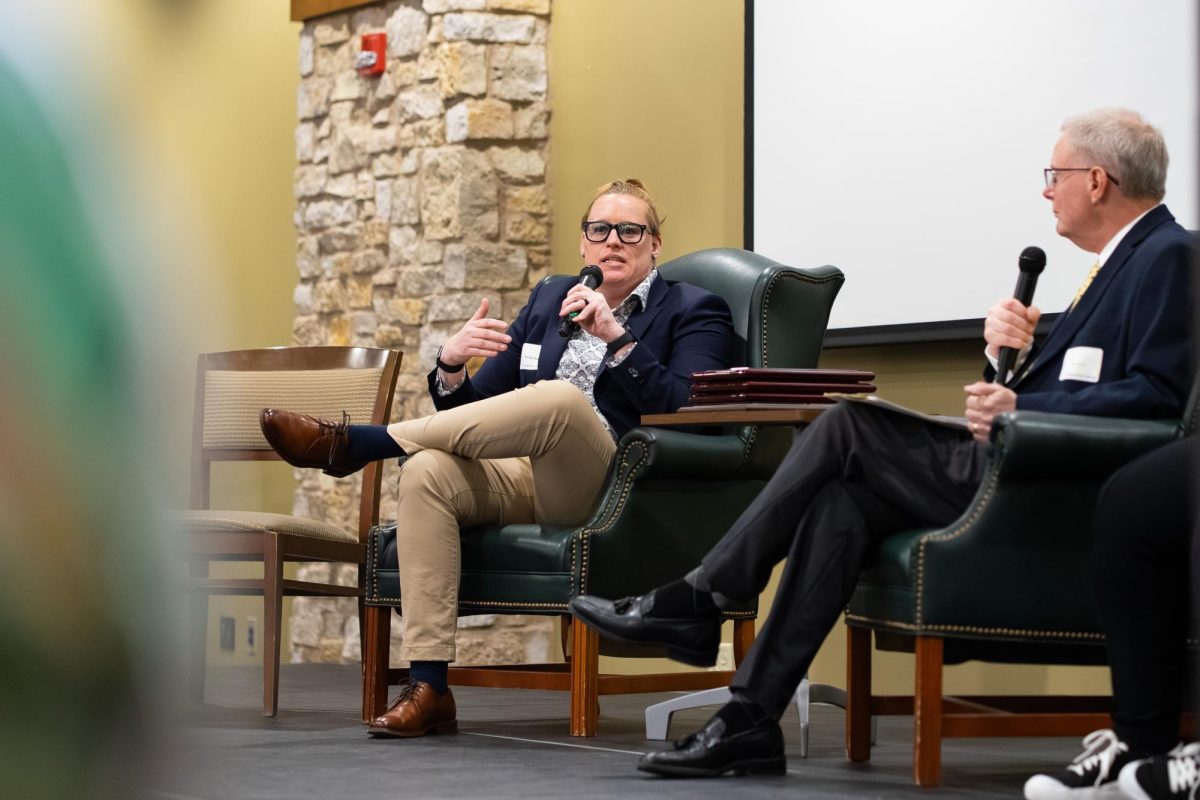








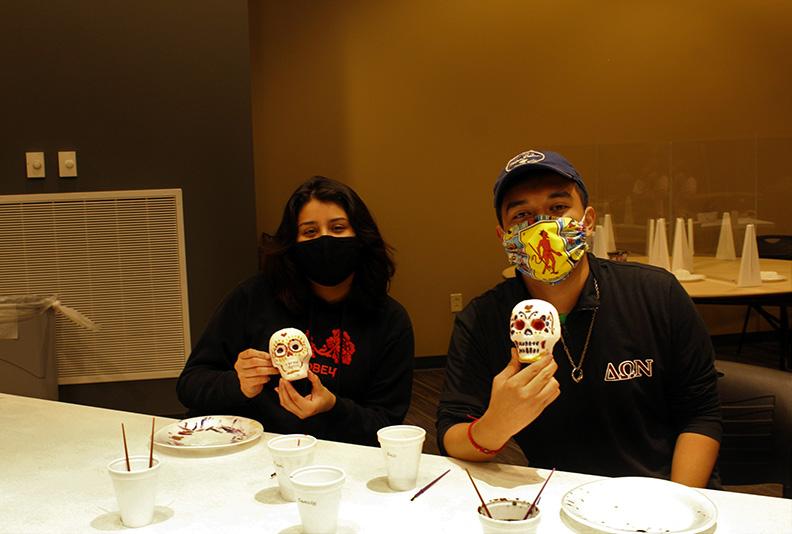
A Death Cafe was held in the back of Rozz-Tox, dimly lit by candles and small lights above each table on Friday, Feb. 27. Led by Adam Kaul, an Augustana anthropology professor, and Lauren Gil-Hayes, an end-of-life doula, the Death Cafe invited an open discussion surrounding the concepts of life, death and dying.
Kaul’s own research focuses on the concept of death and dying across cultures. He said that American society is an outlier in how death is handled and processed in comparison to other cultures, explaining that processes like embalming and terms such as “passed away” show that American culture experiences an extreme mentality of “death denial.”
This mindset is one of the reasons Kaul invited Augustana students and community members to talk about death.
“A Death Cafe is just an open space where people are encouraged to voluntarily come [and] start talking about [death],” Kaul said. “That is how far American society has gotten away from it, [that] we don’t even have spaces to talk about death. This is an opportunity to do so.”
Kaul and Gil-Hayes kicked off the conversation by explaining the rules of the cafe. Attendees were encouraged to open up, or not, but to remember that it was not a therapy session. Anyone could take a step out, look at the provided online resources or talk to Gil-Hayes if needed.
The conversations were open to each table, and cards with guiding questions were provided, but they did not have to be followed. The individual conversations lasted around 45 to 50 minutes. After that, Kaul and Gil-Hayes invited attendees to share anything they learned, talked about or general questions they had for the group.
The evening was wrapped up with DJ Jay Bryant playing music around the theme of death, including “Make Me Rainbows” by Chet Baker.
Sophomore Luka Van Osdol, an event attendee, said his favorite questions and discussions of the night were “If you could haunt one place, where would it be?” and “What should the role of medicine be in the processes of death?”
“I had a lot of fun, and while it was obviously serious as well, I think it is important to discuss how American society views death … and I think discussing it with people, especially on a personal level is a very valuable experience and should happen more frequently,” Van Osdol said.
While the Death Cafe was a new experience for some, this event was nothing new for host Gil-Hayes. She is a current PhD student at the University of Iowa, licensed grief therapist and end-of-life doula. Her research focuses on supporting people who lack resources or connections at the end of their lives.
“I’d started looking up end-of-life care and different community events, because I’ve always been a community-engaged social worker. I like hosting events and being with people, not just one-on-one work,” Gil-Hayes said.
Death Cafes do not require credentials to host, nor do they have to take place in a cafe. One only needs someone willing to host a space for conversation and people willing to talk about these topics.