





















Decorated in gold and blue, the Gavle rooms welcomed students, faculty and community members to celebrate the start of the Mongolian Lunar New Year on Wednesday, Feb. 18. The Mongolian Student Organization (MSO) hosted the event, their first as an organization, as a means of sharing their culture on campus.
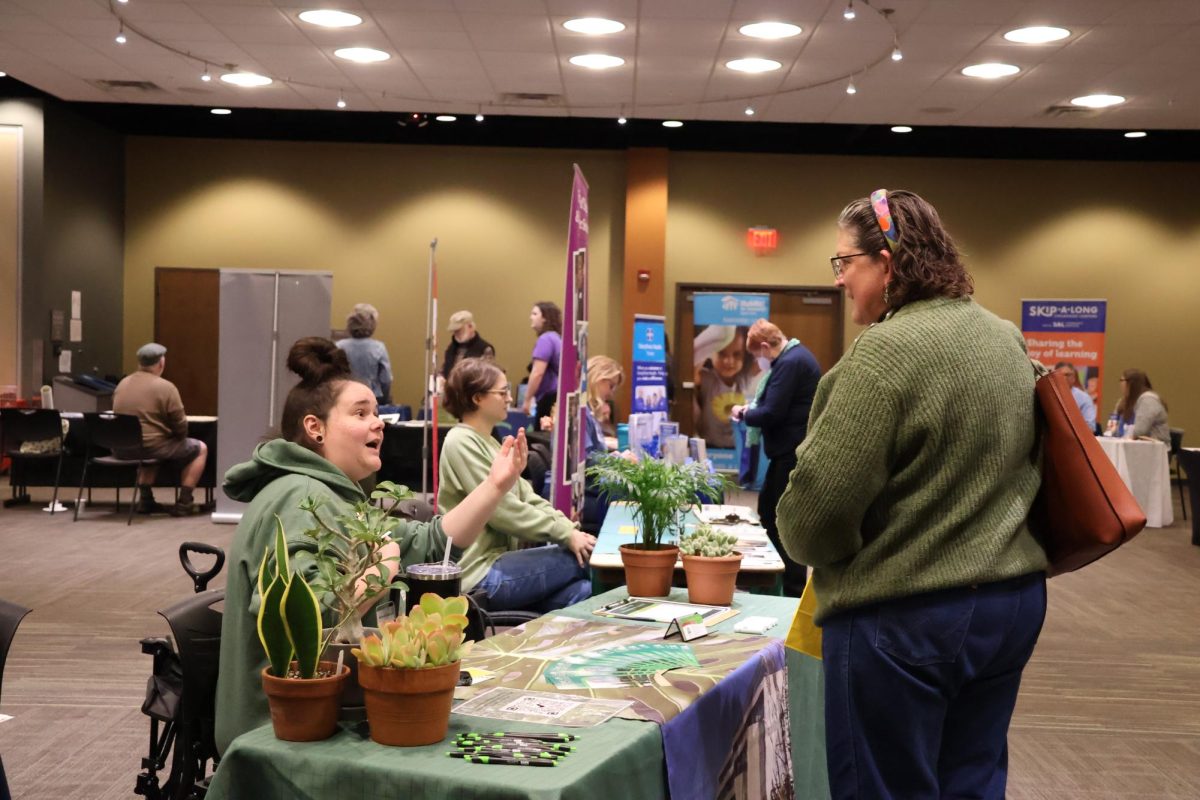
To educate attendees on Mongolian culture, tables were set up around the room with facts about traditional food, greetings and history. At some tables, MSO members wrote attendees’ names in traditional Mongolian script, and at others, a game called Shagai was being played.
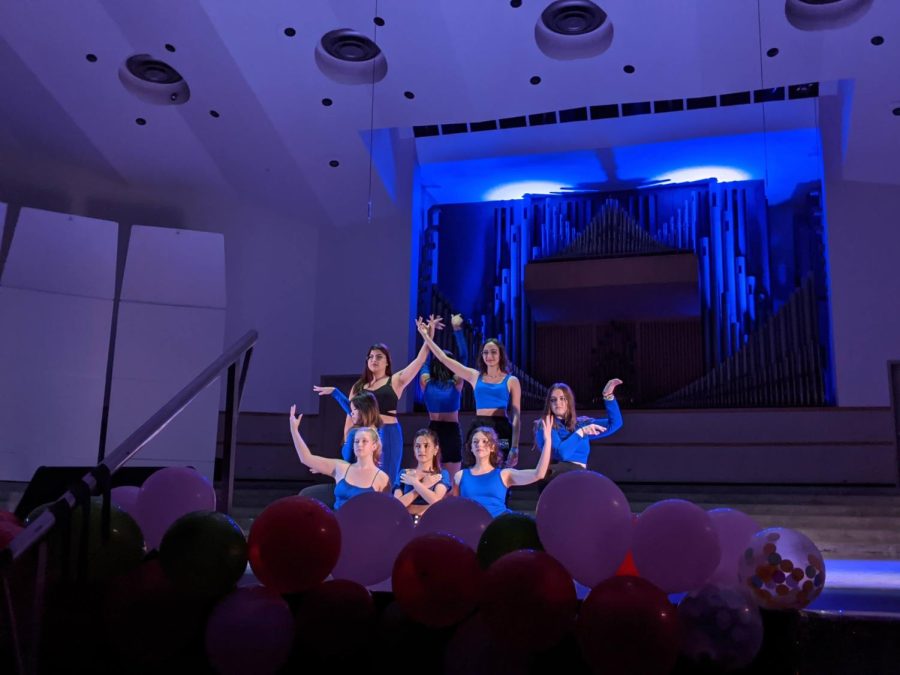
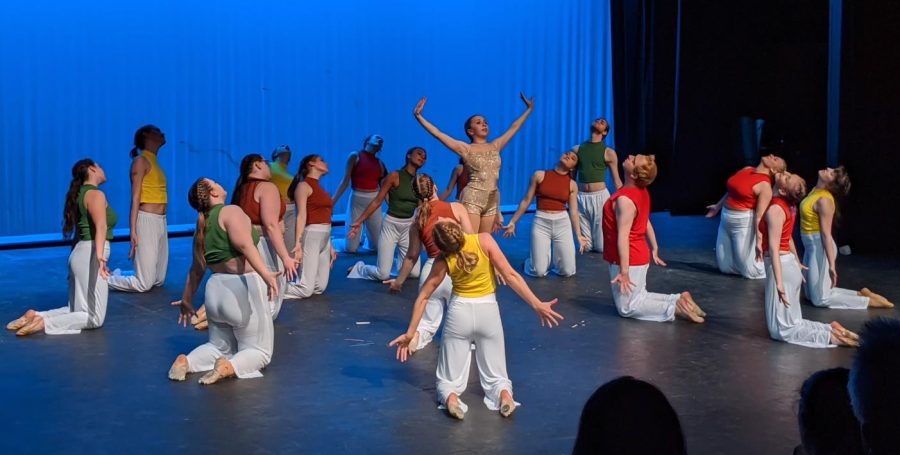
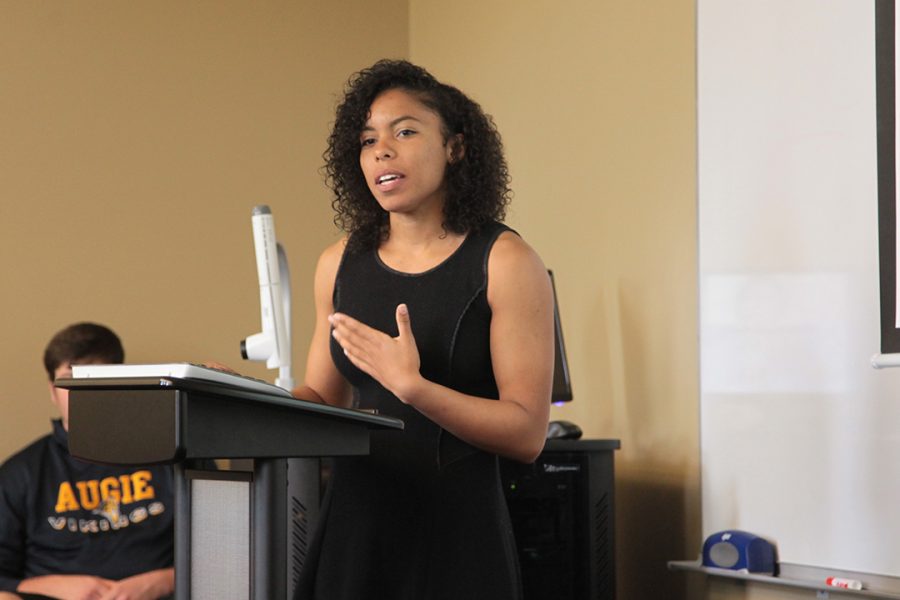
The celebration included opening remarks from MSO President Elle Byambadorj, who taught everyone Zolgokh, a traditional greeting, and presented a slideshow about the history of the Lunar New Year. Following a dinner consisting of traditional dishes such as Buuz and Ul Boov, there was a dance performance by Byambadorj as well as a YouTube video about the Lunar New Year in Mongolia.
One attendee was the club’s advisor, Kai Swanson, who, along with supporting the organization, said he attended the event to take the opportunity to learn something new.
“This was kind of their coming-out party, and I thought they did so well with the food [and] the cultural learning that they invited all of us to do. I think that is a model for how other organizations can do this in the future. I’m very proud of MSO,” Swanson said.
This was the organization’s first event. They participated in Culture Fest and attended other campus events together, but they had not hosted an event of their own.
The club was started in the spring of 2025. According to Ali Kalimat, the vice president of MSO, the First-Year class of 2024 brought nine Mongolian students to Augustana, raising the campus population to 10 students. The influx of students created a small group on campus who came together to create the organization, inspired by other cultural groups on campus.
For Kalimat, the club is a place where students come together to support fellow Mongolian students.
“I think there were nine new Mongolian students, and next year, I think there’s gonna be more than 10. So building a really nice place, a community where Mongolian students or similar cultures can be included is [a] very important thing for us,” Kalimat said. “When we came, it was a little hard to [fit] in with the community, but if we had [already] established this [group], I think it [would’ve been] much easier for others of this community.”
However, that is not the only goal for MSO. Besides building a space and community for Mongolian students, its members want to share their culture with the campus.
“Our club is not specific for Mongolian students only. It’s open to everyone if they want to explore a new cultural experience,” Byambadorj said.
Byambadorj said that Mongolian traditions are often mistaken for Chinese, although each country has unique customs, and that sharing information and Mongolian culture on campus would help inform students and faculty of the differences.
The MSO has no current plans for upcoming events. However, there are ideas for club meetings in the works.