





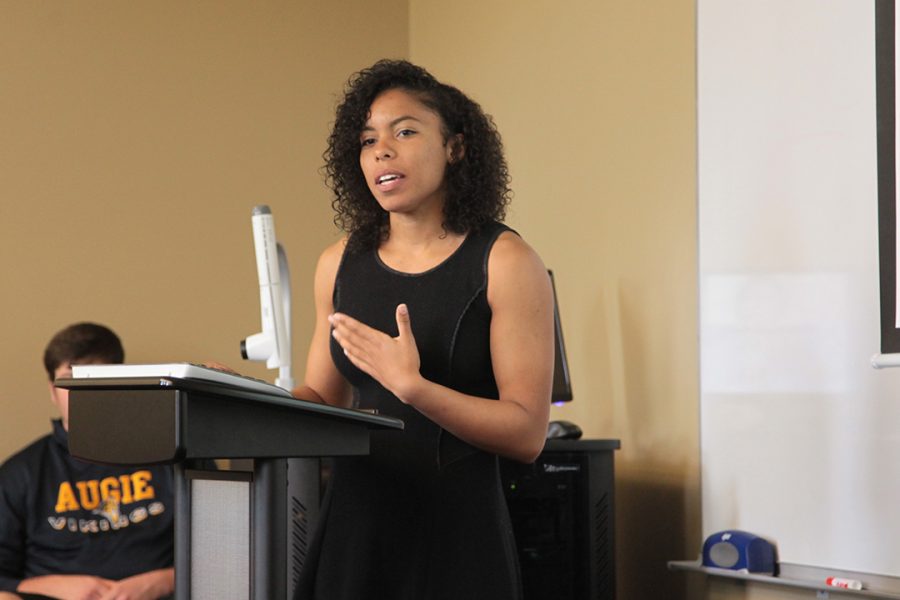

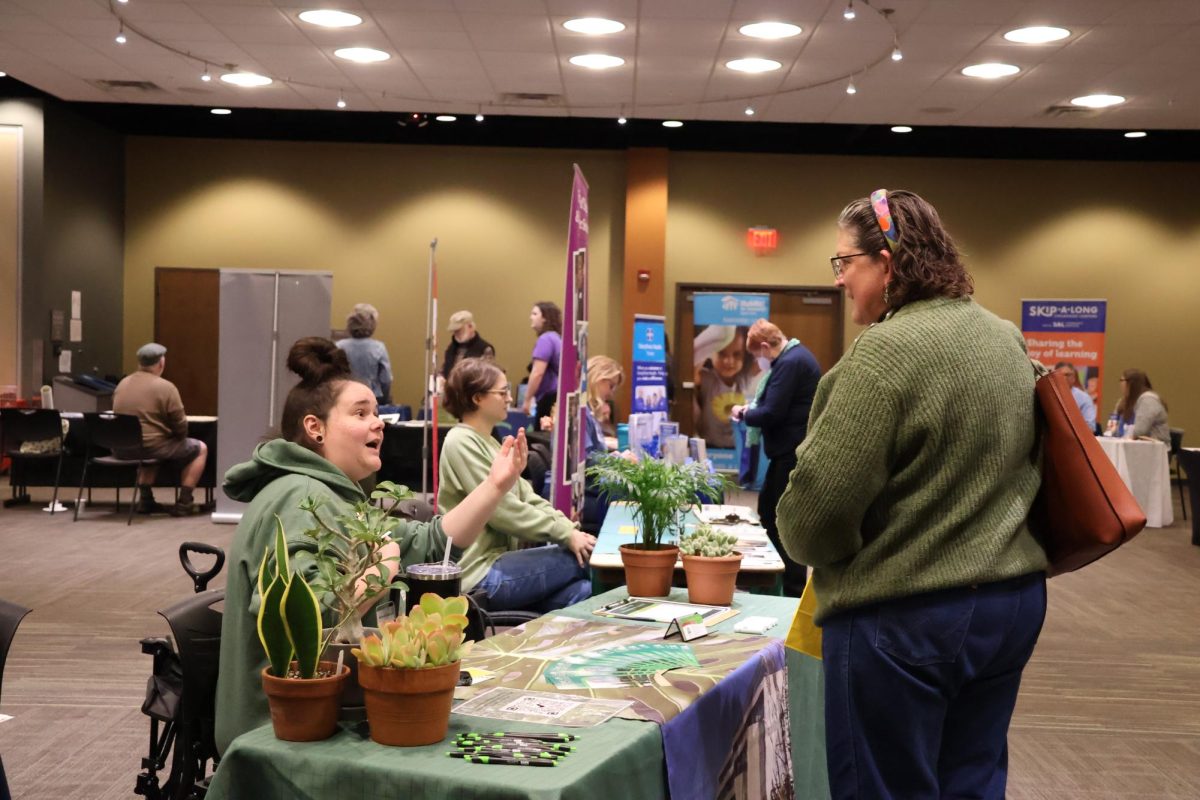




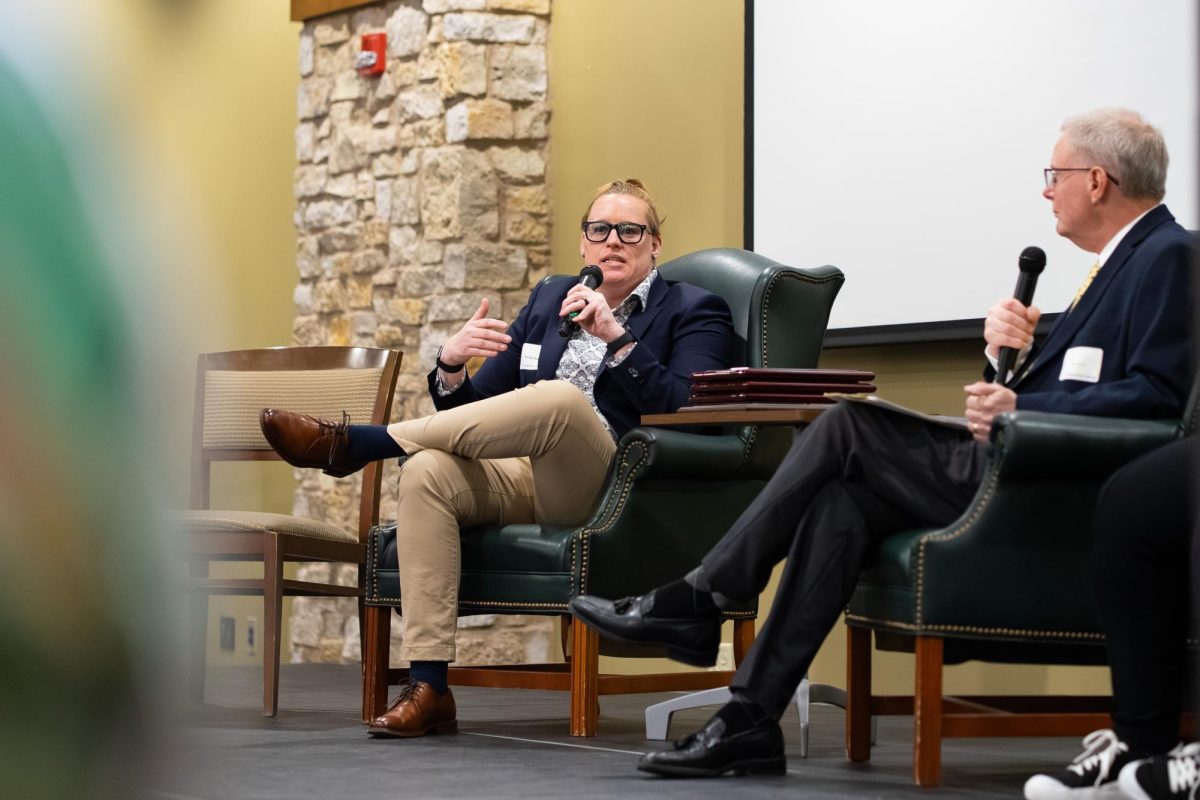





























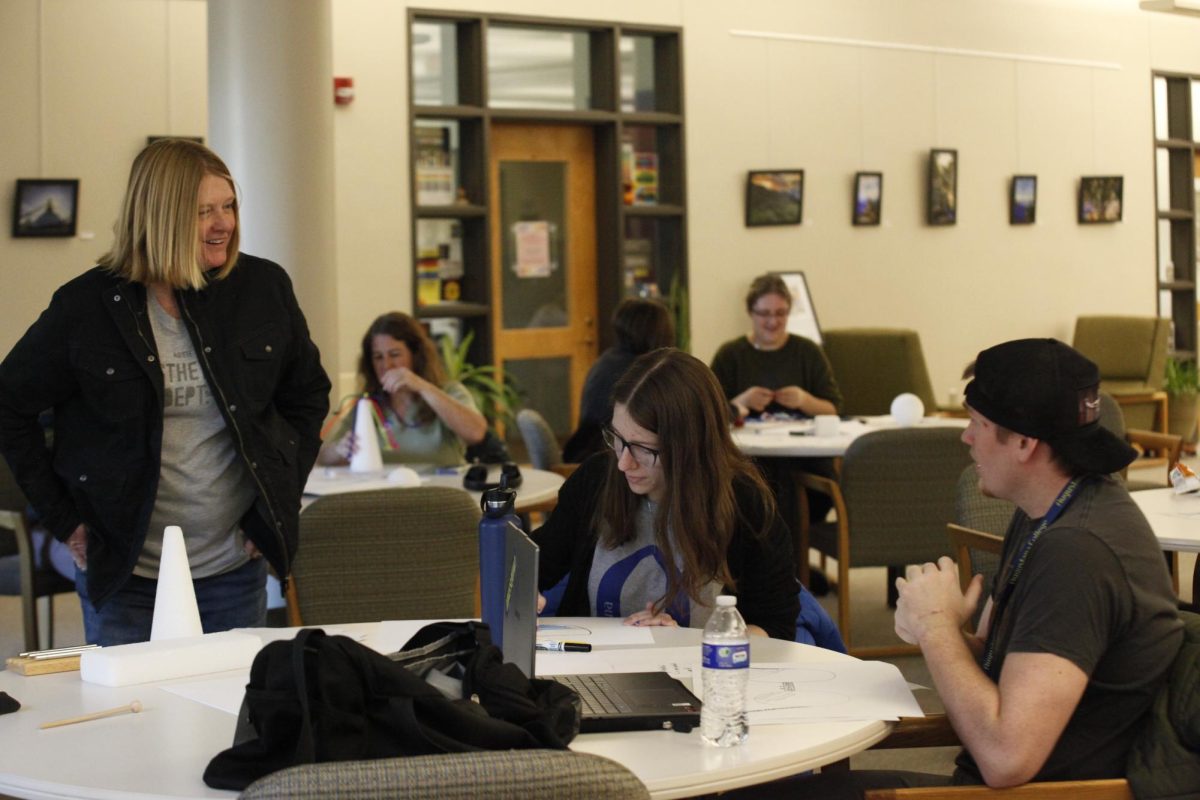
Another installment of the Feminist Tea Talk series, hosted by the Women, Gender and Sexuality Studies (WGSS) program, was held on Friday, Nov. 7, in the Tredway Library. During the talk, presenters shared a lecture on ideas they’ve been researching and opened up space to discussion.
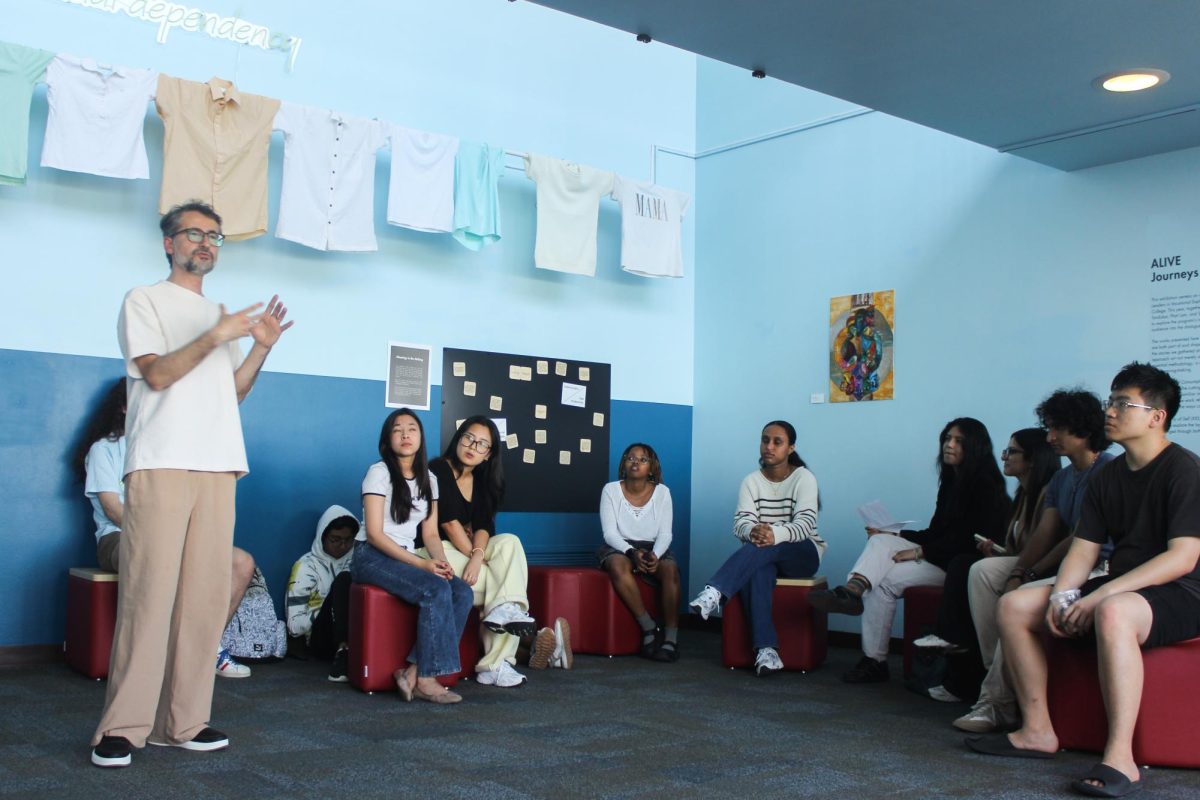
In the past, the usual format for the series has been a lecture, but art professor V Phipps took a different approach: A creative workshop.
The event, titled “Life Force: A Speculative Design Workshop,” was Phipps’ second Tea Talk. The workshop also served as a preview of Phipps’ upcoming fall 2026 class, WGSS 270: Queer Art.
“[A goal for participants] is to think about the questions we ask and ask different ones, because, when we ask different questions, we actually might change the world,” Phipps said.
The workshop began with a brief overview of the concepts of speculative design and design fiction. Speculative design asks how likely it is that a design could happen in the future based on the present. Design fiction is about blending fact and fiction when designing something.
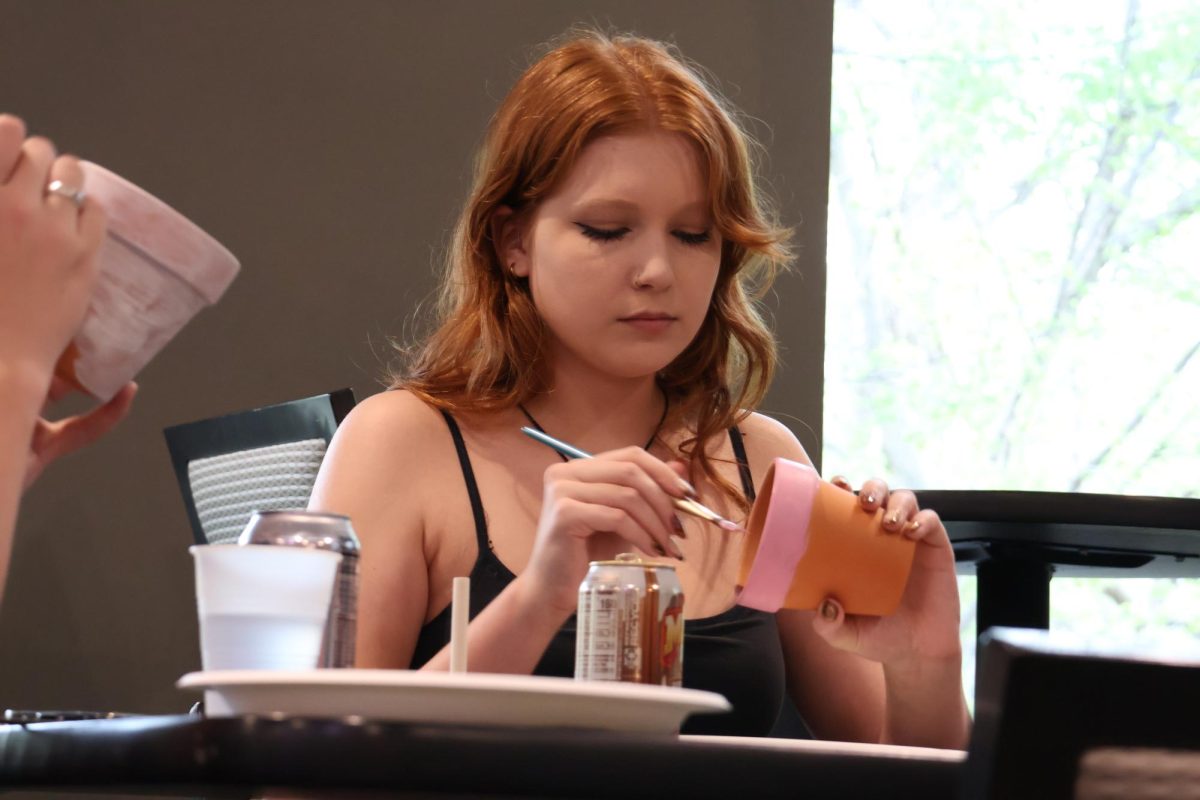
The focus of the workshop participants’ designs was on how AI and machines could support peacekeeping. Participants were prompted to think of what they liked and what holds society back. Combining their own likes with a partner’s problem, participants had fifteen minutes to create a machine design that could change the world.
Some of the ideas that participants came up with were a mechanical whale that eats microplastics, goggles that help those with dyslexia read and a flower that blooms when it hears lies.
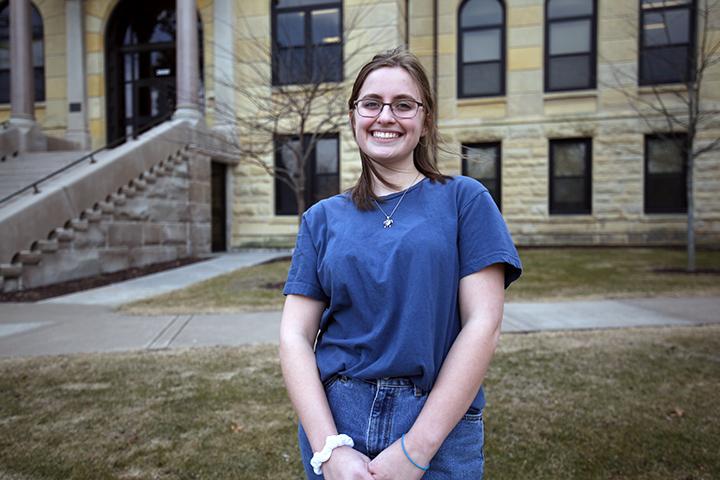
One participant, junior WGSS major Katie West, created Movie Goggles. By combining her own empathetic nature with the violence of the world, West came up with an idea to bridge the gap between people.
“I made goggles, and what [they] do is show people like police officers or ICE who are trying to perpetuate violence against people, the possible victims’ lives and how rich their lives are,” West said.
Once time was up, each participant presented their idea to the group, and they then discussed where the ideas fit on Bloom’s Pyramid of Taxonomy of Futures, where ideas are possible, plausible, preferable or probable, determining how likely the machine could exist. None of the ideas were found to be impossible with a few tweaks.
While many of the participants were previously involved in the WGSS program, one of the new goals of professor Kiki Kosnick, the program’s head, was to make Tea Talks a space for everyone to learn and explore new ideas, whether they had prior involvement with WGSS or not.
“They’re questions that are inextricable for everyone’s day-to-day lives…I think that when you dive into these topics, it’s my hope that people recognize that they’re part of that conversation, that everyone’s part of the conversation,” Kosnick said.
The final Tea Talk of the semester will be the senior Tea Talk held on Dec. 10 at 6 p.m. in Lindberg 202, where seniors will share what they have learned in the program. The series will then pick back up in the spring.