









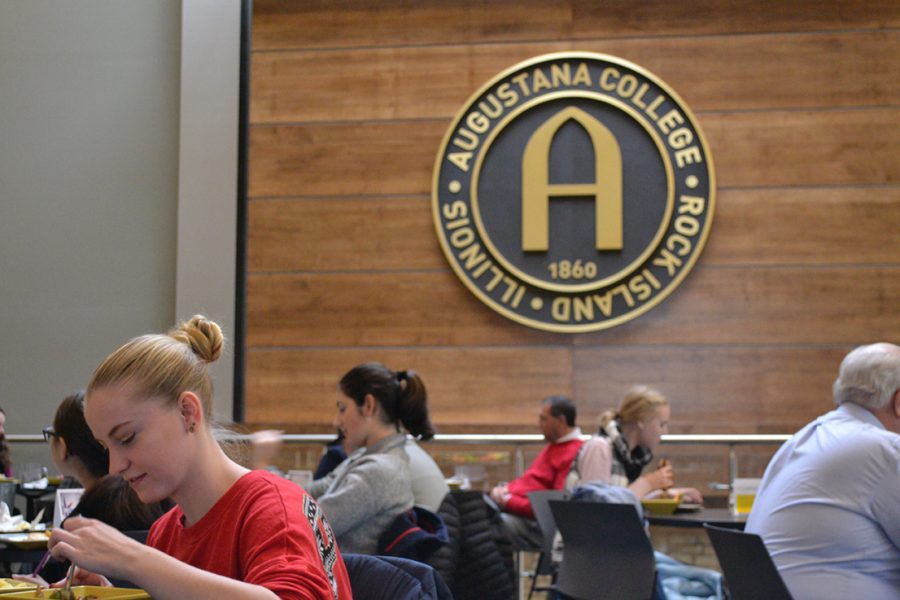






















































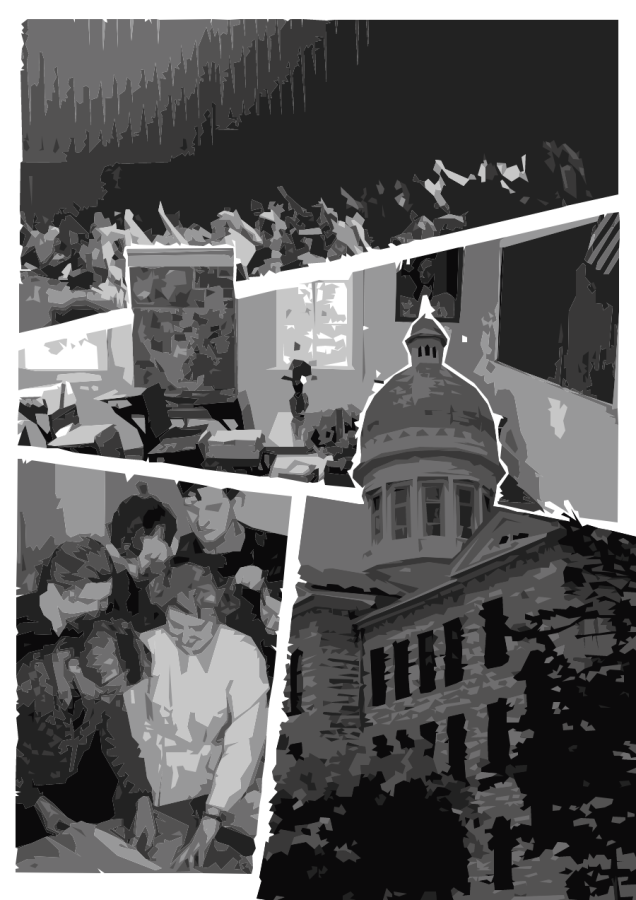


After originally planting its grounds in Paxton, Ill., in 1860, Augustana College celebrates 150 years in Rock Island. This milestone was marked with the 150th Anniversary Rock Island Celebration at Schwiebert Park on Sunday, Sept. 21, highlighting the college’s legacy and its connections to the Quad Cities.
The shift was more than geographical; it determined the future of the college, as it felt that there wasn’t much of a future in Paxton.
From there, they sent Professor Henry Reck, who at the time mostly taught English, but, like most professors at the small college, ended up teaching multiple subjects. He offered $10,000 for the 16 acres of land. His offer received huge support from the big Swedish population in Moline and the Senate, which convinced the Augustana Synod to relocate the college and begin building.
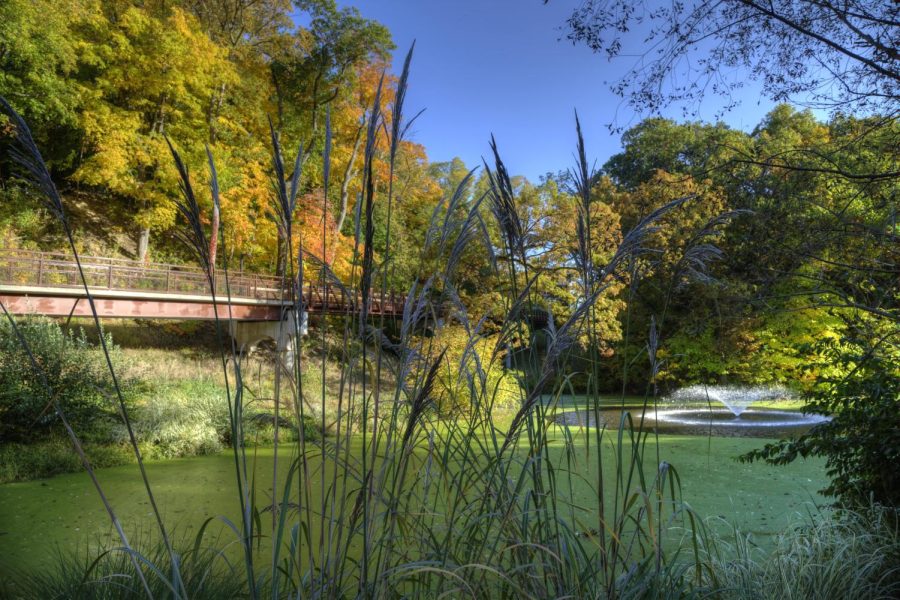
Although the chiming of Old Main’s bells weren’t present, students first entered class on Sept. 22, 1875. Initially founded on 16 acres, Augustana’s campus now spans 115 wooded acres overlooking the Mississippi River.
Early leaders shaped not only the campus, but also its connection to the community. Gustav Andreen, who became president of the college in 1901, pushed Augustana beyond its campus.
“Before the presidency of GA Andreen, [Augustana] made a very grave mistake. It was too exclusive and was afraid to come into contact with the community,” Kai Swanson, special assistant to the president, said. “Dr Andreen has done the school a splendid service in that he has brought the school into contact with the community, and the community into contact with the college.”
Over the years, the college has expanded its footprint, maintaining strong ties to the Quad Cities. From partnerships with local businesses to student involvement outside of the college, Augustana’s influence has grown beyond its campus borders.
When becoming the ninth president of Augustana in 2022, President Andrea Talentino emphasized her commitment to keeping the college closely connected to the Quad Cities community.
“We really want to be known as an anchor of the Quad Cities region,” she said. “A place that brings in people, encourages people to stay, engages in projects with the city and really contributes to the thriving Quad Cities community.”
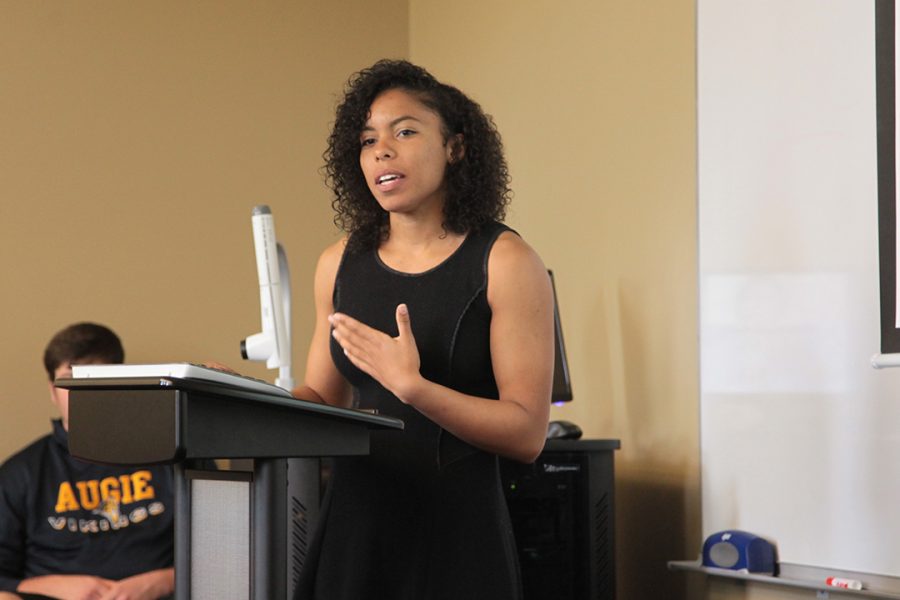
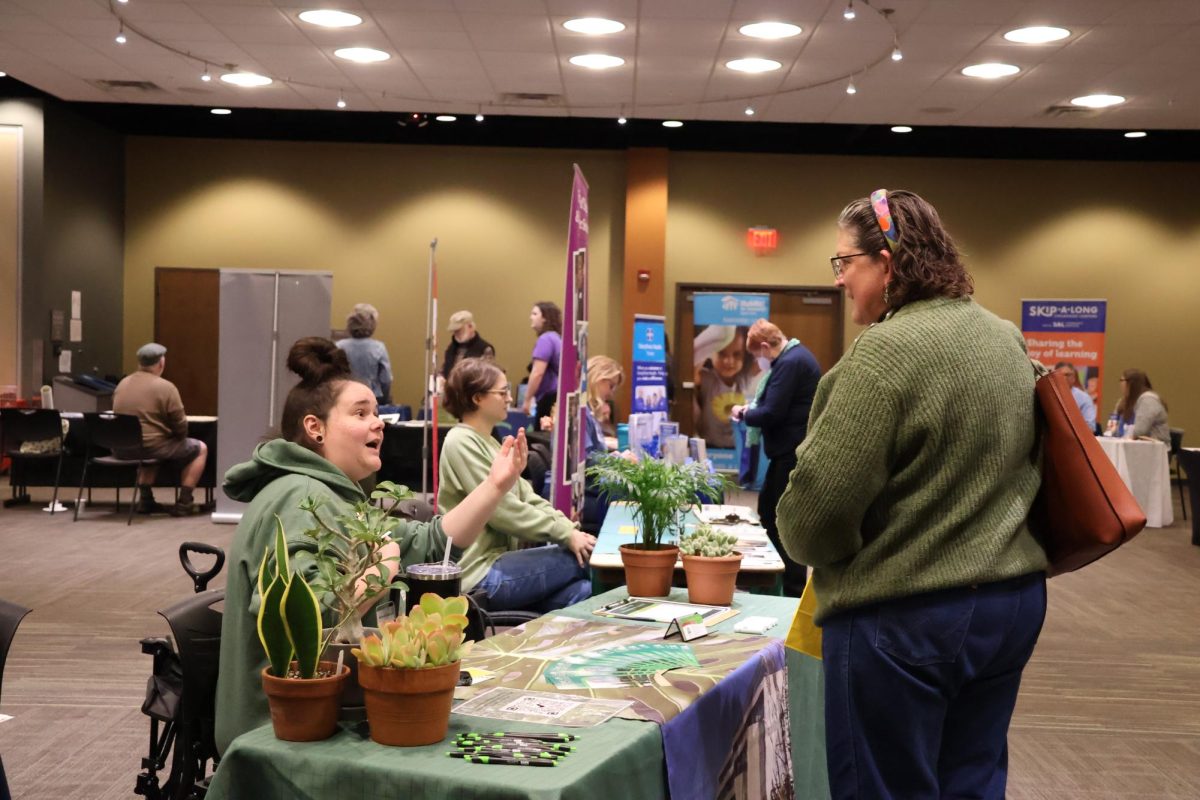
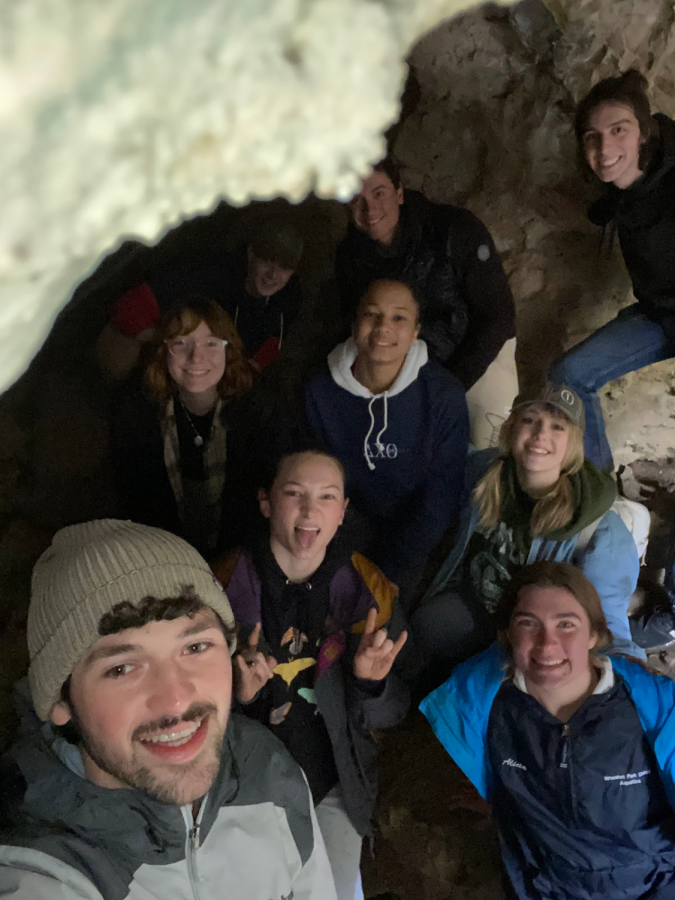
Connections across the Quad Cities have grown stronger in recent years, and students have been more involved in the community. Whether it’s hopping on the MetroLINK bus, volunteering at the Martin Luther King Center or through internships, students are escaping the “Augie bubble.”
“I think the days of the Augie bubble are gone,” Talentino said. “It’s almost getting unavoidable to recognize that we’re connected across all these cities.”
For faculty members who have seen Augustana’s history unfold, the changes are clear. Dan Lee, professor of religion and ethics, who joined the college’s faculty in 1974, has seen the student body transform.
“When I started here in 1974, we had very few international students. Just a handful of them, mostly from Sweden, didn’t offer that much diversity,” Lee said.
Rooted in its Swedish Lutheran beginnings, Augustana once drew most of its students from Swedish immigrant families who shared similar cultural and religious values. Over time, however, those homogenous roots gave way to broader diversity.
Today, the college’s First-Year class represents 23 U.S. states, and includes 173 international students from 37 countries. Together, they speak 23 different languages, and 243 identify as students of color.
Focusing on diversity and inclusion has helped the college’s growth, creating an environment far different from the one Lee encountered five decades ago.
“Most of the changes that have occurred have been for the better, and in particular the increased number of international students,” Lee said. “Now, if you look at Greek groups, their membership is very diverse.”
Unlike Swedish institutions where its students often study one thing, Augustana focuses on a liberal arts education that adapts to American culture.
“In Sweden, typically you say [that] you want to study law, [and] that’s all you study,” Jonas Björk, professor of Scandinavian studies and member of the advisory committee for the Swenson Swedish Immigration Research Center said. “Later on, they decided we should educate young men and women in a more American way and that’s when they became more of a liberal arts college. That idea shows that they were really attuned to what they thought would be needed.”
The college’s Swedish heritage, however, still runs deep, but that history has become the foundation for broader conversation about immigration, culture and inclusion. At the Swenson Swedish Immigration Research Center, head of collections Janette Garcia sees Augustana’s story reflected in the archives she helps preserve.
“Our Swedish heritage still has an impact on our college today. The foundational beliefs of the college, looking at the mind [and] body as a whole, is still very important in our liberal arts education than when it was when we were both a college and seminary,” Garcia said.
Garcia said understanding the past helps us grow and guides the decisions we make today. By reflecting on where we come from, we can better appreciate our present and shape a thoughtful future.
“The National Archives have a saying carved into a stone that says ‘What is past is prologue.’ We are who we are today because of our heritage in the past,” Garcia said.
Augustana’s ability to move beyond its origins as an immigrant college while continuing to thrive as a liberal arts institution was a smooth transition, despite many other liberal arts institutions.
“[Augustana] is a remarkable place that has been in existence as long as it has,” Björk said.
But that smooth transition was often rare.
“Augustana turned from an ethnic immigrant institution into a successful liberal arts college,” Björk said. “Many other similar colleges went out of business.”
Augustana College has consistently adapted its academic offerings to meet the evolving needs of its students and broader community. While maintaining a strong foundation in the liberal arts, the college has introduced programs in emerging fields such as data analytics, public health and environmental studies.
Campus life has also mirrored these academic shifts. From culture houses to Greek life to student groups, it is more diverse than ever. This has created social networks that reflect an evolving student body.
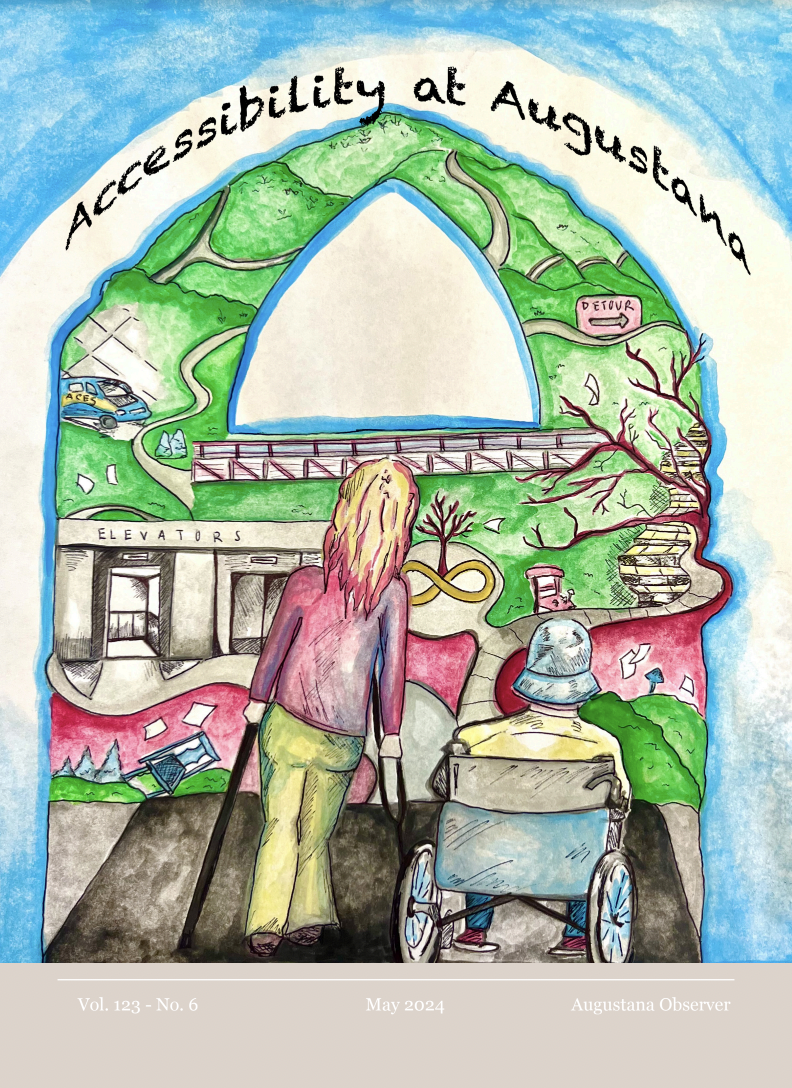
Augustana has also prioritized accessibility and support for historically underrepresented groups. Scholarships, mentorship programs and student organizations aimed at cultural inclusion highlight the college’s long-term commitment to equity, diversity and inclusion.
Swanson said that this commitment is not only symbolic, but transformational for student engagement.
“I think Rock Island is exactly the right place for us… It’s not too big and it’s not too small. It is connected to the world through Deere and Company, Arconic, our transportation hubs, the Mississippi River and all kinds of stuff,” he said.
Looking ahead, President Talentino envisions a future where Augustana continues to balance its liberal arts roots with the demands of a modern and interconnected world.
“I hope that everyone around the region, as well as nationally, recognizes Augustana as a model in terms of connecting students with the community and getting them engaged in meaningful projects,” she said.
As Augustana celebrates 150 years in Rock Island, there’s been a clear shift. However, from humble Swedish roots to a globalized and inclusive liberal arts institution, its history reflects the broader evolution of higher education in the Quad Cities and beyond.
The college’s path forward is rooted in the lessons of its past. As faculty, staff and students look into the next 50 years, Augustana’s bell towers and the chimes of Old Main continue to symbolize both tradition and bold vision.